Content last revised on September 10, 2026
Advanced Switching Efficiency with the Mitsubishi CM150DU-12H IGBT Module
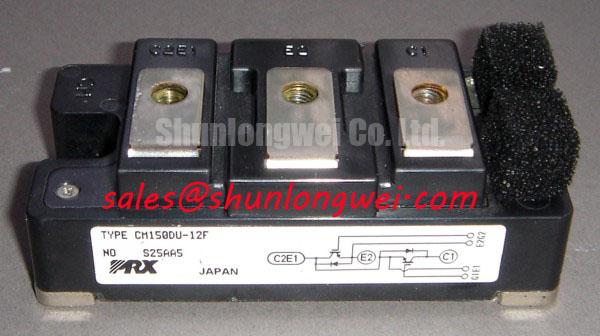
The Mitsubishi CM150DU-12H is a high-performance U-Series dual IGBT module engineered for high-speed power switching applications requiring precise control and thermal stability. This module features a 600V collector-emitter voltage and a 150A collector current rating, optimized for hard-switching topologies in industrial environments. By leveraging Mitsubishi’s advanced trench gate technology, it significantly reduces power dissipation during high-frequency operation. For systems requiring higher current handling, the related CM300DU-12H offers a similar 600V architecture with doubled current capacity. What is the primary benefit of its ultra-fast switching characteristics? It minimizes transition losses, allowing for higher PWM carrier frequencies in inverter designs. For industrial servo drives prioritizing low switching loss over extreme voltage headroom, this 150A 600V module is the optimal choice.
Key Technical Specifications
Defining Performance Through Functional Spec Grouping
The following parameters represent the core operational boundaries of the CM150DU-12H, essential for preliminary engineering assessment.
| Parameter Category | Technical Specification | Reference Value |
|---|---|---|
| Maximum Ratings | Collector-Emitter Voltage (Vces) | 600V |
| Current Capacity | Collector Current (Ic) at Tc=25°C | 150A |
| On-State Performance | Collector-Emitter Saturation Voltage (Vce sat) | 2.4V (Typical) |
| Thermal Dynamics | Thermal Resistance (Junction-to-Case) | 0.16 °C/W |
| Configuration | Module Circuit Topology | Dual (Half-Bridge) |
Download the CM150DU-12H datasheet for detailed specifications and performance curves.
Industrial Applications & Engineering Value
Optimizing High-Frequency Power Conversion in Industrial Drives
In modern servo motor drive systems, engineers often struggle with balancing the PWM switching frequency against the heat generated within the power stage. High switching frequencies are desirable to reduce ripple current and acoustic noise, yet they typically increase switching losses. The CM150DU-12H addresses this challenge with its high-speed switching capability, which can be compared to a high-speed camera shutter that minimizes "blur" or energy leakage during every on-off transition.
Consider a Variable Frequency Drive (VFD) used in a precision manufacturing line. When the drive operates at a high carrier frequency to maintain torque smoothness, the low switching loss profile of this module ensures that the junction temperature remains within safe operating limits without requiring oversized cooling solutions. This efficiency directly impacts the thermal management strategy, allowing for more compact enclosure designs.
Beyond motor control, this module is a staple in UPS systems and Welding Power Supply units. In these scenarios, the isolated baseplate design simplifies the mechanical integration of multiple modules onto a single heatsink, reducing the complexity of the System Integration process. While this 600V unit is a standard for 230V AC line inputs, engineers looking for 460V AC applications may need to evaluate 1200V alternatives such as the CM150DY-24H.
Technical Deep Dive
Analysis of Switching Dynamics and Thermal Ruggedness
The CM150DU-12H utilizes the U-Series chip architecture, which is specifically tailored to reduce the "tail current" during turn-off. In the world of power electronics, the tail current is like a flickering candle that refuses to go out instantly; the longer it flickers, the more energy is wasted. By shortening this duration, the CM150DU-12H maintains high Switching Efficiency even as the operating frequency climbs towards 20 kHz.
Thermal management in this module is governed by its low Rth(j-c) of 0.16 °C/W. To understand this in an engineering context, imagine thermal resistance as a narrow pipe; the smaller the number, the "wider" the pipe, allowing heat to flow more freely from the semiconductor junction to the heatsink. This low resistance is critical during transient overloads, where the SOA (Safe Operating Area) must be strictly maintained to prevent catastrophic failure. For a deeper understanding of these concepts, engineers can refer to the guide to IGBT module selection.
Frequently Asked Questions
Addressing Design-Level Technical Queries
How does the Vce(sat) of 2.4V impact the overall efficiency of the CM150DU-12H in low-frequency vs. high-frequency designs?
The Vce(sat) primarily dictates conduction losses. In low-frequency applications (below 5 kHz), conduction loss is the dominant factor, and 2.4V represents a balance between robust latch-up immunity and efficiency. In high-frequency designs, the low switching loss of the U-Series chip helps offset the conduction losses, maintaining a high Power Density across the entire operating spectrum.
Can the CM150DU-12H be utilized in 480V three-phase systems?
Generally, no. For 480V AC systems, the DC bus voltage typically reaches 650V to 700V. Since the Vces of this module is 600V, it lacks the necessary safety margin to handle the bus voltage and potential inductive spikes. This module is strictly designed for 600V class applications, typically involving 200-240V AC inputs where the DC bus remains well below 400V.
As industrial automation continues to demand higher efficiency and smaller footprints, the CM150DU-12H remains a cornerstone for engineers designing reliable 600V power stages. Its combination of 150A capacity and high-speed switching provides the flexibility needed for demanding motion control and power conversion tasks.