


Content last revised on September 10, 2026
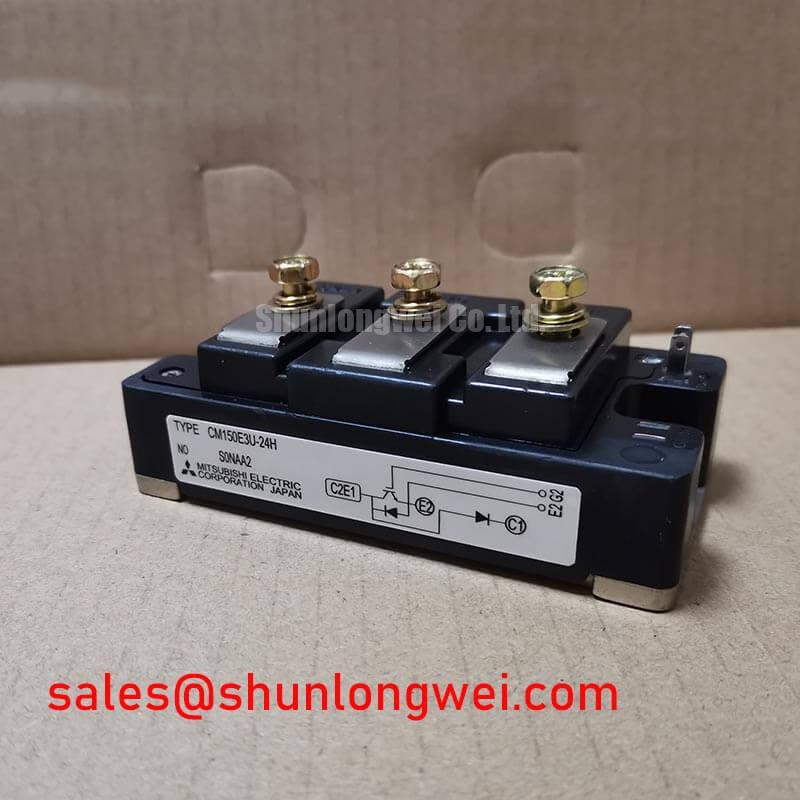
CM150E3U-24H: 1200V / 150A IGBT Module
Engineered for High-Efficiency Power Conversion
Delivering System-Level Benefits in Demanding High-Frequency Applications
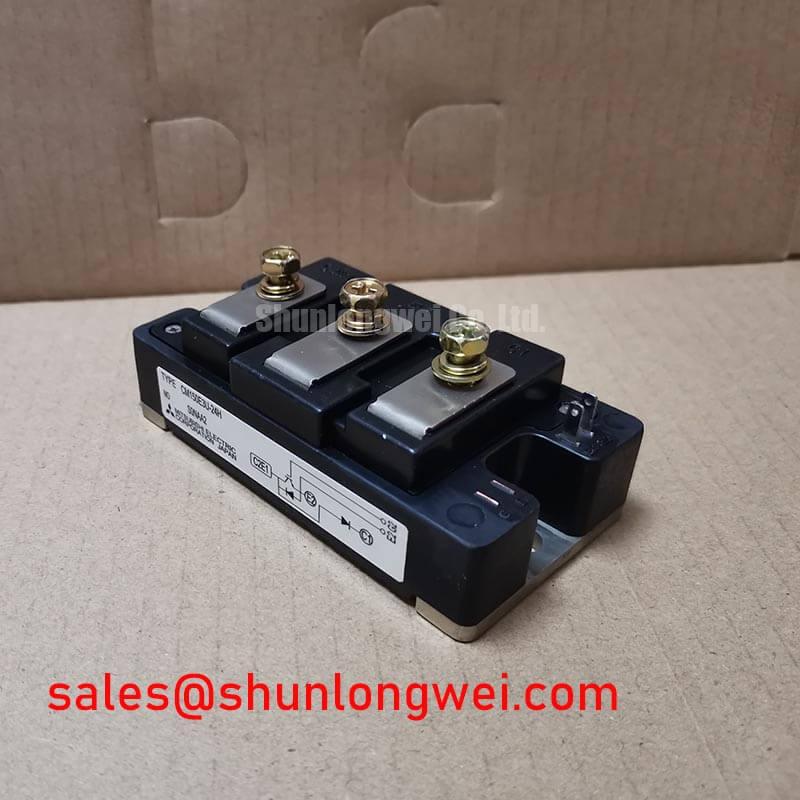
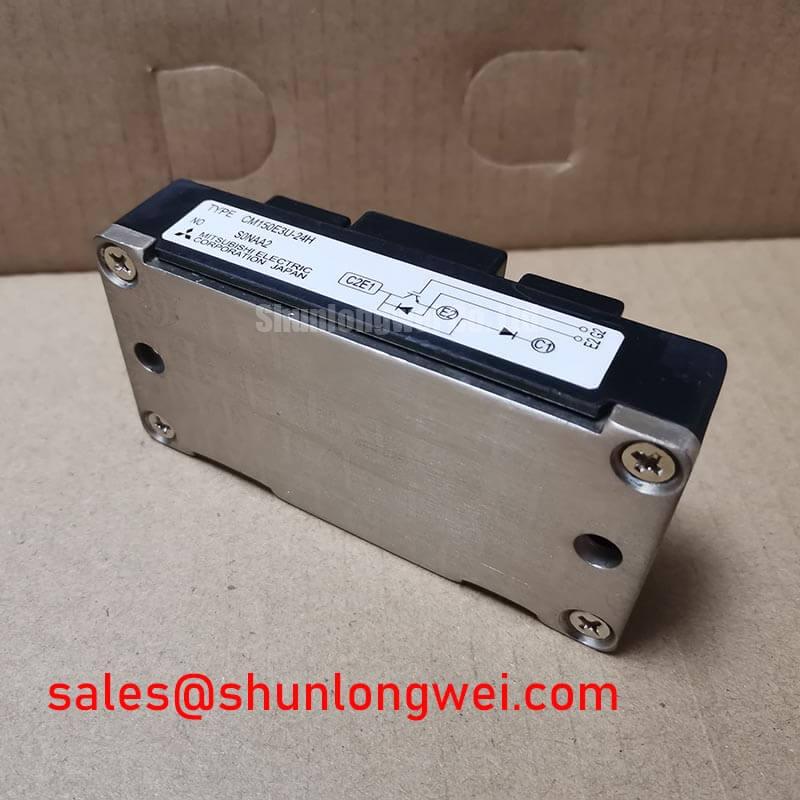
The Mitsubishi CM150E3U-24H is a high-power IGBT module designed for reliability and efficiency in demanding switching applications. This device delivers a robust performance profile optimized for thermal management, featuring key specifications of 1200V Collector-Emitter Voltage (VCES) and a 150A continuous Collector Current (IC). Key benefits include low saturation voltage (VCE(sat)) for reduced conduction losses and an integrated super-fast recovery free-wheel diode that enhances high-frequency operation. This module directly addresses the engineering need for a durable and efficient power stage in industrial systems by ensuring stable operation through its isolated baseplate design, which simplifies thermal management. For industrial drive systems prioritizing efficiency and thermal stability, the CM150E3U-24H's low VCE(sat) of 2.2V (typical) makes it a strategically sound choice for minimizing heat dissipation and improving overall system reliability.
Application Scenarios & Value
Achieving Robust Performance in Motor Control and Power Conversion Systems
The CM150E3U-24H is engineered for high-performance applications where efficient power conversion and operational reliability are critical. Its 1200V rating provides a substantial safety margin for systems operating on 480V and 600V AC lines, making it an ideal component for industrial-grade Variable Frequency Drive (VFD) systems. In a high-fidelity engineering scenario, such as a VFD controlling a high-inertia industrial conveyor, the module's low collector-emitter saturation voltage (VCE(sat)) is paramount. A lower VCE(sat) is analogous to less friction in a mechanical system; it directly reduces the energy lost as heat during the IGBT's on-state, leading to higher inverter efficiency and a reduced thermal load on the cooling system. This allows for a more compact heatsink design, saving space and cost while improving the system's overall power density and long-term reliability. The integrated super-fast recovery free-wheel diode is crucial for mitigating voltage spikes and reducing switching losses during the fast Switching Loss inherent in modern Pulse Width Modulation (PWM) schemes. Further applications include Uninterruptible Power Supplies (UPS), welding power sources, and other high-power switching converters. For systems requiring higher current handling capabilities, the CM200DY-24H offers a similar voltage rating with an increased current capacity.
Key Parameter Overview
Decoding the Specs for Enhanced Thermal Reliability
The technical specifications of the CM150E3U-24H are tailored for robust performance in high-power applications. The following table highlights the key parameters that are critical for design engineers evaluating this module for power conversion systems. Particular attention has been given to thermal and switching characteristics to ensure reliable operation under demanding industrial conditions.
| Parameter | Symbol | Value | Conditions | Engineering Insight |
|---|---|---|---|---|
| Collector-Emitter Voltage | VCES | 1200V | VGE = 0V | Provides a high safety margin for 480V/600V AC line applications. |
| Collector Current (DC) | IC | 150A | Tc = 25°C | Enables high power throughput for medium to large motor drives. |
| Collector-Emitter Saturation Voltage | VCE(sat) | 2.2V (Typ) / 2.7V (Max) | IC = 150A, VGE = 15V | Crucial for efficiency; a low value significantly reduces conduction losses and heat generation. |
| Thermal Resistance | Rth(j-c) | 0.14 °C/W (Max, IGBT) | Junction to Case | Indicates superior heat transfer, simplifying heatsink design and improving reliability. |
| Turn-on Time | t(on) | 300ns (Typ) | Inductive Load | Defines the switching speed, impacting efficiency at higher frequencies. |
| Turn-off Time | t(off) | 550ns (Typ) | Inductive Load | Critical for minimizing switching losses during the off-transition. |
| Isolation Voltage | Viso | 2500Vrms | AC, 1 minute | Ensures safe isolation between the power circuit and the heatsink/chassis. |
Download the CM150E3U-24H datasheet for detailed specifications and performance curves.
Technical Deep Dive
Analyzing the Internal Design for Thermal and Electrical Superiority
A deeper analysis of the CM150E3U-24H reveals a design philosophy centered on maximizing both thermal efficiency and electrical ruggedness. The module's low thermal resistance, Rth(j-c), of 0.14 °C/W for the IGBT part is a direct result of its internal construction, which prioritizes an efficient thermal pathway from the silicon die to the heatsink. This can be compared to the wall of a high-performance heat exchanger versus that of an insulated thermos. The CM150E3U-24H is engineered to be the heat exchanger, moving thermal energy out as quickly as possible, not to contain it. This characteristic is fundamental to its reliability, as it keeps the junction temperature lower during heavy load cycles, directly extending the operational lifespan of the component. The inclusion of a discrete super-fast recovery free-wheel diode is another critical design choice. This ensures that the diode's characteristics are optimized for its role in a half-bridge configuration, providing a low reverse recovery charge (Qrr) which is essential for reducing turn-on losses in the opposing IGBT and minimizing electromagnetic interference (EMI).
Frequently Asked Questions
Engineering Questions on Implementation and Reliability
What is the primary benefit of the low VCE(sat) in the CM150E3U-24H?
Its low saturation voltage of 2.2V (typical) at the nominal 150A rating directly translates to lower power dissipation during operation. This reduces heat generation, which in turn allows for smaller heatsink designs, improves overall system energy efficiency, and enhances the module's long-term reliability by reducing thermal stress.
How does the Rth(j-c) of 0.14 °C/W impact the thermal design process for an inverter?
This low thermal resistance value simplifies thermal management significantly. It indicates a highly efficient heat transfer path from the IGBT junction to the case, meaning less temperature rise for a given power loss. Engineers can use this value to more accurately size heatsinks, potentially reducing system size, weight, and cost while maintaining the junction temperature well within safe operating limits.
What considerations are necessary for the gate drive circuit for this module?
For optimal performance, the gate drive circuit should be designed to provide clean, sharp voltage pulses with the recommended ±15V. Due to the module's high-speed switching capability, it's crucial to minimize inductance in the gate drive loop to prevent ringing and ensure reliable switching. Utilizing a Kelvin Emitter connection, if available on the specific module package, and twisted pair wiring can significantly improve gate signal integrity. A detailed guide on this topic can be found in practical tips for robust IGBT gate drive design.
Is the CM150E3U-24H suitable for high-frequency operation?
Yes, the module is designed for high-frequency operation. This is supported by its fast switching times (t(on) at 300ns, t(off) at 550ns) and the integration of a discrete super-fast recovery free-wheel diode, which minimizes reverse recovery losses that can become significant at higher PWM frequencies.
The strategic selection of a power module like the CM150E3U-24H, with its focus on low losses and robust thermal performance, is a foundational step in designing next-generation industrial systems that meet increasingly stringent demands for efficiency and reliability.