
Content last revised on September 13, 2026
CM400HG-66X Inspection and Integration Overview
Before fitting a CM400HG-66X, isolate the converter, discharge the DC link according to the equipment procedure, then compare collector, emitter, and gate terminal continuity with the original circuit documentation before any powered test.
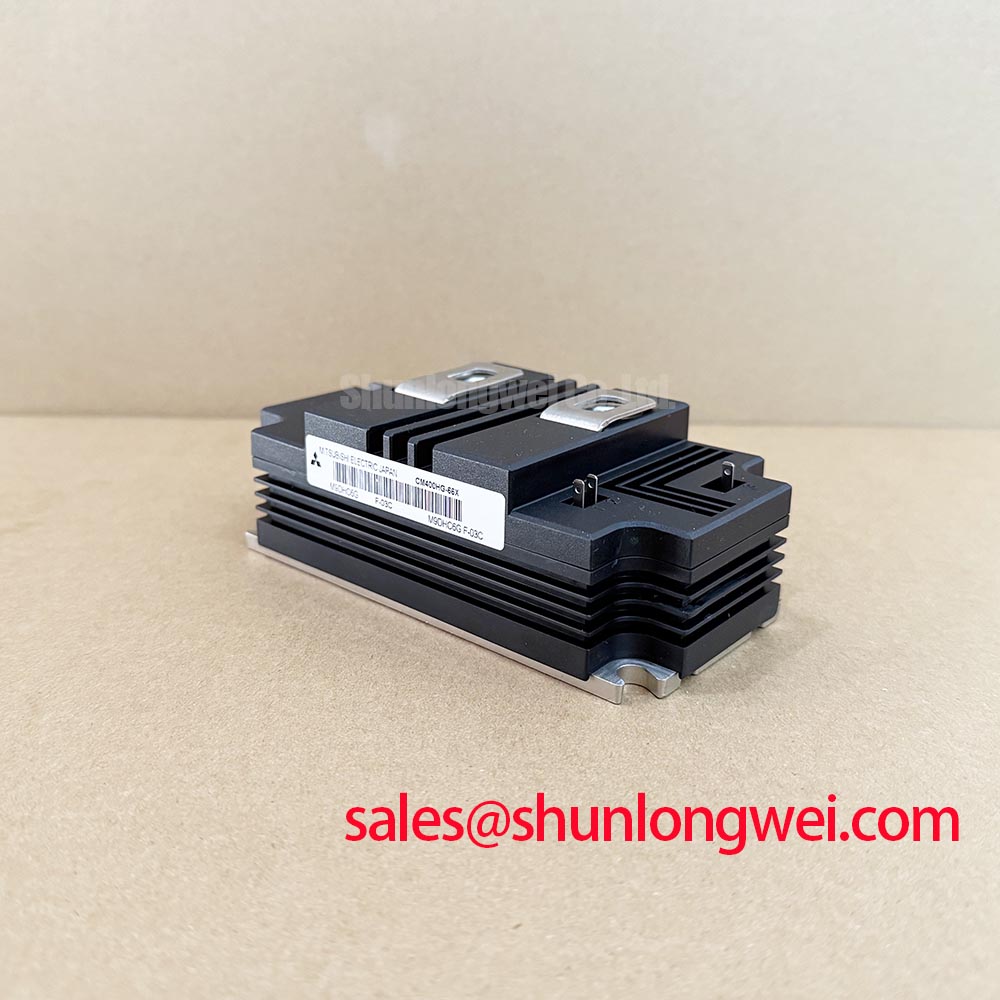
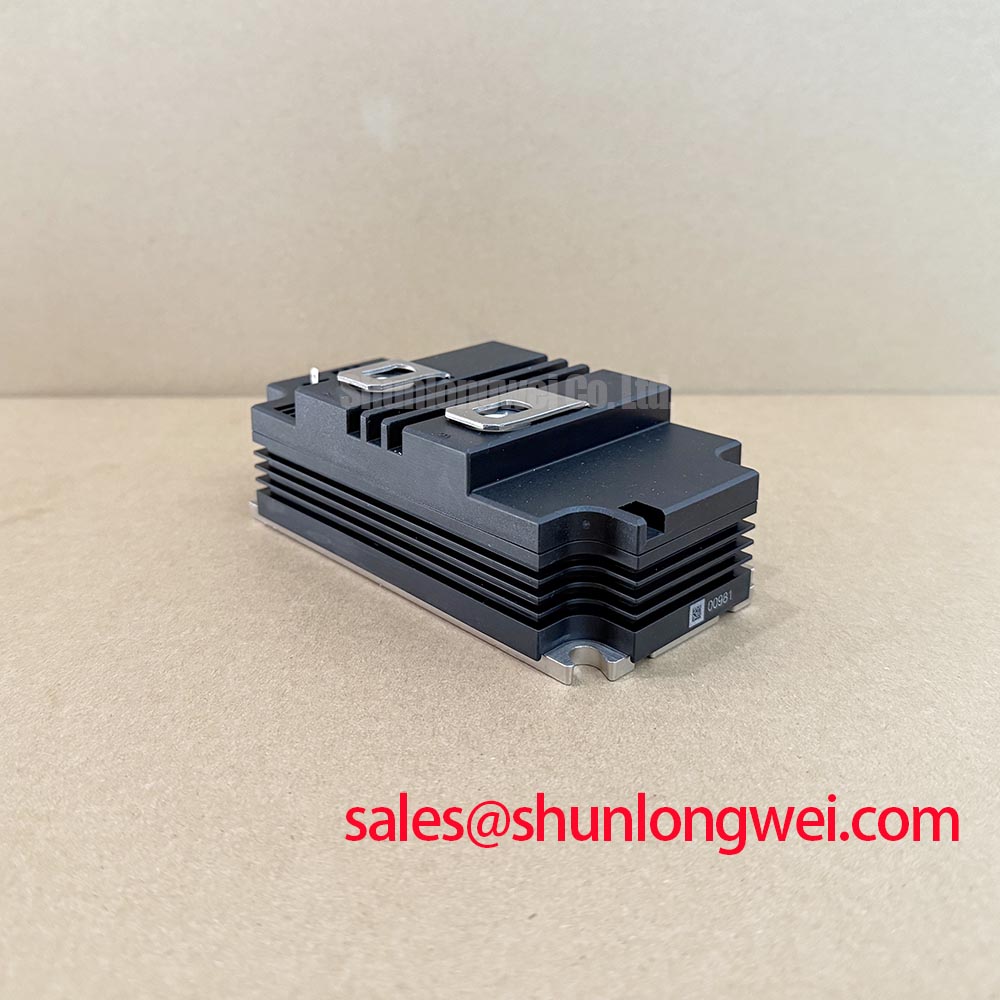
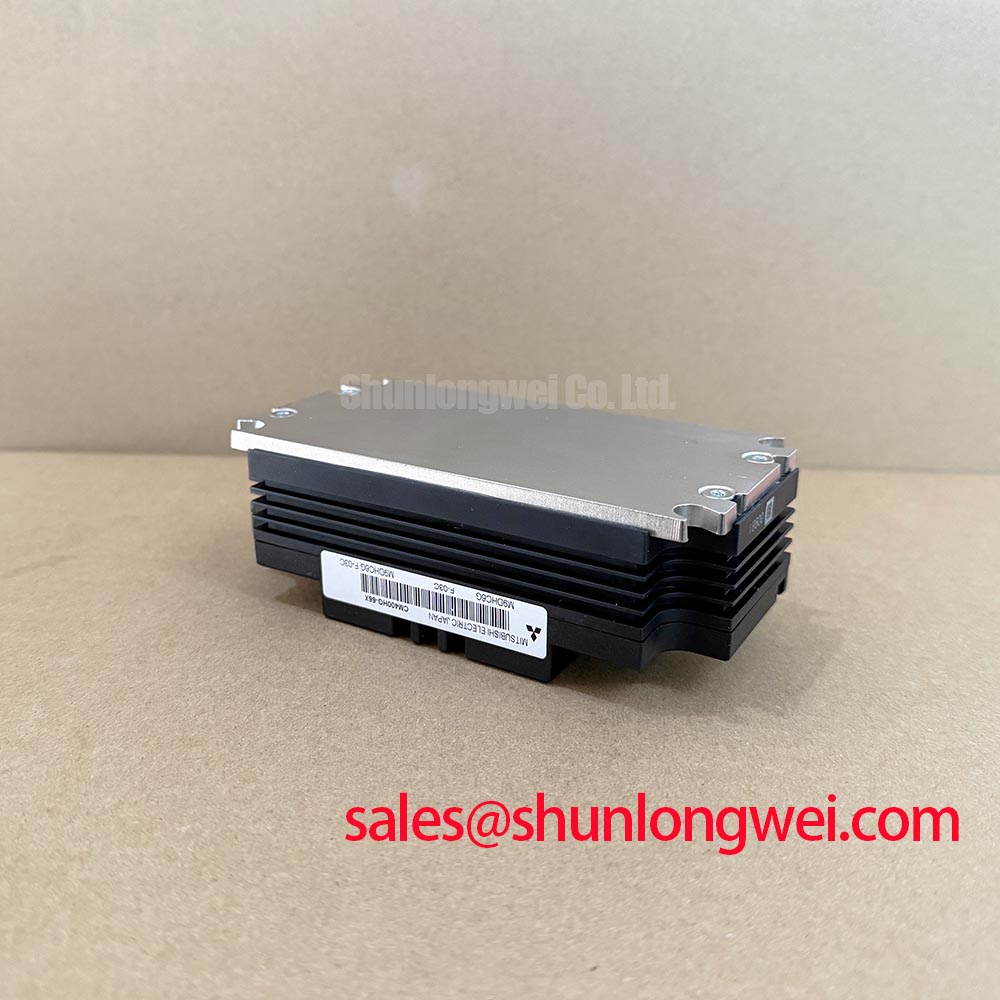
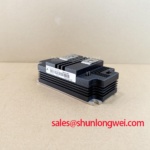
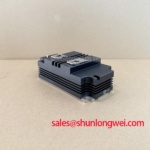
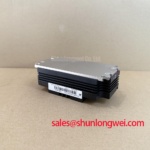
The CM400HG-66X is a Mitsubishi Electric IGBT module with an official 3300V collector emitter voltage rating, 400A continuous collector current rating, and 10.2kVrms isolation voltage. Its official construction information includes an AlSiC baseplate and an integrated RFC diode. These are product identity facts, not system level performance guarantees. For incoming inspection, treat the rating label, terminal geometry, mounting interface, and isolation requirements as separate checks rather than assuming that one visible condition proves every electrical characteristic.
On an unpowered unit removed from surrounding parallel paths, a diode mode comparison can help establish a cold reference between the main power terminals. The reading must be interpreted against the module topology and the original equipment documentation, because external snubbers, bus capacitors, driver boards, or parallel semiconductor paths can alter an in circuit result. A low resistance or unexpected diode direction can indicate several possible conditions, so compare with a known sound phase location where the equipment architecture permits it.
💡 Bench Tip: Use ESD controlled handling and record cold state meter observations before reconnecting any gate drive cable, so later waveform findings can be compared with a documented baseline.
| Product attribute | Official specification or construction information | Integration relevance |
|---|---|---|
| Collector emitter voltage | 3300V VCES | Defines the official blocking voltage class of the module. |
| Continuous collector current | 400A IC | Establishes the published continuous current rating; operating current remains dependent on the assembled thermal system. |
| Isolation voltage | 10.2kVrms Viso | Supports assessment of the module isolation boundary within the complete converter design. |
| Baseplate | AlSiC | Relevant to heatsink interface review and thermal mechanical assembly. |
| Freewheeling function | Integrated RFC diode | Relevant when checking commutation behavior and reverse recovery related switching observations. |
Transient Dynamics & Electrical Design: Turn Off di/dt Induced Vpeak Clamping on CM400HG-66X
At the first controlled power up, measure collector emitter voltage and collector current with probes and bandwidth suitable for the switching event. The practical question is whether the observed turn off peak remains inside the system’s validated voltage margin relative to the 3300V VCES official specification. The electrical relationship is direct: peak voltage rises from DC link voltage by the stray loop inductance multiplied by the current change rate. That relationship is an engineering calculation principle, while the acceptable peak is determined by the specific converter, protection response, measurement method, and validation plan.
Design Consideration: keep the DC link commutation path compact and symmetric so that outgoing and returning current paths remain closely coupled. Planar busbar geometry and local DC link capacitance are commonly evaluated because they can reduce parasitic loop inductance and therefore reduce turn off overshoot. The correct capacitance, physical arrangement, and snubber network cannot be assigned from this module’s headline ratings alone. System engineers should verify the resulting peak voltage on the real bus assembly during switching tests, including the expected operating current and temperature range.
If a voltage trace rings sharply, do not assign the behavior to the IGBT immediately. Confirm probe grounding method, probe placement, current probe orientation, DC link capacitor connection integrity, and the physical return path. A repeatable ringing frequency that changes after busbar or snubber changes can point toward loop parasitics; a change that follows the gate command can instead justify investigation of driver routing and gate damping. The integrated RFC diode is relevant during freewheeling commutation, but its presence does not remove the need to inspect the complete commutation loop.
For a potential multi megawatt offshore or onshore wind turbine full scale converter evaluation, the module’s 3300V voltage class and 400A current rating provide a factual starting point only. The converter topology, DC link, cooling system, and protection architecture decide whether the installed operating envelope is appropriate.
Benchtop Waveform Tuning: Differential Gate-Emitter Loop Routing on CM400HG-66X
Gate drive inspection should start at the device terminals, not only at the controller output. Observe the gate command against the driver reference and compare it with collector emitter behavior over repeated switching events. A gate waveform that appears stable at the driver connector can be materially different at the module when the high current emitter path shares impedance with the gate return. This is a Design Consideration for the assembled power stage, rather than an official claim about the internal terminal construction of the CM400HG-66X.
Route the gate command and its intended return as a closely coupled differential path, separated from the main high current emitter return where the original converter architecture provides that interface. The purpose is to limit common impedance coupling that can disturb the effective gate-emitter voltage during rapid current transitions. Verify with a differential measurement method appropriate to the bench setup. Oscillation, false turn on indications, or unstable turn off waveforms may arise from several contributors, including probe technique, driver output impedance, cable routing, layout coupling, or protection interaction.
Where phase angle control and line frequency ripple are part of the converter’s operating behavior, evaluate switching waveforms across representative electrical angles rather than relying on one favorable capture. DC link ripple can move the instantaneous voltage condition at the switching edge. RC snubber networks can suppress selected transient behavior, but their values and losses are system determined and should be validated with the intended bus voltage, switching pattern, thermal conditions, and fault handling strategy.
When a repair assessment leads to comparison with a lower current, different voltage class module such as the CM50DY-28H, compare official voltage, current, package, terminal layout, diode behavior, driver requirements, and cooling interface line by line. A part number relationship or broad category similarity is not enough to establish interchangeability.
CM400HG-66X Thermal Electrical Optimization: Reinforced Insulation Barrier Integrity and Practical Tuning
The published 10.2kVrms isolation voltage is the official isolation rating for this module. It should be reviewed alongside the converter’s required insulation coordination, enclosure arrangement, contamination control, creepage and clearance design, driver isolation, and test procedure. It does not by itself certify the completed power converter to any system safety or EMC standard.
Before installation, inspect the baseplate contact surface and the mating heatsink for contamination, raised damage, old compound residue, or distortion that could prevent even contact. The AlSiC baseplate is official product construction information. Actual thermal performance remains a property of the entire clamp load, interface material, heatsink flatness, airflow or liquid cooling arrangement, switching losses, and operating cycle. Use the original equipment documentation for mounting hardware and torque requirements rather than applying a generic number as if it were a manufacturer specification for this model.
⚠️ Field Alert: Do not loosen or reconnect gate drive wiring until stored energy is discharged and the equipment’s lockout procedure confirms a safe state.
Engineering Recommendation: correlate case temperature observations with switching waveforms and converter load conditions before attributing a thermal concern to the module. A rising thermal signature can involve imperfect contact at the heatsink, insufficient cooling performance, changed switching behavior, load duty changes, or a control issue. For pulsed operation, transient thermal impedance information from the applicable manufacturer documentation should be used with the real pulse profile to assess junction temperature margin; a steady case measurement alone cannot establish junction temperature.
Common mode disturbance should also be checked at the assembled driver isolation barrier. The required immunity is determined by the converter’s switching waveform and driver design. Rather than asserting a universal common mode transient threshold, verify that the driver does not produce unintended gate pulses under measured converter transients. The Mitsubishi Electric power module and diode module information can provide useful family level context when reviewing diode related commutation requirements, while the applicable CM400HG-66X documentation remains the authority for model specific limits.
Assembly Integrity & Layout Architecture: DC Bus Operating Voltage Headroom Derating for CM400HG-66X
Confirm that the installed DC bus operating range, including ripple, transient peaks, regeneration conditions, and fault response, is assessed against the module’s official 3300V VCES rating. Operating voltage headroom is a system design decision. Designers should establish it through measured switching peaks, DC link behavior, protection timing, environmental requirements, and the equipment manufacturer’s validation criteria, rather than through a fixed percentage rule.
High altitude operation and cosmic ray related single event effects require careful treatment because risk depends on device technology, voltage stress, altitude, mission profile, temperature, and site conditions. No failure in time figure, lifetime prediction, or single event burnout rate should be inferred from the available CM400HG-66X headline specifications. For installations where altitude is a defined operating condition, use applicable manufacturer qualification material and the equipment level reliability assessment. The Field Engineer’s Handbook is a useful reference for structuring measured failure analysis and reliability checks without replacing product specific documentation.
During final assembly, verify terminal contact surfaces, fastener sequence, conductor support, busbar alignment, and insulation spacing against the original converter drawings. Then repeat cold state checks before applying limited energy commissioning power. If post assembly measurements differ from the recorded baseline, isolate whether the difference is associated with the module, bus structure, snubber connection, driver board, or another parallel circuit path. This evidence based sequence gives repair engineers a defensible basis for deciding what requires further measurement.