

Content last revised on October 13, 2026
CM150MXUD-24T Incoming Inspection and Commissioning
- Disconnect the DC supply, verify discharge, and identify each power and control terminal from the circuit drawing before attaching test leads.
- Record cold-state diode-mode readings in both polarities with the gate held at emitter potential, comparing equivalent paths under the same test conditions.
- Inspect terminal seating, busbar alignment, mounting surfaces, and the cooling interface before tightening any connection.
- Match the planned electrical stress to the 1200 V voltage rating and 150 A current rating of the CM150MXUD-24T.
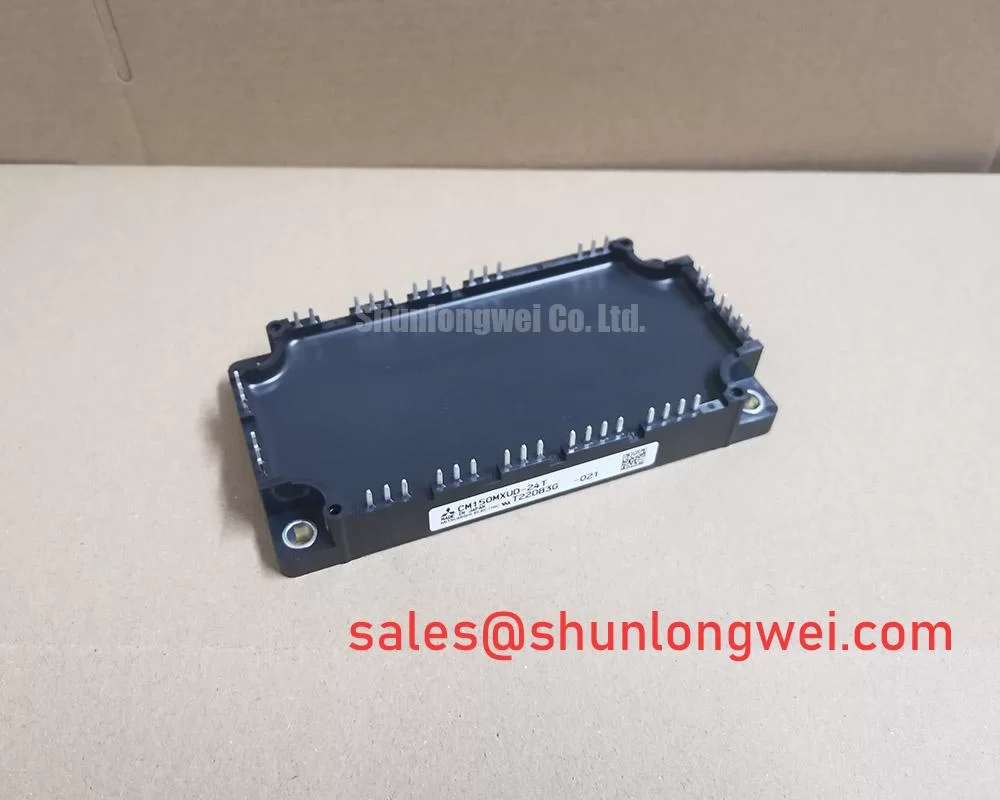
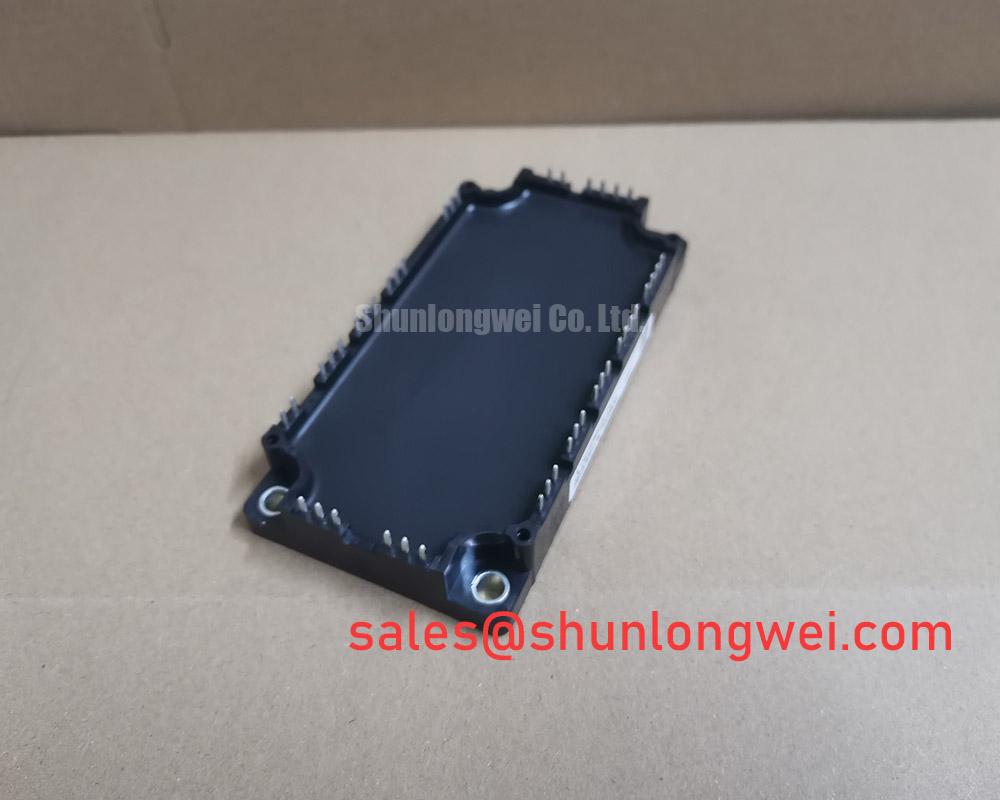
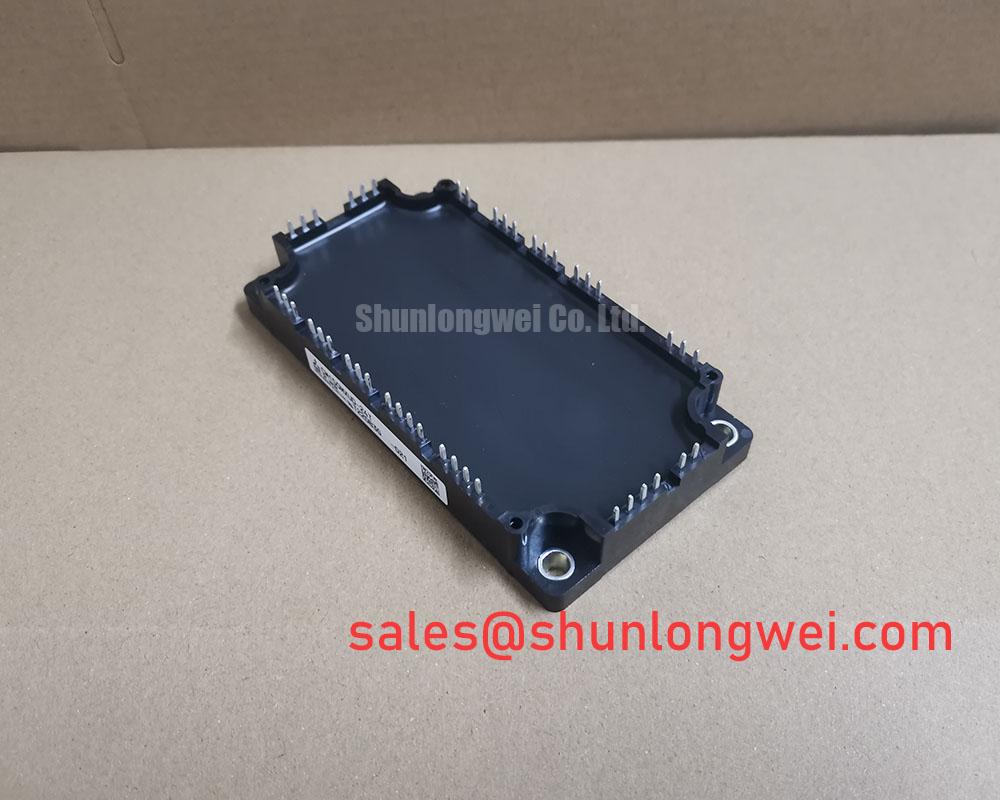
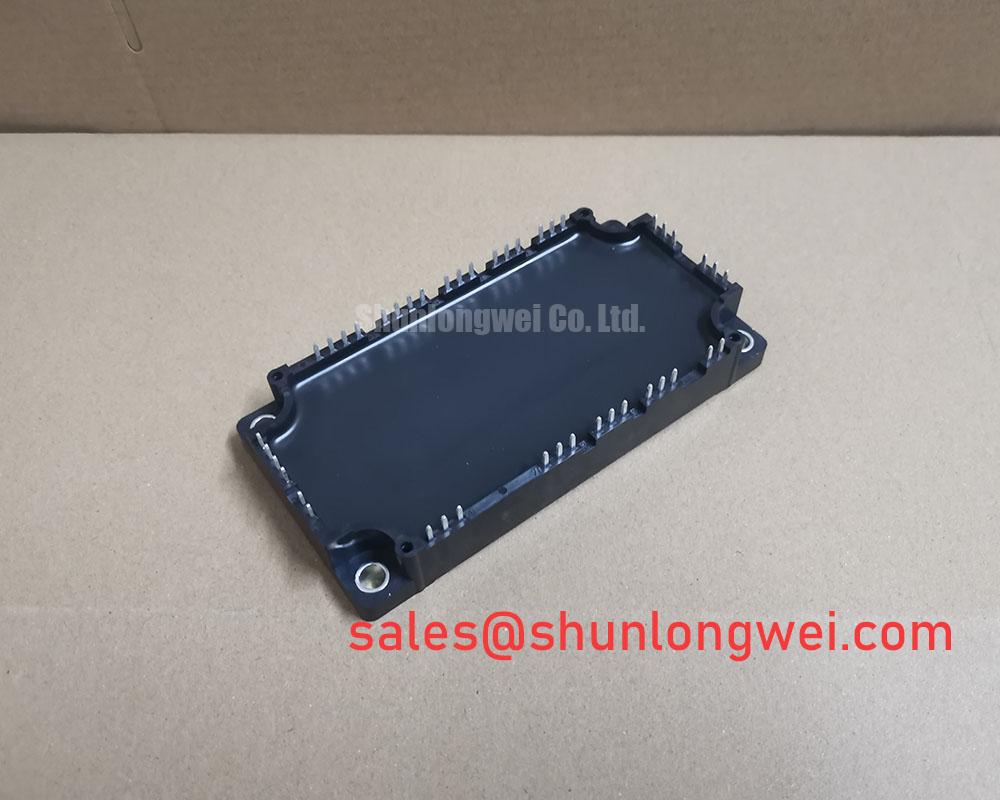
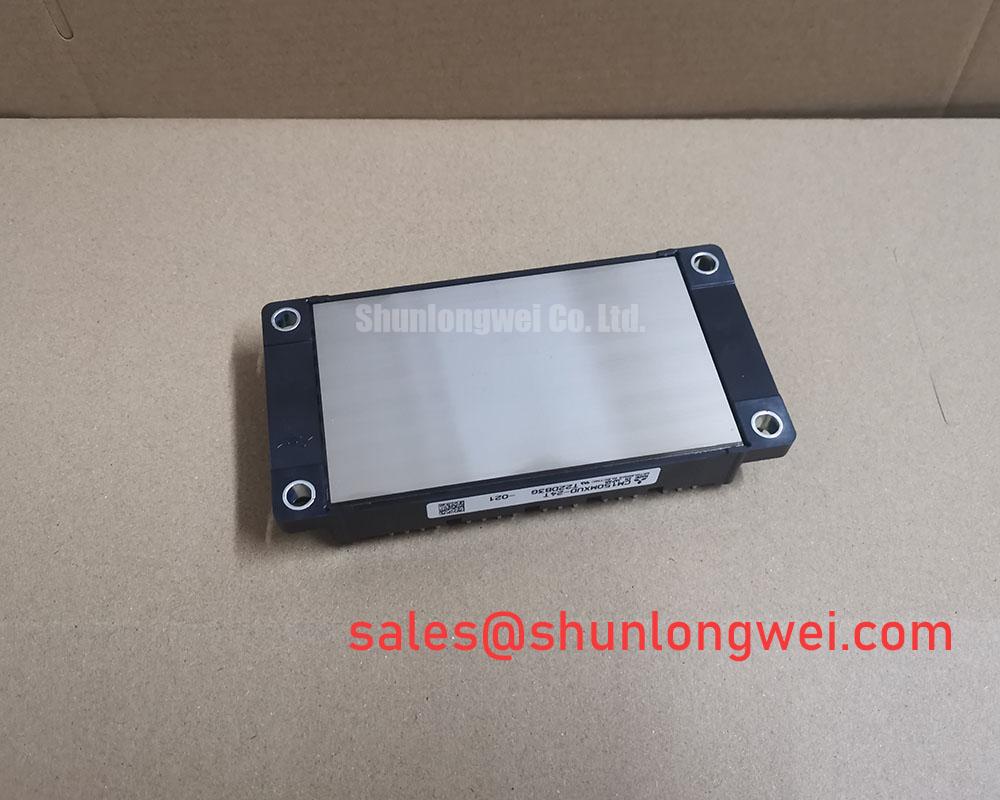
The Mitsubishi Electric CM150MXUD-24T is an IGBT module supplied in a Module package. Incoming inspection should establish a repeatable electrical baseline before the unit enters an energized assembly. Separate semiconductor-path measurements from bolted-joint measurements: a multimeter can help compare diode conduction paths, but it cannot resolve the contact resistance of a high-current terminal connection.
| Product characteristic | Value | Parameter identity |
|---|---|---|
| Model | CM150MXUD-24T | Product identification |
| Manufacturer | Mitsubishi Electric | Manufacturer identification |
| Rated voltage | 1200 V | Official Specification |
| Rated current | 150 A | Official Specification |
| Package | Module | Official Specification |
| Terminal map, rating conditions, gate limits, thermal curves, mounting requirements, and isolation test conditions | Consult Datasheet | Model-specific integration references |
💡 Bench Tip: Use ESD-controlled handling and keep the gate referenced to its emitter during cold-state comparisons so accumulated gate charge does not distort the measurement.
Field Diagnostics & Commissioning: Preventing Terminal Overheating in CM150MXUD-24T Topologies
Measure each assembled power-terminal joint with a four-wire micro-ohmmeter, placing the sense probes across the actual contact interface rather than across an arbitrary length of busbar. As a Design Consideration, the acceptance criterion belongs to the equipment’s joint design and inspection procedure; it should not be presented as an inherent resistance specification of the CM150MXUD-24T. Record probe positions, conductor temperature, and assembly condition so subsequent readings remain comparable.
A rising joint resistance deserves inspection of contact surfaces, fastener condition, conductor flatness, and mechanical loading. Busbars should meet the terminals without using the fasteners to pull misaligned conductors into position. Follow the applicable assembly drawing for tightening sequence and torque, and retain the prescribed hardware arrangement. Uneven loading can change the contact interface even when the fastener appears secure.
Thermographic inspection becomes useful once the equipment reaches a controlled, stable operating condition. Compare equivalent terminals carrying comparable current, and account for surface emissivity, reflections, and access angle. A localized warm region may involve the joint, conductor geometry, nearby heat sources, or unequal current distribution. Correlate the image with electrical measurements before attributing it to the module itself.
Cold-state diode testing serves a different purpose. Identify the relevant collector and emitter nodes from the terminal drawing, then compare forward and reverse readings without allowing the gate to float. The meter’s test current and compliance voltage affect the displayed result, so an isolated reading is not a substitute for the manufacturer’s diode characteristic. Parallel circuitry, snubbers, and connected driver boards can also alter the reading; isolate the measurement path where the equipment service procedure permits.
For insulation checks, distinguish collector-emitter blocking voltage from terminal-to-baseplate isolation. The 1200 V rating is not a permissible hipot-test setting. As an Engineering Recommendation, apply only the documented isolation-test configuration, including terminal grouping and test duration. Inspect creepage paths and air clearances after assembly because conductor placement, contamination, and nearby grounded metal can change the equipment-level insulation arrangement.
CM150MXUD-24T Operational Boundaries: Evaluating Turn-Off di/dt-Induced V_peak Clamping and Limits
Capture collector-emitter voltage at turn-off with a suitably rated differential measurement arrangement, keeping the measurement loop short enough to avoid mistaking probe pickup for device overshoot. The Engineering Calculation relationship V_peak = V_DC + L_sigma × |di/dt| describes the inductive contribution to the peak voltage; it is a simplified circuit estimate, not a complete prediction of ringing or clamp behavior.
As a Design Consideration, minimize commutation-loop inductance by keeping outgoing and returning current paths closely coupled and avoiding unnecessary conductor excursions. Broad, overlapping busbar paths can reduce loop area, but the final geometry must also satisfy insulation, mechanical access, and thermal requirements. Evaluate the measured peak against the module’s voltage boundary across the intended DC-link and load conditions rather than assigning a universal busbar-inductance target.
A snubber should be assessed from the actual transient energy, repetitive heating, capacitor pulse capability, and interaction with the switching loop. Adding capacitance without examining its discharge path can move stress into another component or increase switching loss. Where a clamp is used, include its connection inductance and response in the assessment. Component values and clamp thresholds remain system-dependent decisions supported by switching measurements.
Gate-loop damping requires measurements at the module terminals, not only at the driver output. Route the gate and its return together, separate them from high-current commutation conductors, and examine ringing during both transitions. If the terminal drawing identifies a dedicated auxiliary emitter connection, use that reference as specified rather than assuming any nearby terminal provides a Kelvin return. Gate resistance and any negative turn-off bias should remain within the documented device and driver limits.
For a bootstrap-powered high-side driver, the supply assessment should include gate charge, driver consumption, leakage, maximum on-time, and the opportunity to recharge. Check supply droop and undervoltage behavior through the intended operating sequence. A stable no-load waveform does not establish adequate high-side supply behavior during sustained operation.
In the wider power chain, engineers comparing device roles can review CM2400HC-34N alongside the relevant converter schematic. That comparison does not establish it as a rectifier, a companion stage, or an interchangeable device for this module. Determine each component’s circuit function from its own topology and electrical characteristics before integrating it into a shared DC-link architecture.
CM150MXUD-24T Circuit Protection & Reliability: Calibrating Junction-to-Case Thermal Network Simulation
Build the junction-to-case thermal model from the manufacturer’s transient thermal-impedance data, then compare its response with the intended load-pulse sequence. As a Design Consideration, a multi-RC approximation should reproduce the relevant portions of that response rather than merely fit a single steady-state point. Keep the model convention consistent when connecting it to the case, interface, and heatsink network.
Populate the loss input with conduction and switching losses at the relevant current, gate-drive conditions, and temperature. A pulse can end before the case sensor shows a substantial change, while heat already accumulates within the semiconductor. Repeated pulses also carry thermal history into the next event. Evaluate the resulting junction-temperature trajectory against the documented junction limit, including the hottest expected starting condition and the actual repetition pattern.
The mounting interface deserves an independent check. Inspect the heatsink surface, module seating, and thermal-interface application against the assembly requirements. Keep contamination and trapped debris out of the contact region, and avoid treating additional interface material as a remedy for poor flatness. Case-temperature readings should use a defined location and attachment method so comparisons between assemblies reflect thermal behavior rather than sensor placement.
Protection timing belongs in the same assessment. Overcurrent detection, driver response, and switch turn-off occur over a finite interval, during which the device remains electrically and thermally stressed. Evaluate that interval against the applicable device operating limits and the protection circuit’s measured behavior. A thermal model cannot establish short-circuit capability or validate protection timing by itself.
The manufacturer’s Mitsubishi Electric Power Semiconductors & High-Power Modules resources provide the authoritative context for device documentation and application guidance. For topology-level background, Peak Efficiency in Solar and Energy Storage can help frame switching-state and loss-distribution questions. Neither a topology discussion nor a fitted thermal network establishes a service-life guarantee for the CM150MXUD-24T.
Preventing Spurious Faults: Derating Guidelines and Mismatched Parameter Guidelines for CM150MXUD-24T
Compare gate-emitter waveforms at each relevant switch position when a protection trip appears without a corresponding sustained overload. As an Engineering Recommendation, investigate driver-reference movement, gate ringing, supply disturbance, and protection-input pickup separately. A common-mode transient can affect several measurements simultaneously, so correlate the fault indication with independently measured current and switching voltage.
For parallel operation, static current sharing depends on the actual on-state characteristics at the intended current and temperature. A positive temperature coefficient can assist sharing only where the device characteristics demonstrate that behavior; it should not be assumed across the entire operating range. Compare conduction characteristics under matched conditions, then examine dynamic sharing with equivalent gate paths, power-path impedances, and cooling conditions.
Keep protection wiring away from the switching-current loop and reference it to the intended driver return. Symmetrical routing helps reduce differences between parallel branches, but symmetry alone does not compensate for unmatched switching behavior. If negative gate bias is part of the approved driver arrangement, assess the measured gate excursion against the device limits rather than increasing bias to mask unexplained noise.
When evaluating the module for a commercial string inverter or micro-grid energy-storage converter, compare the switching topology, terminal arrangement, cooling assembly, and protection interface with the equipment requirements. The related CM35MXA-24S provides a separate product reference for selection review, not an automatic replacement for the CM150MXUD-24T. Matching a voltage class does not establish compatible current capability, mechanical fit, or gate-drive behavior.
Close a nuisance-trip investigation by repeating the affected operating transition after the identified correction, retaining synchronized current, gate-voltage, DC-link, and fault-signal records. Confirm that the correction improves the measured disturbance without slowing protection beyond the intended response or introducing additional switching stress. Preserve those traces with the incoming cold-state baseline so later maintenance can distinguish a changed assembly condition from the original commissioning behavior.