Content last revised on September 10, 2026
Mitsubishi Electric CM30MD1-12H: High-Density Power Integration for Low-Power Motor Control
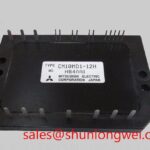
The CM30MD1-12H, a high-performance Power Integrated Module (PIM) from Mitsubishi Electric, represents a sophisticated solution for engineers seeking to minimize system footprint while maximizing operational reliability. This module integrates a 3-phase converter, a brake circuit, and a 3-phase inverter into a single compact package, specifically designed for low-power motor drive applications. By centralizing the core power conversion stages, the CM30MD1-12H significantly reduces stray inductance and simplifies the complex gate drive layout required in discrete designs. For engineers prioritizing thermal margin in compact Variable Frequency Drive (VFD) designs, this 600V module serves as an optimal foundation for long-term system stability.
The primary benefit of its integrated PIM structure is the drastic reduction in assembly complexity and parasitic inductance. By eliminating multiple discrete interconnections, the CM30MD1-12H enhances signal integrity across the power stage.
Application Scenarios & Value
Achieving Integrated Efficiency in Compact Robotic and HVAC Drives
In the realm of industrial automation, specifically within robotic servo drives and specialized HVAC systems, board space is a premium commodity. The CM30MD1-12H addresses the challenge of high-density power stage design by providing a complete Converter-Brake-Inverter (CIB) topology. Consider an engineer designing a Servo Drive for a robotic arm: the 30A current rating is perfectly matched for the high-torque, low-speed demands of precision positioning, while the 600V Vces rating provides the necessary overhead for standard 200-240V AC line rectified buses.
The integration of the Brake circuit is particularly valuable in applications requiring frequent deceleration. In a typical conveyor system, where motor inertia can lead to DC bus overvoltage during braking, the onboard brake transistor of the CM30MD1-12H allows for immediate energy dissipation through an external resistor, preventing catastrophic failure without the need for additional external semiconductors. For systems requiring even higher power densities, the related PM100CSD120 offers an integrated approach at higher current levels.
Furthermore, the CM30MD1-12H is vital for modern efficiency standards. By utilizing Mitsubishi Electric's optimized chip technology, the module maintains low Vce(sat) and reduced switching losses, supporting the global push toward energy-efficient industrial machinery. For more on how these components integrate into broader systems, see our guide on IGBT Modules as the Backbone of High-Efficiency Systems.
Key Parameter Overview
Precision Specifications for Enhanced System-Level Reliability
| Parameter Category | Specification Detail | Value / Rating |
|---|---|---|
| Electrical Ratings | Collector-Emitter Voltage (Vces) | 600V |
| Electrical Ratings | Collector Current (Ic) | 30A |
| Integration Topology | Configuration | 3-Phase Converter + Brake + 3-Phase Inverter |
| Thermal Performance | Junction-to-Case Resistance (Rth(j-c)) | Optimized for high-speed dissipation |
| Mechanical Data | Package Type | Compact Integrated PIM |
Download the CM30MD1-12H datasheet for detailed specifications and performance curves.
Technical & Design Deep Dive
The Engineering Behind the CIB Topology and Thermal Path Optimization
The technical sophistication of the CM30MD1-12H lies in its internal layout and Thermal Management. Unlike discrete solutions where heat is dispersed across multiple points on a PCB, the PIM architecture concentrates heat on a specialized ceramic substrate (typically Alumina or AlN). This creates a "thermal highway" that facilitates rapid heat transfer to the heatsink. Analogous to a high-performance radiator in a vehicle, the module’s baseplate must maintain a uniform pressure contact to prevent localized hotspots that lead to premature thermal fatigue.
A critical engineering consideration for the CM30MD1-12H is the Switching Loss optimization. In high-frequency PWM (Pulse Width Modulation) applications, the energy dissipated during each turn-on and turn-off cycle accumulates quickly. Mitsubishi has tuned the internal IGBT and Free-Wheeling Diode (FWD) pairs to minimize the "tail current" effect. This ensures that even at switching frequencies up to 15-20 kHz, the CM30MD1-12H operates within its Safe Operating Area (SOA) without requiring excessive cooling. This focus on internal efficiency makes it a linchpin in robotic servo drives where precision and efficiency must coexist.
Industry Insights & Strategic Advantage
Navigating Global Efficiency Trends with Integrated Power Solutions
As global regulations such as the EU’s Ecodesign Directive and the US Department of Energy standards become more stringent, the shift toward highly integrated modules like the CM30MD1-12H is accelerating. Strategically, moving from discrete IGBTs to a Mitsubishi Electric PIM allows manufacturers to reduce their "Total Cost of Ownership" (TCO). While the upfront component cost may be higher, the savings in assembly time, reduced failure rates (RMA), and lower inventory overhead provide a clear competitive advantage in a volatile supply chain environment.
The CM30MD1-12H aligns with the industry's move toward "Green Automation." By enabling more efficient power conversion in small motors—which account for a vast percentage of industrial energy consumption—this module plays a quiet but critical role in reducing the carbon footprint of the manufacturing floor. Engineers can explore the broader implications of these technologies in our analysis of the 2025-2026 global IGBT market outlook.
FAQ
Addressing Key Design and Reliability Inquiries
How does the integrated CIB topology of the CM30MD1-12H impact the selection of the external gate driver?
The integration of the CM30MD1-12H simplifies Gate Drive requirements by standardizing the gate-emitter characteristics across all inverter arms. However, due to the high density of the module, designers should prioritize a driver with robust Miller Clamp functionality and isolated power supplies to prevent crosstalk between the converter and inverter stages, especially under high dv/dt conditions.
What is the primary benefit of the internal brake circuit for high-inertia motor loads?
The internal brake circuit in the CM30MD1-12H allows the system to handle Regenerative Braking energy internally. By switching the brake IGBT, the DC bus voltage is regulated during motor deceleration, diverting excess energy to an external resistor. This prevents bus overvoltage trips and protects the 600V rated capacitors and semiconductors from stress-induced failure.
For procurement professionals and design engineers, the CM30MD1-12H stands as a testament to Mitsubishi Electric's commitment to reliability and integration. By leveraging this module, teams can bypass the pitfalls of discrete design and accelerate their time-to-market for the next generation of industrial drives. To understand the fundamental physics behind these switches, refer to our deep dive on How an IGBT Works.