Content last revised on September 26, 2026
CM400HA2-34KA Circuit Protection & Reliability: Assessing Symmetrical Busbar Geometry
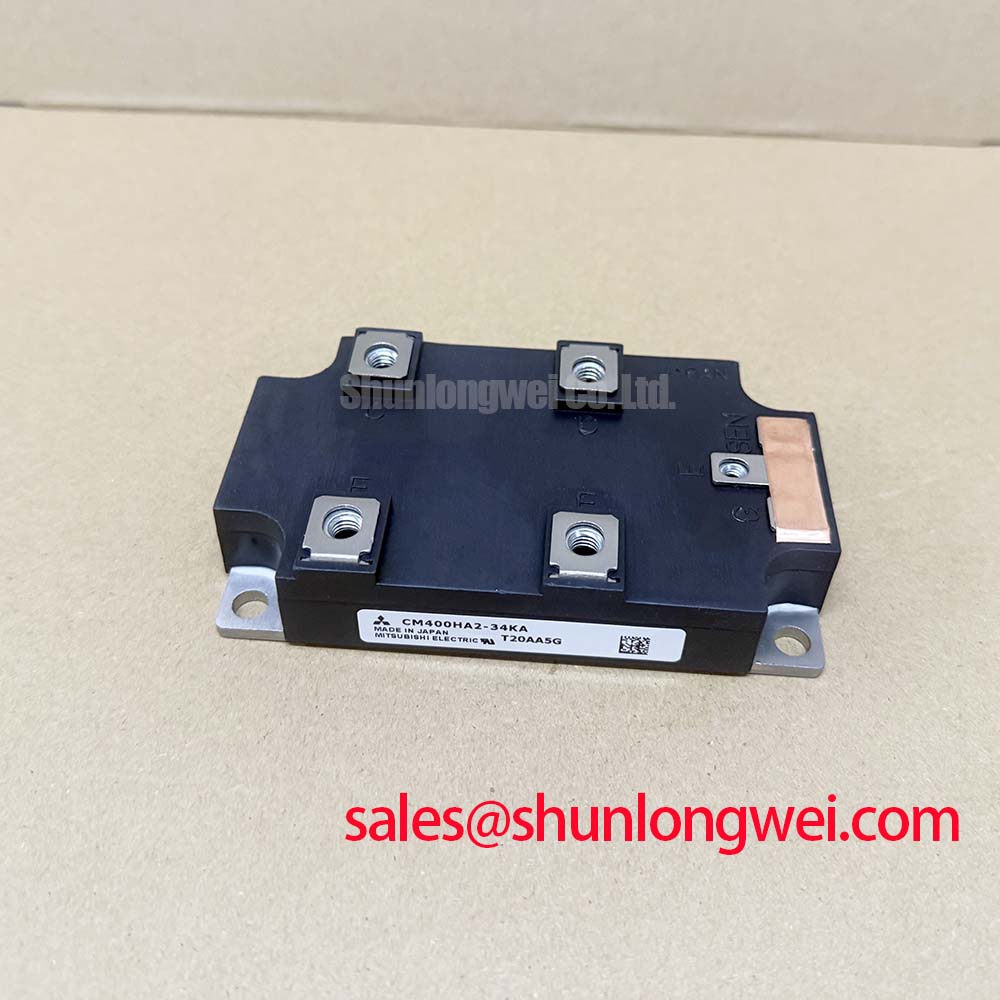
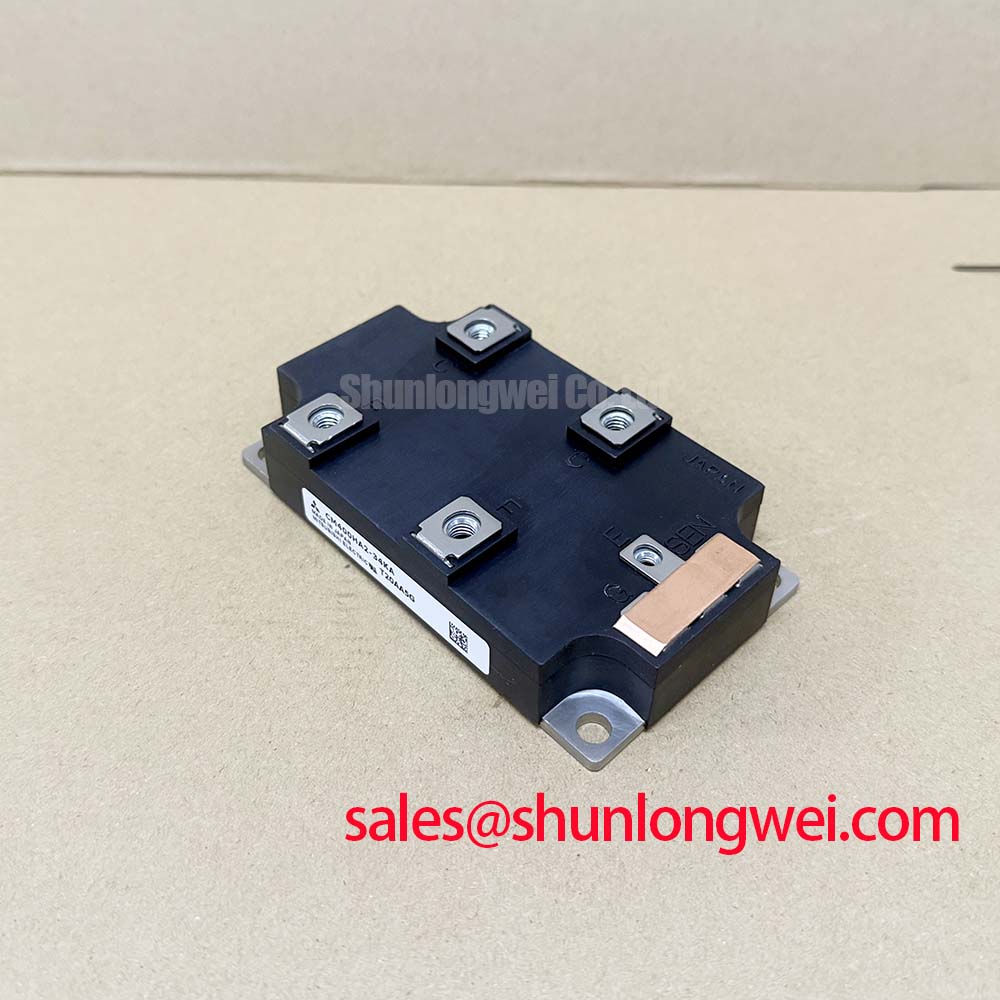
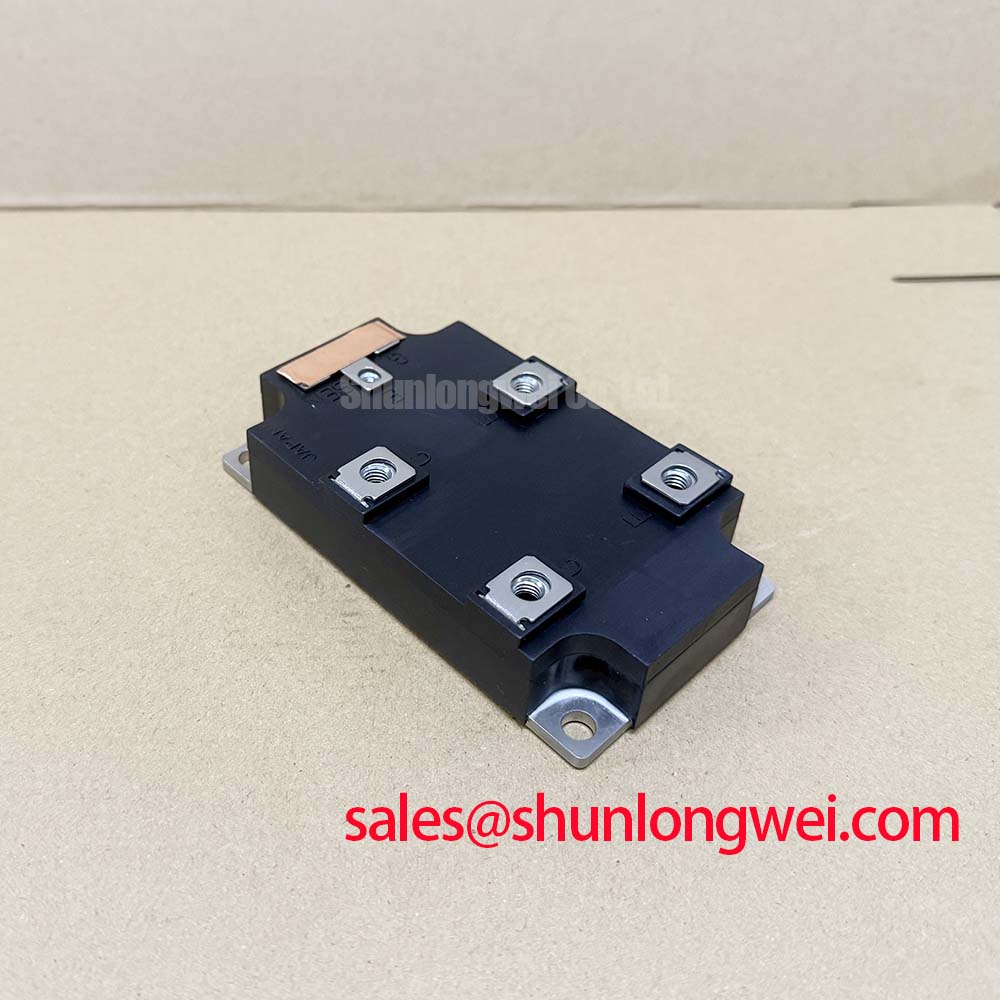
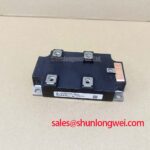
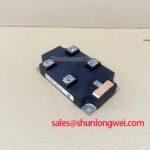
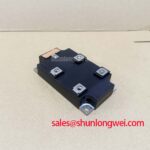
Before disconnecting a CM400HA2-34KA, isolate the equipment, verify that the DC link has discharged, and compare the module marking with the converter’s approved parts list. Record terminal positions, gate wiring, busbar alignment, and the condition of the heatsink interface before disturbing the assembly. These observations help distinguish a module replacement task from an unresolved cooling, connection, or gate drive problem.
The Mitsubishi Electric CM400HA2-34KA IGBT module has an official collector-emitter voltage rating of 1700 V and a DC collector current rating of 400 A at a case temperature of 25°C. These are device ratings with defined conditions, not a guarantee of continuous output current in an assembled converter. Replacement assessment should also cover the original terminal drawing, mounting dimensions, gate drive requirements, and cooling arrangement.
The following official specifications establish the electrical boundaries for this module. Keep their test conditions attached to the values when preparing maintenance records or purchasing comparisons; a rating copied without its temperature or gate voltage condition can lead to an incorrect compatibility assessment.
| Parameter | Symbol | Test conditions | Official Specification |
|---|---|---|---|
| Collector-emitter voltage | VCES | Rating | 1700 V |
| Gate-emitter voltage | VGES | Rating | ±20 V |
| DC collector current | IC | Case temperature 25°C | 400 A |
| Collector-emitter saturation voltage | VCE(sat) | Collector current 400 A; gate-emitter voltage 15 V | 2.7 V maximum |
| Collector power dissipation | PC | Case temperature 25°C | 2500 W |
As a Design Consideration, inspect the complete commutation path rather than judging busbar quality by appearance alone. Loose joints, altered conductor spacing, and displaced local capacitors can change parasitic inductance. An Engineering Calculation expresses the first-order turn-off relationship as Vpeak = VDC + Lσ × |di/dt|: the DC-link voltage and inductive contribution together determine the estimated collector voltage peak. Actual switching measurements remain necessary because ringing and the measurement arrangement influence the observed waveform.
Symmetrical, closely coupled outgoing and return conductors can help reduce loop inductance, subject to insulation and mechanical constraints. Snubber capacitance should be assessed against measured switching behavior, capacitor pulse capability, and dissipation. Neither an inductance target nor a snubber value follows directly from the module’s voltage rating. Verify collector overshoot across the equipment’s intended operating conditions before accepting a modified assembly.
For maintenance purchasing, evaluate another part against the original circuit requirements rather than its current rating alone. The 2MBI400TB-060-01 is a separate comparison candidate, not an established interchangeable replacement for CM400HA2-34KA. Confirm blocking voltage, topology, terminal layout, switching characteristics, and mechanical fit before making any substitution decision.
CM400HA2-34KA Thermal-Electrical Optimization: Busbar and Gate Loop Balance
During a stopped-equipment inspection, check whether power terminals sit naturally against their mating conductors. A busbar pulled into position by its fasteners can impose mechanical stress and produce uneven contact. As an Engineering Recommendation, follow the equipment and module mounting instructions, use calibrated tightening tools, and inspect contact surfaces before reassembly. Do not infer tightening torque from the module current rating or apparent fastener size.
Parallel operation requires separate checks for steady-state current sharing and switching balance. A positive temperature coefficient of saturation voltage can assist static sharing under appropriate operating conditions, but the supplied CM400HA2-34KA specifications do not establish that behavior over its operating range. Designers should consult the relevant characteristic curves before relying on temperature-driven balancing. The single maximum saturation-voltage value does not establish matched behavior between modules.
As a Design Consideration, compare branch conductor geometry, cooling conditions, and gate loop routing when parallel devices are present. Unequal gate paths can produce different switching transitions even when steady-state currents appear similar. Gate resistor selection and driver capability should follow measured behavior and manufacturer guidance, not a presumed universal setting. The ±20 V gate-emitter rating is an electrical limit, not a recommended drive amplitude.
If the existing driver uses bootstrap power, its energy budget should account for gate charge, driver consumption, leakage, and the longest interval without recharge. Establish those quantities from the selected driver and module documentation before sizing the supply. For a converter subsystem containing other switching stages, the CM100DY-12E should be assessed according to its own ratings and circuit role; it should not be treated as a rectifier or a companion device solely because it appears in the same assembly.
Mitsubishi Electric’s CSTBT technology and motion-control information provides broader manufacturer context, but does not establish a particular internal chip structure or current-sharing characteristic for this exact model.
CM400HA2-34KA Circuit Protection & Reliability: Dynamic Loss and Thermal Recovery
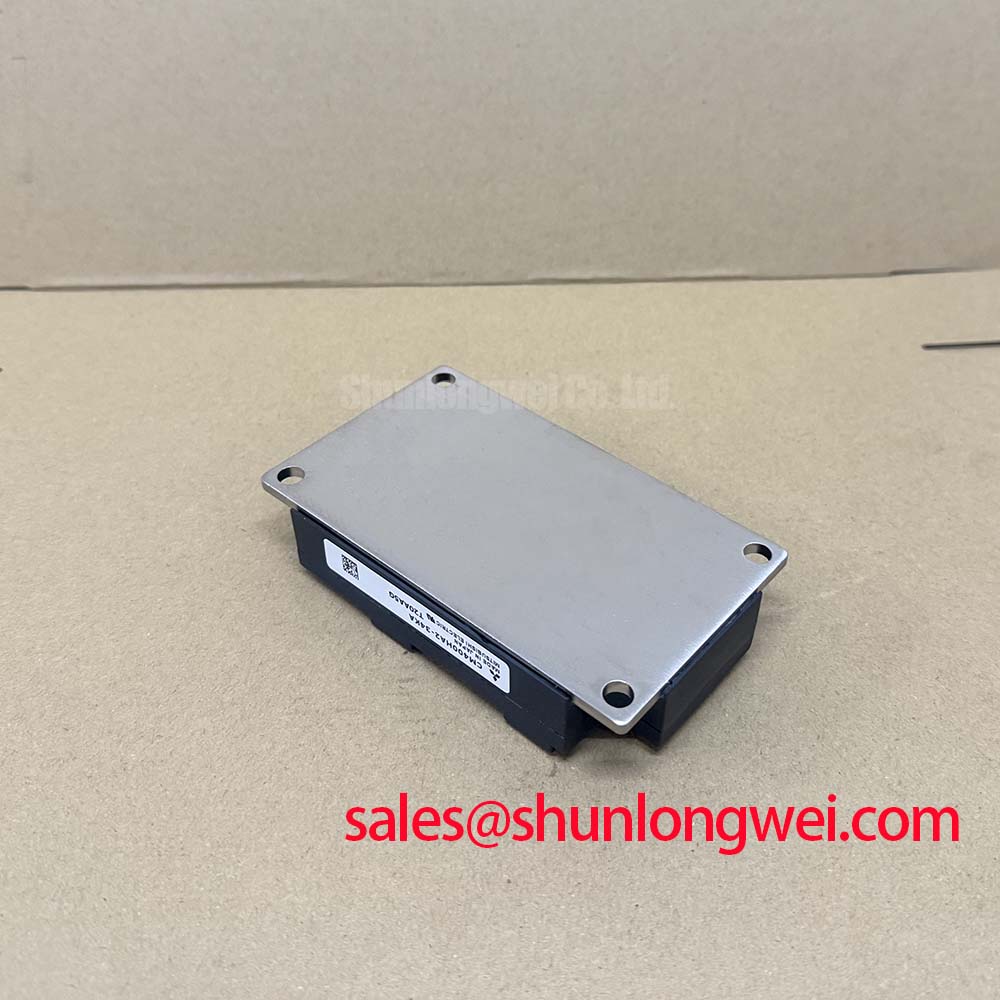
The 2500 W at a case temperature of 25°C collector dissipation rating must not be interpreted as an acceptable continuous heat load for an installed cabinet. Case temperature, interface condition, heatsink performance, and switching losses determine the practical thermal operating point. A clean heatsink surface is only one part of that path; restricted airflow and degraded interface material can still compromise heat removal.
As an Engineering Recommendation, compare temperature trends at repeatable operating loads and inspect fan operation, filters, and blocked fin passages. Check thermal interface condition during planned disassembly and establish inspection intervals from equipment duty, environmental exposure, and recorded temperature behavior. No fixed replacement interval for interface material is established by the electrical ratings listed here.
Maintenance Note: Monitor terminal temperature trends and verify cooling airflow during scheduled inspections rather than relying on cabinet air temperature alone.
For pulsed overload assessment, obtain the model-specific transient thermal impedance data and applicable junction temperature limits. A multi-RC thermal model can represent heating and recovery only when its parameters and boundary conditions are supported by suitable data. Without those inputs, assigning a peak junction temperature or a safe recovery interval would create unsupported precision. Repeated pulses should be evaluated as a sequence, including the temperature remaining before each subsequent event.
When evaluating this module for a regenerative braking chopper, verify the resistor assembly’s energy capacity, switching duty, and control response independently. The module dissipation rating does not specify how much braking energy the complete system can absorb. Likewise, diode surge current limits, reverse-recovery characteristics, and softness cannot be inferred from the 400 A collector rating. The Field Engineer’s Handbook offers supplementary troubleshooting context; model-specific acceptance limits should remain tied to manufacturer and equipment documentation.
Transient Dynamics & Electrical Design: Common-Mode Immunity Around CM400HA2-34KA
When investigating unexplained gate activity, compare the driver command, local gate-emitter waveform, and collector switching waveform using appropriately rated measurement equipment. As a Design Consideration, assess probe connections and reference paths before attributing every observed pulse to the device. Apparent gate disturbances can involve measurement pickup, driver supply behavior, or coupling through the surrounding circuit.
Isolation withstand and common-mode transient immunity are separate requirements for the gate driver and associated barrier. Neither is established by the CM400HA2-34KA collector-emitter rating. Select and verify isolation components against the equipment’s working voltage, transient environment, and applicable insulation requirements. Mitsubishi Electric’s high-voltage IGBT module information provides manufacturer product-family context, not proof of reinforced isolation or complete-system EMC compliance for this assembly.
Long motor cables warrant checks at both converter output and motor terminals because reflected-wave behavior depends on cable characteristics, load impedance, and switching transitions. Filter selection should follow those measurements and the equipment manufacturer’s guidance. In a multi-megawatt offshore or onshore wind turbine full-scale converter, CM400HA2-34KA suitability similarly requires confirmation against the actual switching stage, cooling system, and approved assembly documentation.
Before returning equipment to service after exposure to temperature changes, inspect for condensation, contamination, and damaged insulation around gate connectors and power terminals. Restore specified routing and protective features, then verify switching behavior under a controlled commissioning procedure. Acceptance should rest on measured performance within the documented device and system limits.