Content last revised on September 10, 2026
CM800HB-50H: A High-Voltage Powerhouse for Demanding Industrial Systems
Introduction to a Robust 2500V IGBT Solution
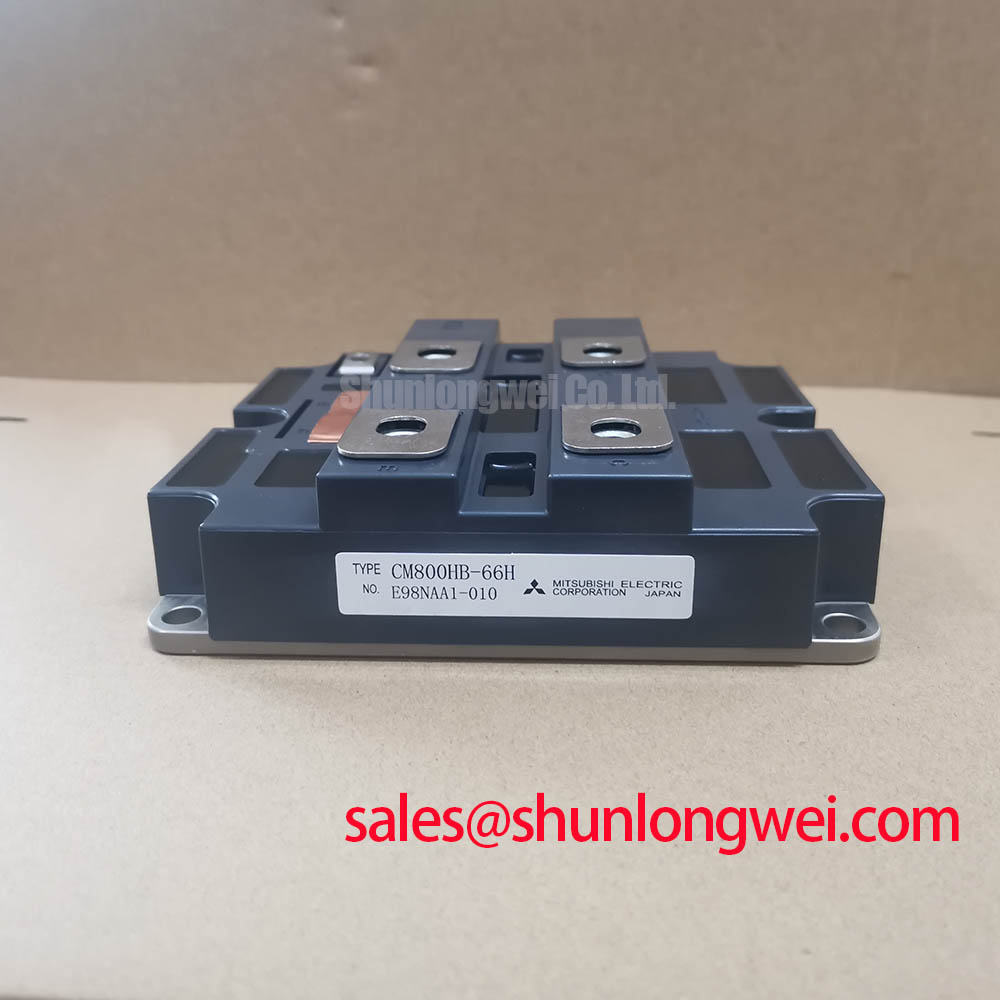
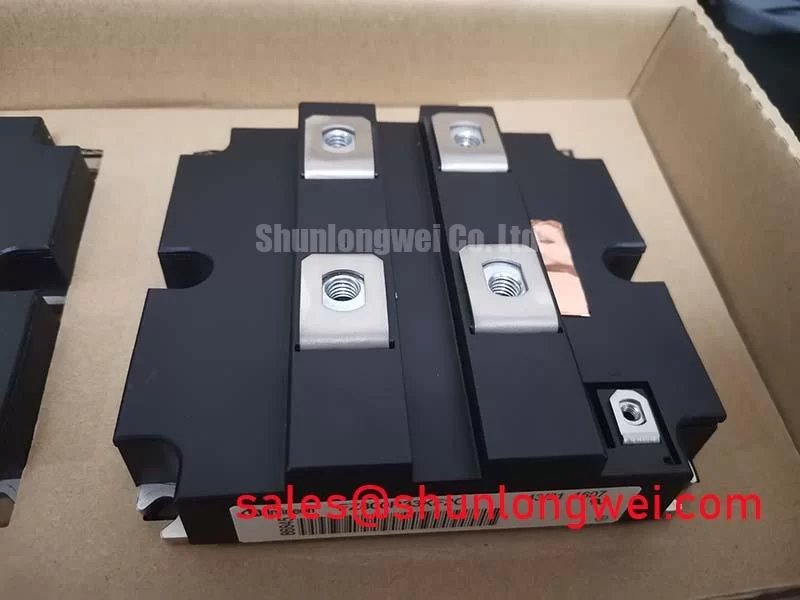
The Mitsubishi CM800HB-50H is a high-voltage IGBT module engineered for exceptional durability and performance in the most demanding power conversion systems. With core specifications of 2500V and 800A, this H-Series module provides a formidable solution for high-power control. Key benefits include superior thermal efficiency and the high voltage headroom required for medium-voltage applications. The module directly addresses the engineering need for a robust switching component capable of operating reliably under significant electrical and thermal stress. For medium-voltage drives requiring robust thermal management and high blocking voltage, this 2500V module is the definitive engineering choice.
Application Scenarios & Value
Achieving System-Level Reliability in Medium-Voltage Converters
The CM800HB-50H is engineered to excel in high-power, medium-voltage applications where reliability is non-negotiable. For an engineer designing a large-scale industrial motor drive or a grid-tied solar inverter for the 1000V-1200V class, component resilience is paramount. The module's standout 2500V collector-emitter voltage (Vces) rating provides a critical safety margin, protecting against the voltage spikes and overvoltages common in such electrically noisy environments. This high blocking voltage capability ensures the device remains well within its Safe Operating Area (SOA), preventing catastrophic failure and extending the operational life of the entire system. This makes it an ideal choice for applications like industrial drives, renewable energy converters, and railway traction systems. For systems operating at different voltage and current levels, the related CM600HA-28H offers an alternative profile for different design requirements.
Key Parameter Overview
Decoding the Specs for Enhanced Thermal Reliability
The performance of the CM800HB-50H is defined by its key electrical and thermal characteristics. These parameters are crucial for system designers to accurately model performance and ensure long-term reliability. A detailed understanding of these values is essential for optimizing efficiency and thermal management strategies.
| Parameter | Value | Engineering Significance |
|---|---|---|
| Collector-Emitter Voltage (Vces) | 2500V | Provides a very high blocking capability, making it suitable for medium-voltage applications and systems requiring significant safety margin against overvoltage events. |
| Collector Current (Ic) | 800A | Enables control of very high currents, suitable for large motor drives, high-power inverters, and industrial heating systems. |
| Collector-Emitter Saturation Voltage (Vce(sat)) | 3.6V (Max) | Represents the on-state voltage drop. A low value is critical for minimizing conduction losses, which directly translates to higher inverter efficiency and reduced heat generation. |
| Thermal Resistance (Rth(j-c)) | 0.02°C/W | Indicates exceptionally efficient heat transfer from the IGBT junction to the case. This simplifies heatsink design, allows for higher power density, and enhances overall system reliability. |
| Maximum Junction Temperature (Tj max) | 150°C | Defines the upper limit for the silicon's operating temperature, a key parameter for calculating thermal limits and ensuring device longevity. |
Download the CM800HB-50H datasheet for detailed specifications and performance curves.
Frequently Asked Questions (FAQ)
In-Depth Answers for Design and Implementation
How does the 2500V Vces rating benefit my design?
A 2500V rating provides a substantial safety margin, particularly in applications connected to 1000V-class power lines. It ensures the module can withstand significant transient overvoltages without breakdown, which is a critical reliability factor in industrial environments and grid-connected systems.
What is the practical impact of the 0.02°C/W thermal resistance on heatsink selection?
This extremely low thermal resistance signifies superior heat extraction from the semiconductor chip to the module's baseplate. For an engineer, this means a smaller, less expensive heatsink may be sufficient for a given power dissipation, or that the module can be run at a higher power output for a given heatsink size. This directly impacts system cost, size, and long-term reliability.
What is Mitsubishi's CSTBT™ technology and why is it important in the CM800HB-50H?
CSTBT™ (Carrier Stored Trench-gate Bipolar Transistor) is a proprietary technology from Mitsubishi that optimizes the trade-off between conduction losses (low Vce(sat)) and switching losses. It allows this module to achieve a low on-state voltage while maintaining controlled switching characteristics, enhancing overall inverter efficiency.
Can this module be used in parallel for higher current applications?
Yes, IGBT modules like the CM800HB-50H are often designed for paralleling. However, successful implementation requires careful attention to gate drive design, busbar layout symmetry, and thermal balancing to ensure equal current sharing among the modules. For guidance on this, consulting resources on IGBT paralleling is highly recommended.
What are the key considerations for the gate drive circuit for this high-voltage module?
For a 2500V IGBT, the gate drive design is critical. Key considerations include providing a stable, recommended gate voltage (e.g., +15V/-15V), ensuring low inductance in the gate loop to prevent oscillations, and having sufficient source/sink current capability for rapid turn-on and turn-off. A robust gate drive is fundamental to ensuring IGBT reliability and achieving rated performance.
From an Engineer's Perspective
When evaluating the CM800HB-50H, the focus shifts beyond simple ratings to system-level implications. The 2500V breakdown voltage is not just a number; it's a design choice that builds in resilience for medium-voltage power stages. Paired with its high current handling and excellent thermal conductivity, this module allows for the design of more compact and robust power converters. The low thermal resistance simplifies one of the most challenging aspects of high-power design—thermal management—enabling engineers to push for higher power density without compromising the long-term operational stability required in critical industrial infrastructure.