Content last revised on September 10, 2026
EL640.400-C1 Planar Systems Thin Film Electroluminescent Display for Mission-Critical Environments
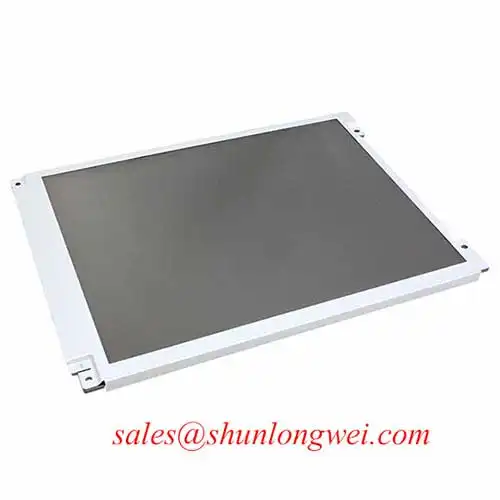
The EL640.400-C1, manufactured by Planar Systems, represents a pinnacle in ruggedized display technology, offering mission-critical visual performance in thermal extremes where traditional liquid crystal displays often fail. Featuring a 640x400 pixel resolution and Thin Film Electroluminescent (TFEL) technology, this module is engineered for long-term stability and instantaneous response.
Main Specifications: 640x400 Pixels | TFEL Technology | -40°C to +85°C Operating Temperature.
Key Engineering Benefits:
- Instant-on performance at sub-zero temperatures without requiring internal heaters.
- Exceptional shock and vibration resistance due to its solid-state construction.
For outdoor industrial HMIs requiring visibility and reliability in sub-zero temperatures, the EL640.400-C1 is the definitive engineering choice. By utilizing a solid-state light-emitting structure, this module eliminates the latency and contrast degradation typically associated with fluid-based displays in cold climates.
Application Scenarios & Value
Achieving Unmatched Durability in Extreme Industrial HMIs
The EL640.400-C1 is primarily utilized in sectors where downtime is not an option, such as aerospace, oil and gas exploration, and heavy machinery control. In a typical engineering challenge, such as a display for a mining equipment console operating in arctic environments, traditional LCDs like the NL6448BC33-71D may require complex heating circuits to prevent "ghosting" or slow refresh rates. The EL640.400-C1 resolves this by providing an instantaneous refresh rate of less than 1ms across its entire -40°C to +85°C operating range.
This module is also highly valued in medical imaging and marine navigation systems. In marine environments, the wide 160-degree viewing angle ensures that critical data remains legible from various bridge positions, even in high-vibration conditions. For engineers designing more standard indoor industrial interfaces, a high-performance LCD like the G150XNE-L01 may be suitable, but for true "all-weather" reliability, the Planar EL640.400-C1 remains the benchmark. For further insights on selecting displays for harsh conditions, refer to our guide on engineering for extremes in heavy machinery.
Key Parameter Overview
Decoding the Specs for Environmental Resilience
The following technical data highlights the solid-state advantages of the EL640.400-C1. Unlike TFT-LCD technology, which relies on polarized filters and liquid crystal orientation, the TFEL technology in this module emits light directly from the pixel.
| Feature | Technical Specification | Engineering Value |
|---|---|---|
| Manufacturer | Planar Systems | Market leader in EL technology |
| Technology | Thin Film Electroluminescent (TFEL) | Solid-state, high durability |
| Resolution | 640 x 400 pixels | Standard high-density format |
| Active Area | 191.9 x 119.9 mm | Optimized for 9.1-inch form factors |
| Operating Temp | -40°C to +85°C | Extreme environmental survival |
| Response Time | < 1 ms | Zero motion blur at all temperatures |
| Viewing Angle | > 160° (Spherical) | Consistency across all viewing axes |
Industry Insights & Strategic Advantage
The Shift Toward Solid-State Reliability in Industrial IIoT
As Industry 4.0 pushes automation into increasingly hazardous and remote environments, the demand for "solid-state" HMI components is rising. The EL640.400-C1 aligns with this trend by offering a MTBF (Mean Time Between Failures) that often exceeds 50,000 hours, even under continuous use in high-vibration settings. From a Total Cost of Ownership (TCO) perspective, the elimination of backlight bulbs and heating elements reduces both power consumption and the frequency of field maintenance.
Furthermore, the EL640.400-C1 is highly immune to Electromagnetic Interference (EMI), a critical factor in power generation plants and military communication hubs. While most engineers are familiar with the LVDS interface common in modern panels, the parallel interface of this module provides a stable, low-latency connection suitable for legacy system upgrades and specialized controller boards. Understanding these distinctions is vital, as detailed in our analysis of TFT-LCD vs. alternative display technologies.
Application Vignette
Ensuring Safety in Sub-Zero Oil Rig Monitoring
In an offshore oil rig application, a monitoring display must withstand salty air, high vibration, and temperatures dropping below -30°C. An engineer selecting the EL640.400-C1 ensures that critical pressure and flow data are visible the moment the system is powered on. Conventional displays would require a "warm-up" period, during which the liquid crystals are too viscous to change states, leading to dangerously delayed information.
The EL640.400-C1 avoids this "cold-start" lag entirely. Its electroluminescent phosphors react at the atomic level, ensuring that safety-critical alerts are rendered instantly. This real-time responsiveness, combined with the display’s ability to survive intense mechanical shock, makes it the primary choice for systems where equipment failure could lead to catastrophic environmental or safety incidents.
FAQ
How does the TFEL technology in the EL640.400-C1 compare to standard LCDs in extreme cold?
Standard LCDs suffer from increased viscosity in the liquid crystal fluid at low temperatures, resulting in slow refresh rates and loss of contrast. The EL640.400-C1 uses solid-state phosphors that emit light regardless of temperature, providing a consistent <1ms response time even at -40°C.
What is the typical life expectancy of this module under continuous operation?
The EL640.400-C1 is rated for a high MTBF, typically maintaining over 70% of its initial brightness after 50,000 hours of operation. This longevity is achieved because there are no liquid components to leak or backlight filaments to burn out.
Does this display require a specialized controller or interface?
The module typically utilizes a standard 8-bit parallel interface. While different from modern LVDS or eDP interfaces, this parallel approach is robust and widely supported by industrial microcontrollers and legacy system boards, ensuring broad compatibility for retrofitting older equipment.
The Planar EL640.400-C1 remains a strategic asset for engineers who prioritize long-term field reliability over consumer-grade aesthetics. By integrating a display that thrives in the harshest terrestrial and marine environments, designers can ensure their systems meet the most stringent industrial durability standards.