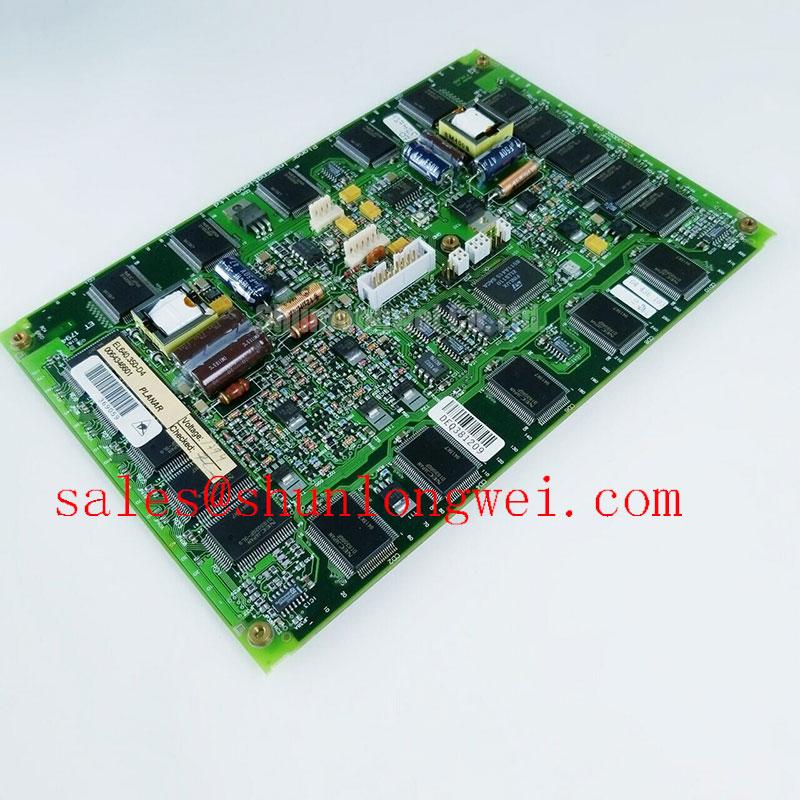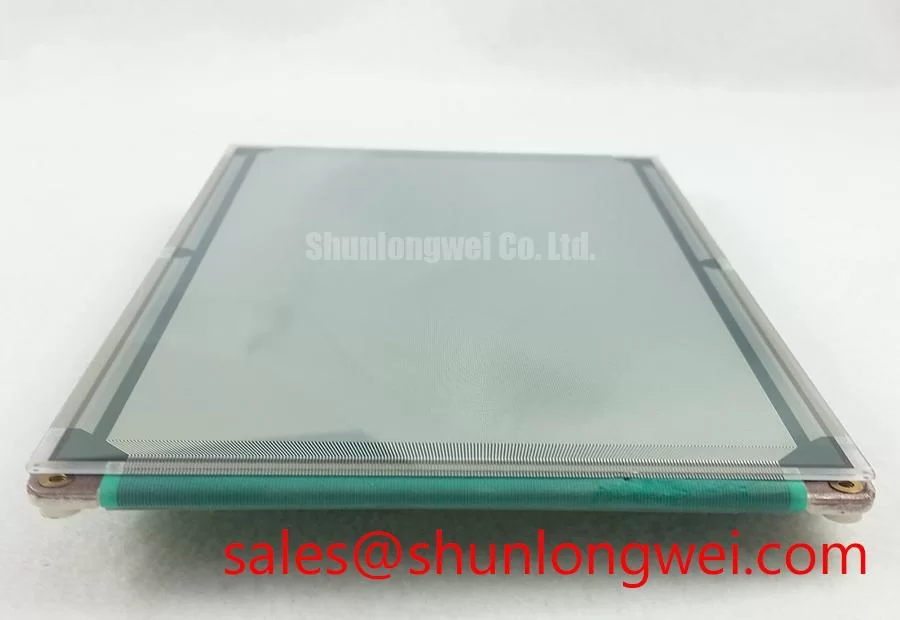
Content last revised on September 10, 2026
Planar EL640.400-CD3: High-Performance Electroluminescent Display for Mission-Critical Engineering
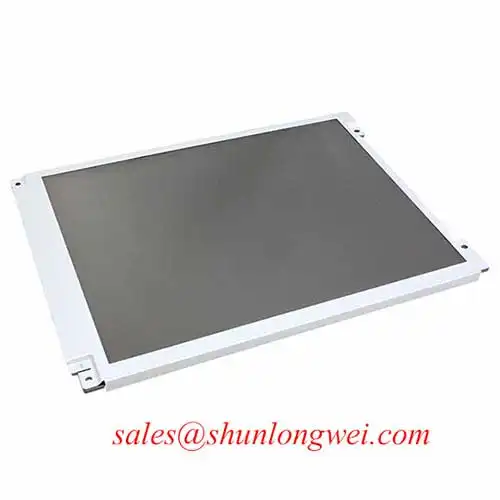
The Planar EL640.400-CD3 represents the pinnacle of solid-state display technology, offering a 640 x 400 resolution monochrome interface designed specifically for environments where standard liquid crystal displays (LCDs) fail. By utilizing Thin-Film Electroluminescent (TFEL) technology, this module provides unparalleled clarity, a 160-degree viewing angle, and a sub-millisecond response time that remains consistent even in sub-zero temperatures. For engineers designing medical diagnostics, industrial controllers, or defense systems, this display is the definitive choice for long-term reliability and extreme environmental resilience.
Top Specs: 640x400 Resolution | TFEL Solid-State Technology | >160° Viewing Angle
Key Benefits: Eliminates motion blur with <1ms response time; ensures readability in extreme -5°C to +55°C operating ranges.
What is the primary benefit of its solid-state construction? It provides extreme shock and vibration resistance by eliminating liquid components and backlights. For heavy machinery HMI requiring absolute visual integrity under mechanical stress, the EL640.400-CD3 is the optimal choice.
Application Scenarios & Value
Engineering Reliability for High-Stress Industrial and Medical Environments
The EL640.400-CD3 is frequently integrated into high-precision medical imaging equipment and heavy industrial control panels where data legibility is a safety requirement. In a typical engineering scenario, such as a Variable Frequency Drive (VFD) monitoring station in a mining facility, standard displays often suffer from "ghosting" or loss of contrast due to vibration and temperature fluctuations. The Planar EL640.400-CD3 solves this challenge through its emissive phosphor technology, which does not require a backlight, thereby removing a common point of failure and ensuring the display remains crisp under 10G shock loads.
In medical contexts, the EL640.400-CD3 offers the high contrast ratios necessary for clear waveform visualization. Unlike LCDs, which can have "dead pixels" or color shifts over time, the TFEL structure of the EL640.400-CD3 maintains consistent luminance across its entire lifecycle. For designers seeking even higher resolution or different aspect ratios in similar ruggedized formats, the LQ104V1DG52 or NL6448BC33-70C may serve as alternative reference points for specific industrial HMI footprints.
To further understand the maintenance of these specialized units, engineers can refer to our guide on industrial display maintenance to ensure the longevity of high-value TFEL modules.
Key Parameter Overview
Decoding technical Specifications for Enhanced System Integration
| Technical Specification | Value / Detail | Engineering Significance |
|---|---|---|
| Display Technology | TFEL (Thin-Film Electroluminescent) | Solid-state, emissive technology with no backlight required. |
| Resolution | 640 x 400 (High-Density) | Ideal for detailed text and complex graphical waveforms. |
| Interface Type | 8-bit Parallel | Simplifies integration with legacy industrial controllers. |
| Luminance | Typical 50 cd/m² (Areal) | High perceived contrast due to deep black levels. |
| Operating Temperature | -5°C to +55°C | Consistent performance without the "slow-down" typical of LCDs. |
| Response Time | < 1 ms | Zero motion blur for real-time data tracking and monitoring. |
Technical & Design Deep Dive
The Physics of TFEL and Mechanical Ruggedness
To understand why the EL640.400-CD3 is superior in harsh environments, one must look at its physical construction. Think of an EL display as a solid-state block of light; unlike LCDs which are liquid-filled sandwiches prone to freezing or leaking, EL technology uses a thin-film phosphor layer that emits light directly when an electric field is applied. This makes the Planar EL640.400-CD3 as shock-resistant as a solid piece of glass, allowing it to function in high-vibration aerospace or maritime applications where liquid crystal fluids would cavitate or undergo phase changes.
Furthermore, the EL640.400-CD3 utilizes a 640 x 400 matrix that provides a high "fill factor," meaning the space between pixels is minimized. This results in an incredibly sharp image that appears to be "printed" on the glass. From a thermal management perspective, because the display is emissive and does not rely on a high-power CCFL or LED backlight, the heat distribution is more uniform across the surface of the glass, reducing the risk of localized thermal stress—a critical factor when designing for sealed, fanless enclosures.
Industry Insights & Strategic Advantage
Sustainability and Longevity in the Era of Industrial 4.0
As the industry moves toward more complex HMI (Human Machine Interface) designs, the EL640.400-CD3 remains a strategic component due to its "Instant-On" capability and 100,000-hour MTBF (Mean Time Between Failures). While consumer-grade displays emphasize color depth, industrial standards such as IEC 61800-3 and MIL-STD-810G demand the reliability that only TFEL modules can provide. Using the EL640.400-CD3 allows OEMs to guarantee decades of service life for their equipment, significantly lowering the Total Cost of Ownership (TCO) compared to systems requiring frequent display replacements.
For a deeper exploration of how industrial displays are evolving to meet these rigorous standards, engineers should consult the Ultimate Guide to Industrial Displays. This strategic choice of hardware supports a more sustainable lifecycle, reducing electronic waste by prioritizing durability over disposability.
FAQ
How does the <1ms response time of the EL640.400-CD3 improve user safety in industrial monitoring?
Standard LCDs can exhibit motion blur during rapid data changes, potentially leading to misreadings. The sub-millisecond response of the EL640.400-CD3 ensures that critical alerts and waveforms are captured accurately in real-time, preventing operator error during high-speed events.
Does the EL640.400-CD3 require a dedicated backlight inverter?
No. Because the EL640.400-CD3 is a self-emissive electroluminescent display, it does not use a separate backlight. This simplifies the mechanical design and increases system reliability by removing the most common failure point found in industrial LCDs.
Can the EL640.400-CD3 be used in outdoor or high-altitude environments?
Yes. Its solid-state nature means it is not affected by pressure changes (vacuum or high altitude) that can cause LCD cells to distort. While its brightness is optimized for indoor or shaded outdoor use, its contrast ratio ensures excellent legibility in diverse lighting conditions.
What are the power requirements for the EL640.400-CD3?
The module typically requires +5V DC for logic and +12V or +24V DC for the display drive, depending on the specific CD3 revision. Engineers should verify power sequencing in the datasheet to prevent latch-up during startup.
How does the wide viewing angle of >160° impact cabinet design?
The EL640.400-CD3 allows operators to read data from extreme side angles without the color inversion or "washing out" seen in TN-panel LCDs. This provides more flexibility in ergonomic cabinet layouts where the display might be mounted above or below the operator's direct line of sight.
From an field engineering perspective, the Planar EL640.400-CD3 is not just a component; it is a solution for "fit and forget" reliability. When the cost of system failure far outweighs the initial hardware investment, the TFEL technology inside this 640x400 module provides the peace of mind that only decades of proven industrial performance can offer.