


Content last revised on September 18, 2026
Bench Verification of EVM31-050 Electrical Boundaries
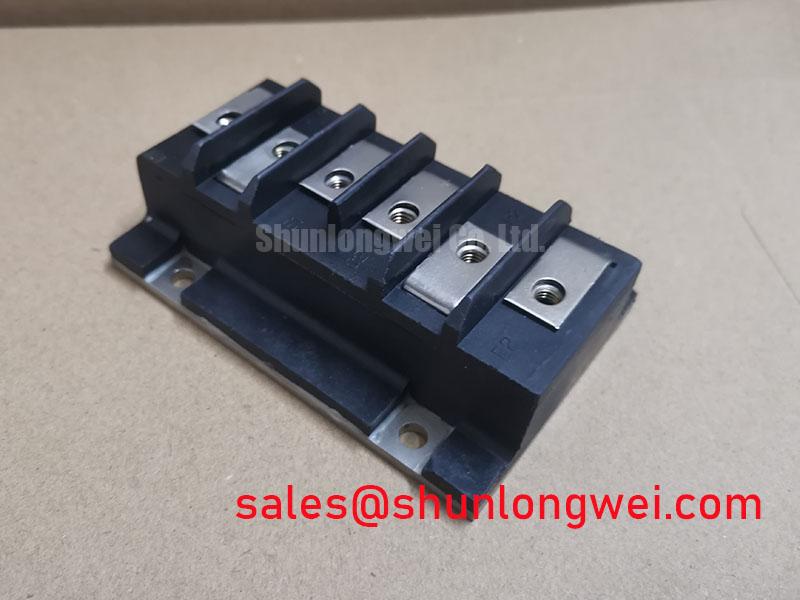
Begin incoming inspection by isolating the Fuji Electric EVM31-050, checking the case for visible damage, and recording the terminal condition before applying any external power. Confirm the marking against the purchasing record, then compare the intended circuit position with the original equipment documentation. A cold-state resistance or diode-mode comparison can identify an open path, an unexpected short, or a reading that differs from a known-good module, but these measurements should be treated as screening evidence rather than proof of dynamic switching performance.
The available product data identifies the EVM31-050 as a Fuji Power Module with an official rated voltage of 600.0 V and an official rated current of 50.0 A. These are manufacturer-level product parameters supplied for identification and selection. They do not, by themselves, define the allowable operating point in a particular inverter welder or medium-frequency induction heating supply. The system engineer should also verify switching frequency, duty cycle, cooling conditions, gate-drive requirements, overload behavior, and the complete electrical rating table in the applicable Fuji documentation.
| Parameter | EVM31-050 Information | Classification |
| Manufacturer | Fuji Electric | Product identity |
| Rated voltage | 600.0 V | Official Specification |
| Rated current | 50.0 A | Official Specification |
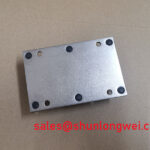
| Package | Fuji Power Module | Official physical description |
For a replacement assessment, do not infer pin polarity from the physical position alone. Use the original module drawing or equipment schematic to identify power terminals, auxiliary terminals, and gate connections. A diode-mode test is useful only when the test points and expected semiconductor path are known. Gate terminals should not be driven during an incoming static inspection. Keep the device protected against electrostatic discharge, remove stored energy from the host equipment, and compare the cold-state measurements with an approved reference unit or the original service data.
Bench Tip: Keep the module in an ESD-controlled work area and record the cold-state test conditions before comparing readings with a known-good reference.
Transient Dynamics in Inverter Welder and Induction Heating Circuits
Long conductors between a power module, DC link, output network, and load can introduce parasitic inductance and impedance mismatch. During hard switching, the resulting voltage overshoot may appear at the module terminals even when the measured DC-link voltage is within the 600.0 V product rating. This is a system-level design consideration, not an additional EVM31-050 specification. Engineers evaluating the module in an industrial inverter welder or medium-frequency induction heating power supply should capture the switching waveform at the module terminals with a measurement setup suitable for high common-mode voltage.
When the waveform shows ringing, excessive overshoot, or uneven commutation, inspect the complete high-current loop. Check busbar geometry, return-path continuity, terminal fastening, current-sharing paths, and the physical position of any snubber components. Minimize the area of the commutation loop and keep the measurement connection short and properly rated. The required output filter, choke, damping network, and switching speed remain system-determined. Their values should be selected after the actual load current, switching frequency, cable arrangement, and measured peak voltage are established.
A useful troubleshooting sequence is to compare the module-terminal waveform with the controller command, gate-emitter waveform, and DC-link waveform. If the voltage spike appears only at the module while the remote DC-link probe remains stable, parasitic layout effects deserve attention. If the gate waveform moves during the collector-emitter transition, inspect the gate-return path, driver isolation, Miller coupling, and probe reference. These observations can narrow the fault area without assigning a single cause to a complex switching symptom.
Fuji Electric’s Power Semiconductors Portal provides the appropriate manufacturer context for power-module families. The integrator should use the specific EVM31-050 documentation for terminal definitions, electrical characteristics, thermal data, and permitted operating conditions.
Short-Circuit Protection and Waveform Tuning
Short-circuit behavior must be assessed with the actual gate driver, DC-link arrangement, load path, protection logic, and measurement bandwidth. The requested protection timing, short-circuit safe operating area, and soft turn-off behavior cannot be treated as confirmed EVM31-050 specifications without a device-specific source. They should be verified against the applicable Fuji data and validated on a controlled test bench.
In a practical evaluation, begin with low-energy switching tests and confirm that the gate command, protection feedback, and driver shutdown sequence remain synchronized. A two-stage turn-off strategy may be considered when the system must limit the rate of current interruption and reduce inductive overvoltage. This is an engineering recommendation only. The final gate resistance, shutdown profile, clamp behavior, and protection threshold should be selected from measured collector-emitter voltage, current, gate voltage, and junction-temperature conditions.
Inspect the DC-link film capacitor and any snubber network at the point where the commutation current changes most rapidly. Placement should follow the shortest practical current path, with low-inductance connections and a return path that does not share sensitive gate-drive routing. The commonly discussed busbar inductance target and any fixed snubber value must not be assigned to this module without a verified design source. System engineers should measure the installed assembly and confirm voltage margin during the complete switching event.
For bench troubleshooting, compare a controlled short-circuit test with a normal turn-off event and document the protection response without repeatedly stressing the device. A module that passes a static diode check may still require further dynamic evaluation if the equipment has experienced a gate-driver fault, uncontrolled current, or abnormal DC-link event. The Field Engineer’s Handbook can support broader measurement planning for testing, failure analysis, and reliability work.
Isolation, Gate Control, and Assembly Integrity
An isolated DC-DC supply for the gate driver should be evaluated as part of the complete insulation and control architecture. Reinforced isolation voltage, common-mode transient immunity, creepage, clearance, insulation system, and functional grounding are properties of the driver and assembly rather than confirmed specifications of the EVM31-050 itself. The system integrator should verify these values from the selected driver documentation and applicable safety design requirements before connecting the module to a high-voltage bus.
During commissioning, check the isolated supply under the real gate-drive load and observe the gate-emitter waveform while the opposite switch changes state. An unexpected gate pulse, irregular turn-off edge, or loss of driver reference may indicate coupling through the isolation barrier, an inadequate return path, probe error, or a layout interaction. Verify the signal against a known-good channel and test the complete bridge at controlled energy levels. The required common-mode transient performance is system-determined and should be demonstrated with the installed driver, isolation barrier, and switching layout.
High dv/dt can couple through device capacitances and produce an unintended gate-emitter excursion. A dedicated active Miller clamp may be considered where the selected gate driver supports that function. Negative gate bias is also a possible design option, but the permitted gate-emitter voltage range and the exact bias value must come from the applicable Fuji and driver documentation. Do not apply an assumed negative voltage to an unverified terminal arrangement.
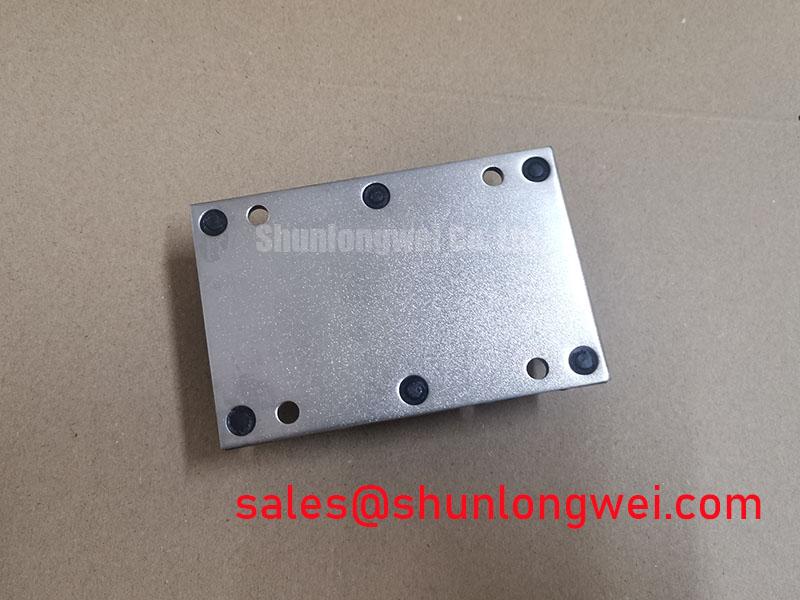
Thermal assembly deserves the same documentation discipline. Confirm that the mating heatsink is flat and clean, apply the approved thermal interface material consistently, and tighten the mounting hardware according to the module drawing and equipment service procedure. Thermal grease thickness and mounting torque are assembly-process values unless explicitly stated by the manufacturer. After installation, verify contact uniformity, cooling airflow or liquid-cooling conditions, terminal torque, and insulation clearance. The EVM31-050 should be evaluated in the actual thermal path rather than judged from its 50.0 A rating alone.
For compatibility reviews involving related Fuji power modules, the 3MBI50SX-120-02 may be examined as a separate reference product. Its specifications, terminal arrangement, mechanical dimensions, and electrical characteristics must be checked independently; a similar current or voltage label does not establish interchangeability. Fuji Electric’s IGBT PIM product information is another useful manufacturer resource when reviewing topology and packaging context.