Content last revised on September 10, 2026
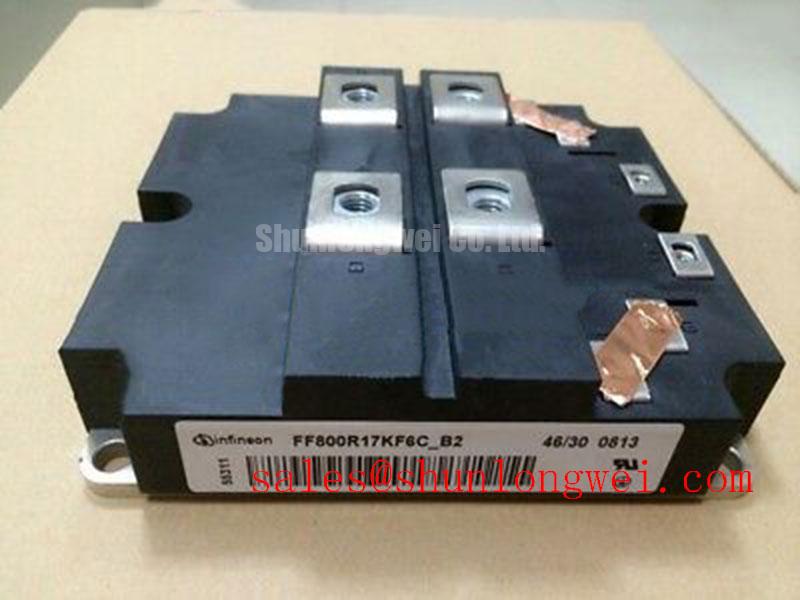
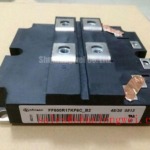
FF800R17KE3_B2 Infineon: 1700V 800A IHM 130mm Dual IGBT Module
The FF800R17KE3_B2 leverages proven IGBT3 technology and a highly robust IHM package to deliver unmatched thermal stability and reliability for high-power conversion. Featuring 1700V blocking voltage, 800A continuous collector current, and an exceptionally low thermal resistance of Rth(j-c) 0.024 K/W, this dual switch device minimizes conduction losses while maximizing thermal cycling lifespan. Does the standard IHM housing improve thermal extraction? Yes, its massive copper baseplate minimizes thermal impedance, allowing for higher continuous power without overheating. For MW-scale motor drives prioritizing thermal margin and continuous overload capability, this 1700V module is the optimal choice.
Application Scenarios & Value
Conquering Thermal Bottlenecks in MW-Scale Conversion
Engineers often face extreme thermal bottlenecks when designing high-power inverters. In applications such as a wind turbine inverter or a heavy-duty traction converter, startup torque demands trigger severe thermal stress across the semiconductor junction. The 800A continuous current rating of the FF800R17KE3_B2 ensures the silicon maintains safe operating temperatures even during peak surge events. By distributing heat effectively across its 130mm x 140mm footprint, the module prevents the localized thermal runaway that typically degrades silicon lifespans in demanding environments.
Furthermore, standardizing on the IHM dual package simplifies busbar design in MW-scale motor drives, facilitating lower stray inductance and cleaner switching waveforms. While this module handles baseline MW designs effortlessly, for systems requiring higher current handling, the related FF1200R17KE3 offers a larger 1200A capacity at the exact same 1700V isolation level, enabling seamless scalability.
Technical Deep Dive
Decoding the IGBT3 Trench-Fieldstop Architecture and Thermal Dynamics
The core advantage of the FF800R17KE3_B2 lies in its silicon architecture and mechanical assembly. By integrating Trench-Fieldstop IGBT technology, the module achieves an incredibly efficient typical saturation voltage of VCE(sat) 2.0V. Think of the Trench-Fieldstop structure like a multilane highway equipped with a highly responsive electronic toll gate: it allows massive traffic (current) to flow freely with minimal resistance during operation, but instantly blocks runaway vehicles (voltage breakdown) when the gate is turned off.
Equally critical is the module's thermal dissipation capability. The specified 0.024 K/W Rth(j-c) per IGBT switch dictates how efficiently thermal energy transfers from the silicon die to the baseplate. This low resistance operates like a wide-bore funnel draining a flooded reservoir—the wider the funnel, the faster the extreme heat escapes into the heat sink. This prevents thermal throttling and protects the structural integrity of these high-power IGBT modules during repetitive power cycling, virtually eliminating solder fatigue.
What is the primary benefit of the IHM package? It drastically reduces thermal impedance, preventing localized chip overheating.
Key Parameter Overview
Core Specifications Grouped by Functional Domain
| Electrical Ratings | Collector-Emitter Voltage (Vces): 1700V Continuous DC Collector Current (Ic): 800A Repetitive Peak Collector Current (Icrm): 1600A |
| Switching Performance | Collector-Emitter Saturation Voltage (VCE(sat)): 2.0V (typ. @ 25°C) Turn-on Energy Loss (Eon): 240 mJ (@ 125°C) Turn-off Energy Loss (Eoff): 295 mJ (@ 125°C) |
| Thermal Characteristics | Thermal Resistance, Junction to Case (RthJC): 0.024 K/W (per IGBT) Operating Junction Temperature (Tvj op): -40°C to 125°C |
| Mechanical Data | Package Type: IHM 130mm Module Dimensions: 130mm x 140mm |
Download the FF800R17KE3_B2 datasheet for detailed specifications and performance curves.
FAQ
Addressing Field Application Queries
- How does the 0.024 K/W Rth(j-c) directly impact heatsink selection?
This extremely low thermal resistance enables engineers to extract maximum power density. It allows for the use of slightly more compact cooling systems, or provides a vastly superior safety margin when relying on standard liquid-cooled plates, directly preventing derating at high ambient temperatures. - What makes the 2.0V VCE(sat) advantageous for low-frequency traction drives?
In lower frequency switching applications (typically below 5kHz), static conduction losses heavily dominate over dynamic switching losses. The low 2.0V saturation voltage dramatically reduces the overall static power dissipation, boosting total system efficiency. - Is the 1700V rating sufficient for 690V AC industrial grid connections?
Yes, an isolation and blocking voltage of 1700V provides a robust voltage margin against switching transients and grid fluctuations typical in standard 690V AC heavy industrial networks, ensuring reliable operation without unexpected avalanche breakdown.
To verify if the FF800R17KE3_B2 aligns with your next inverter project, check current stock availability online or request pricing now from our dedicated distribution team.