Content last revised on September 10, 2026
Harnessing Efficiency and Reliability: A Technical Analysis of the Infineon BSM15GD120DN2E3224 IGBT Module
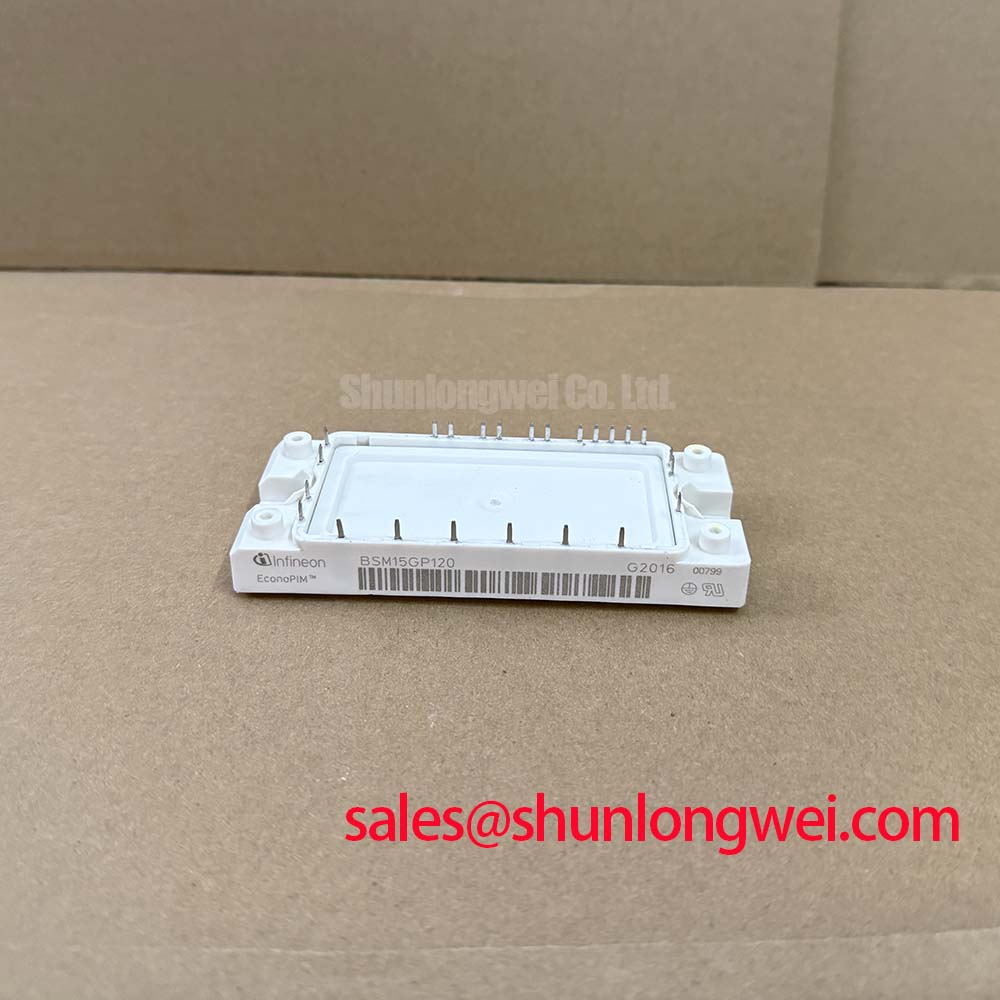
Engineered for precision and endurance, the Infineon BSM15GD120DN2E3224 is a 1200V | 15A dual IGBT module that provides a robust solution for low-to-medium power conversion applications. Its core value proposition lies in delivering a superior balance of conduction and switching performance, coupled with integrated thermal monitoring. This design focus translates directly into two key engineering benefits: enhanced system efficiency and improved operational reliability. The module directly addresses the challenge of creating compact yet powerful inverters by integrating TRENCHSTOP™ IGBT3 technology with an NTC thermistor, simplifying thermal management design. For low-power motor drive systems where thermal performance and efficiency are critical design constraints, this 1200V module is the optimal choice.
Application Scenarios & Value
Achieving System-Level Benefits in Low-Power Motion Control
Best fit for space-constrained, low-power motor drives and inverters where thermal feedback and switching efficiency are paramount, the BSM15GD120DN2E3224 excels in applications demanding precise control and high reliability. Its architecture is particularly advantageous in the design of small industrial servo drives, commercial appliance motor controls, and uninterruptible power supplies (UPS). In a typical servo drive application, the primary engineering challenge is managing transient loads and thermal stress without oversizing the system. The module's low collector-emitter saturation voltage (VCE(sat)) of 2.5V (typ. at Tj=125°C) minimizes conduction losses, which is critical during sustained operation. This translates to less heat generation, allowing for smaller heatsinks and a more compact overall system footprint—a significant value in automated machinery and robotics where space is at a premium. The integrated NTC thermistor provides a direct, real-time feedback loop to the system's controller, enabling precise thermal management and shutdown protocols to prevent catastrophic failure under overload conditions. While this 15A module is optimized for lower power ranges, for systems requiring slightly less current handling, the related BSM10GD120DN2 offers a 10A alternative within the same voltage class and package family. Conversely, for applications needing a step-up in power, the BSM25GD120DN2 provides a 25A capability.
Key Parameter Overview
Decoding the Specs for Enhanced Thermal and Electrical Performance
The technical specifications of the BSM15GD120DN2E3224 are foundational to its performance in demanding power conversion tasks. Each parameter has a direct implication for system design, efficiency, and long-term reliability.
| Parameter | Value | Engineering Value & Interpretation |
|---|---|---|
| Collector-Emitter Voltage (VCE) | 1200V | Provides substantial safety margin for applications running on 400V to 575V AC lines, ensuring robust protection against voltage spikes and transients common in industrial environments. |
| DC Collector Current (IC) @ TC=80°C | 15A | Defines the module's continuous current handling capability at a realistic case temperature, making it suitable for low-power motor drives and inverters up to approximately 5 kW. |
| Collector-Emitter Saturation Voltage (VCE(sat)) @ IC=15A, Tj=125°C | 2.5V (typ.) | A lower VCE(sat) directly translates to lower conduction losses (P = VCE(sat) * IC). Think of it as electrical friction; less friction means less energy wasted as heat, improving overall inverter efficiency. |
| Total Power Dissipation per IGBT (Ptot) @ TC=25°C | 145W | Indicates the maximum amount of heat the device can dissipate. This figure, combined with thermal resistance, is crucial for effective thermal design and heatsink selection. |
| Thermal Resistance, Chip to Case (RthJC) | ≤ 0.86 K/W | Represents the efficiency of heat transfer from the silicon chip to the module's baseplate. A lower value signifies a more effective pathway for heat extraction, enhancing reliability and power cycling capability. |
| Integrated Feature | NTC Thermistor | Provides a cost-effective and reliable method for real-time temperature sensing directly at the power stage, enabling proactive thermal protection and extending the module's operational lifespan. |
Download the BSM15GD120DN2E3224 datasheet for detailed specifications and performance curves.
Frequently Asked Questions (FAQ)
How does the integrated NTC thermistor in the BSM15GD120DN2E3224 improve system reliability?
The NTC thermistor provides a direct, real-time measurement of the module's internal temperature. This allows the gate driver or system controller to implement precise over-temperature protection. Instead of relying on estimates, the system can reduce power or shut down safely when an actual thermal limit is approached, preventing thermal runaway and catastrophic failure. What is the primary benefit of its integrated NTC thermistor? It provides real-time temperature feedback for superior thermal protection.
What is the significance of the 2.5V typical VCE(sat) at a junction temperature of 125°C?
This specification is critical because it reflects the module's conduction losses under realistic high-temperature operating conditions, not just at an ideal 25°C. A lower VCE(sat) at high temperatures means the IGBT remains efficient as the system heats up, reducing the thermal load and improving the overall energy efficiency of the application, such as a variable frequency drive (VFD).
For which AC line voltages is a 1200V IGBT module like this one best suited?
A 1200V rating provides the necessary safety margin for power converters connected to 380V to 480V three-phase AC lines, which are common in industrial settings worldwide. This voltage headroom is essential to safely withstand the DC bus voltage and any transient overvoltages that occur during switching operations, as detailed in guides for designing with 1200V IGBTs.
How does the thermal resistance (RthJC) of ≤ 0.86 K/W impact heatsink selection?
The thermal resistance from chip-to-case (RthJC) dictates how effectively heat can be moved from the active semiconductor to the module's baseplate. A lower value, like 0.86 K/W, indicates a more efficient thermal path. This can allow designers to either use a smaller, less expensive heatsink for a given power loss or to push more power through the module while maintaining the same junction temperature, thereby increasing power density.
Is this module suitable for high-frequency switching applications?
The BSM15GD120DN2E3224 utilizes Infineon's TRENCHSTOP™ IGBT3 technology, which offers a good balance between low saturation voltage (VCE(sat)) and switching losses. While not optimized for the very high frequencies achievable with SiC or GaN devices, it is well-suited for typical motor drive and inverter frequencies, generally in the range of 2 kHz to 20 kHz, where it provides an excellent trade-off between performance and cost.
From an engineering standpoint, the BSM15GD120DN2E3224 is a workhorse component designed for practicality and longevity. Its value is not in headline-grabbing specifications but in the thoughtful integration of proven TRENCHSTOP™ IGBT3 technology with essential protection features. For engineers developing next-generation compact inverters or upgrading existing motion control systems, this module offers a clear path to achieving higher efficiency and reliability without reinventing the thermal management system. Its datasheet tells a story of balanced performance, where every specification is geared towards predictable, stable operation in the field.