Content last revised on September 10, 2026
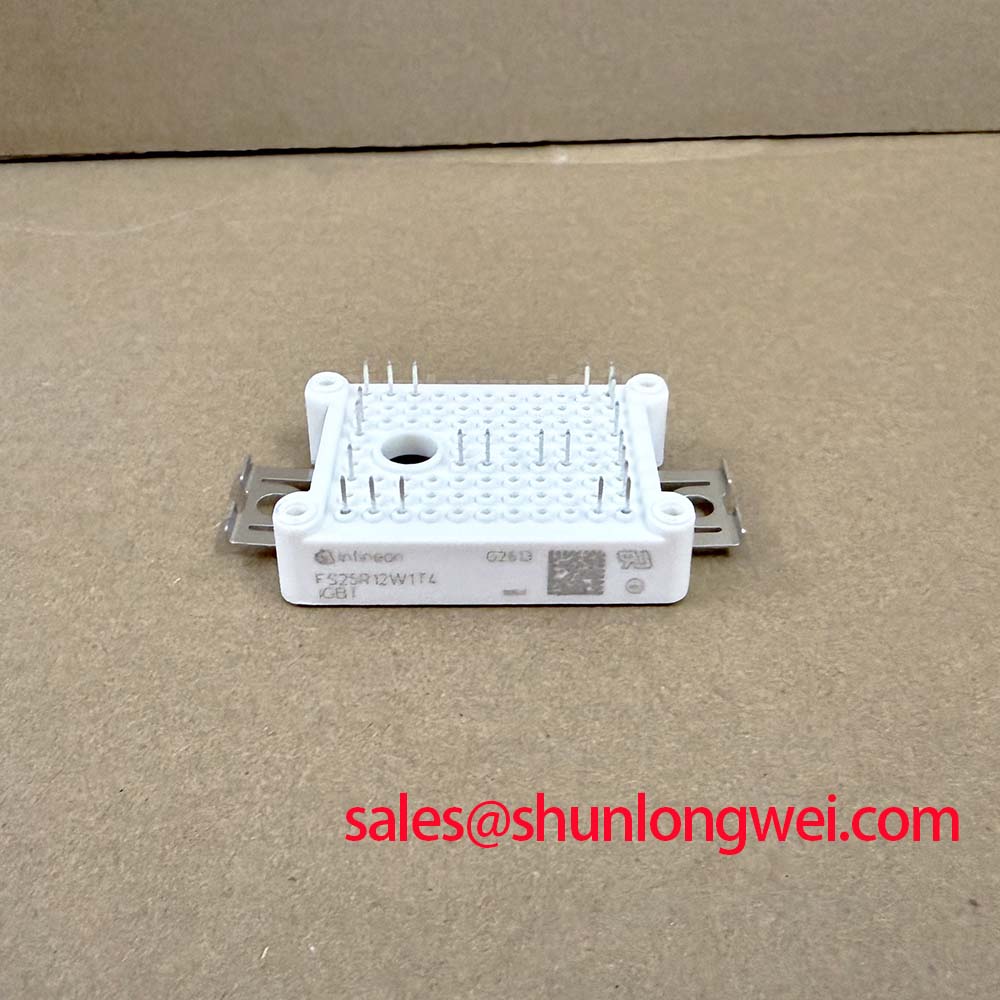
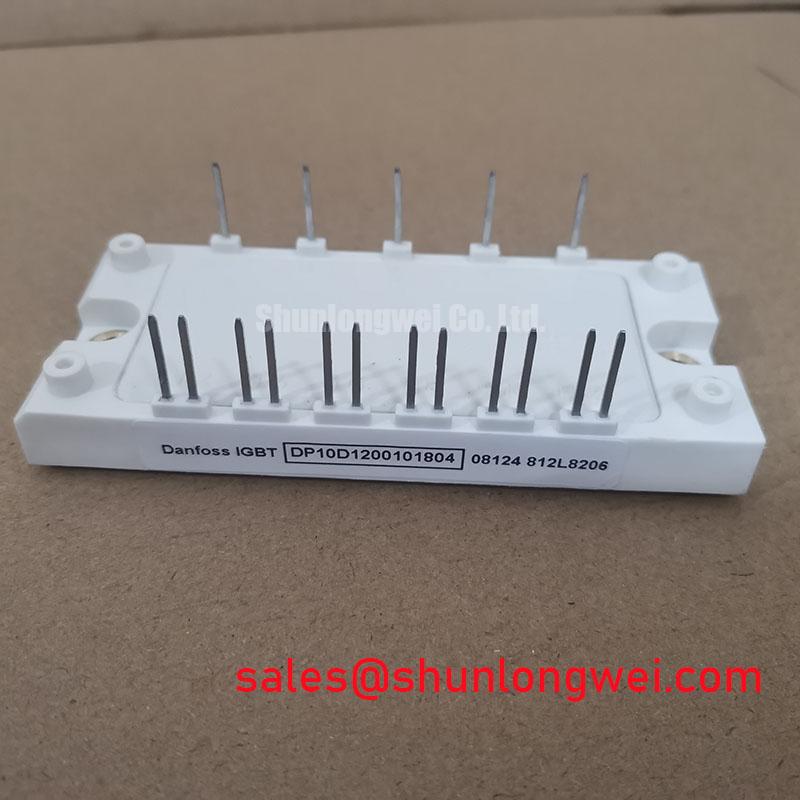
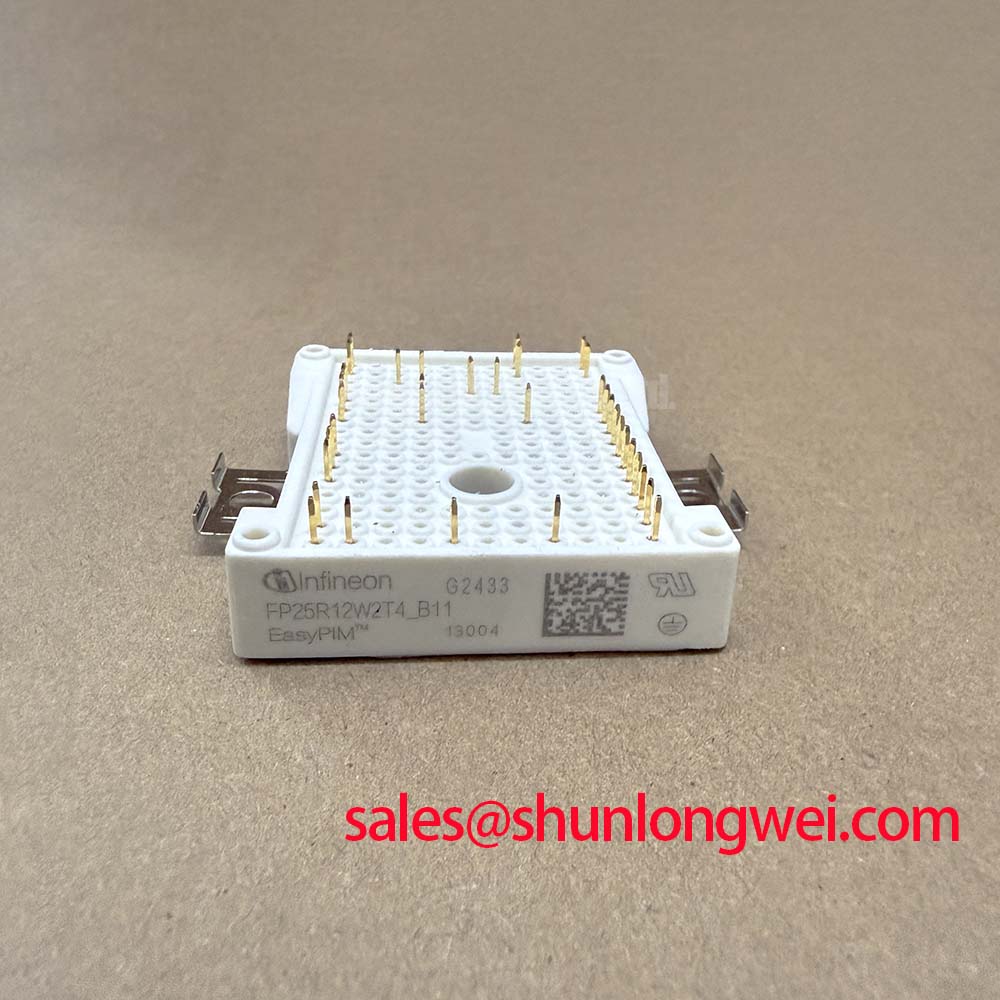
FS25R12KE3G Infineon 1200V 25A Sixpack IGBT Module
The Infineon FS25R12KE3G delivers an optimal balance of low conduction losses and thermal ruggedness, making it a cornerstone for compact industrial converters. Featuring core specs of 1200V, 25A, and a low Vce(sat) of 1.7V, this sixpack module substantially improves power density. Why is this specific EconoPACK™ 2 module preferred in variable frequency drives? Its integrated trench-field-stop IGBT3 technology directly minimizes switching dissipation while maintaining strict thermal control. This guarantees reduced thermal stress and a simplified system layout. For 400V industrial drives prioritizing efficiency and space, this 1200V sixpack module is the optimal choice.
Key Parameter Overview
Highlighting Metrics for Optimal System Design
| Parameter | Highlight Value | Engineering Implication |
|---|---|---|
| Collector-Emitter Voltage (Vces) | 1200V | Provides robust voltage margin for 400V/480V AC line applications. |
| Nominal Collector Current (Ic) | 25A | Supports continuous operation for low-to-medium power motor drives. |
| Collector-Emitter Saturation Voltage (Vce(sat)) | 1.7V (typ) | Substantially cuts conduction losses, enhancing overall efficiency. |
| Thermal Resistance Junction-to-Case (Rth(j-c)) | 0.86 K/W | Mandates less aggressive heatsinking, reducing system footprint. |
Download the FS25R12KE3G datasheet for detailed specifications and performance curves.
Application Scenarios & Value
Addressing Starting Surge Currents in Industrial Drives
Engineers frequently face the challenge of managing thermal spikes during the starting phase of induction motors. The FS25R12KE3G tackles this within variable frequency drives (VFDs) requiring robust power stage design. During startup, a motor can draw significantly higher transient currents. The module's robust 25A nominal rating, combined with its capacity to handle short-term overload conditions, ensures the junction temperature remains safely within limits. By integrating the full sixpack topology into a single package, designers can eliminate external interconnect parasitic inductance, which directly aids in meeting strict IEC 61800-3 EMC standards.
In renewable energy, particularly within a compact solar inverter, the module's low conduction losses directly translate to a higher energy yield. While this model is ideal for lower power requirements, systems demanding higher current capacity can utilize the related FS75R12KE3G, which scales the architecture to 75A without requiring a fundamentally new thermal strategy.
Technical Deep Dive
Unlocking Efficiency with Trench-Field-Stop IGBT3 Architecture
The core advantage of the FS25R12KE3G lies in its Infineon IGBT3 technology. In power electronics, minimizing both conduction and switching losses is a perpetual challenge. The trench-gate structure restricts the saturation voltage to an impressive 1.7V, while the field-stop layer accelerates the turn-off process. Think of the trench-gate like a meticulously tuned aerodynamic car body that effortlessly cuts through wind resistance, minimizing conduction loss. Concurrently, the field-stop layer acts as high-performance ceramic brakes, rapidly halting the current to reduce switching loss. This synergy allows the module to operate at higher frequencies with minimal heat generation.
Furthermore, thermal management is heavily dictated by the module's internal packaging. The Rth(j-c) of 0.86 K/W is achieved through optimized soldering and substrate materials. To contextualize this, consider thermal resistance as a highway for heat dissipation. A lower resistance value means adding more lanes to the highway, which entirely prevents thermal bottlenecks during peak load cycles. This guarantees that the integrated NTC thermistor registers stable operating temperatures, extending the operational lifespan of the power stage.
Frequently Asked Questions
Expert Answers on Deployment and Reliability
- What is the primary benefit of its IGBT3 technology? It lowers conduction losses to 1.7V, boosting inverter efficiency.
- How does the 0.86 K/W thermal resistance impact heatsink selection? This relatively low value allows engineers to deploy smaller, passive heatsinks in space-constrained enclosures, effectively lowering total system cost.
- Why is the integrated sixpack topology advantageous for motor drives? By combining all six active switches into a single housing, it eliminates the parasitic inductance caused by external wiring, simplifying gate drive layouts.
- Can this 1200V module be utilized in standard 400V line networks? Absolutely. The 1200V blocking capability provides a necessary safety margin against voltage transients and spikes common in industrial 400V grids.
The trajectory of industrial automation dictates a continuous push toward denser, more efficient power conversion platforms. Integrating the FS25R12KE3G into next-generation designs provides a definitive edge in balancing thermal limits with electrical performance, positioning systems to meet increasingly stringent global efficiency mandates.