

Content last revised on September 10, 2026
AUO G101EVN03.0: High-Brightness 10.1-inch WXGA Display for Demanding Environments
A Technical Introduction to the Industrial-Grade MVA Panel
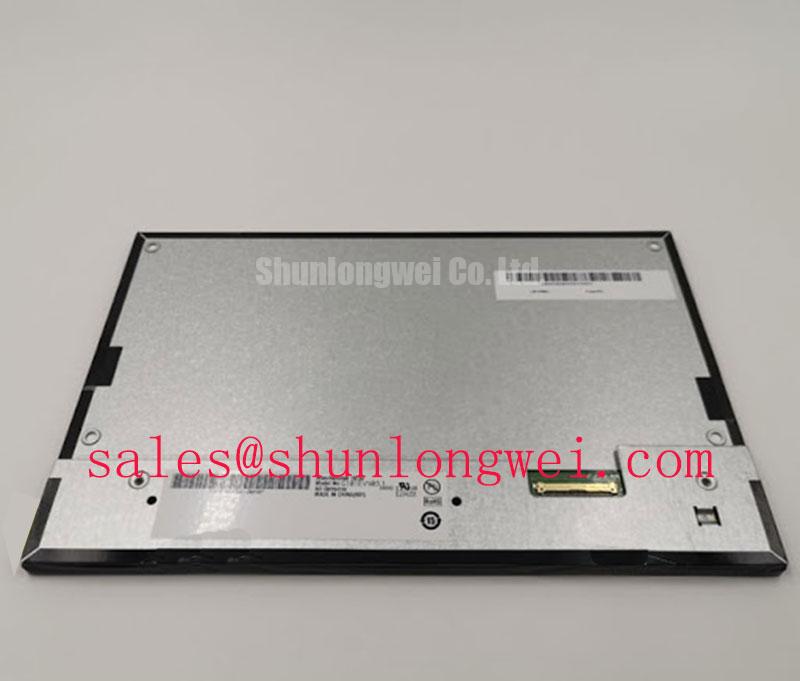
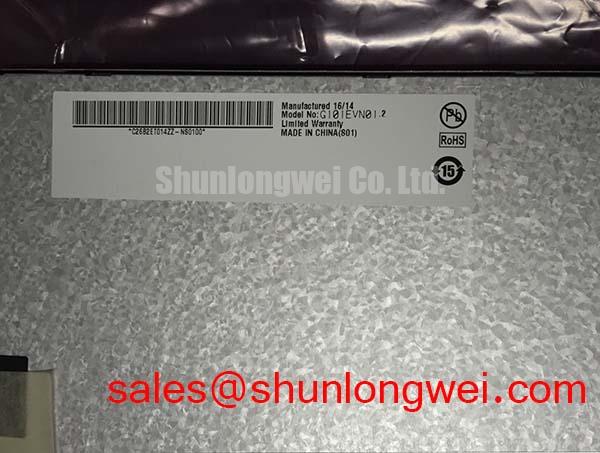
The AUO G101EVN03.0 is an industrial-grade 10.1-inch TFT-LCD module engineered for exceptional visual performance in high ambient light and thermally challenging conditions. Delivering a potent combination of high brightness, wide viewing angles, and robust construction, it provides a reliable human-machine interface (HMI) foundation for a new generation of smart industrial equipment, outdoor kiosks, and portable diagnostic tools. Its MVA (Multi-domain Vertical Alignment) technology ensures superior image fidelity and color consistency, critical for applications where data must be interpreted accurately and quickly. Best fit for outdoor HMI or portable instrumentation where high brightness and wide temperature tolerance are non-negotiable design criteria.
Key Parameter Overview
Decoding the Specs for Enhanced Operational Resilience
The specifications of the G101EVN03.0 underscore its suitability for deployment in environments where consumer-grade displays would fail. The combination of high brightness and a wide operating temperature range is a critical enabler for equipment designed for outdoor or factory floor use. This ensures consistent readability and reliable performance, whether in direct sunlight or in unconditioned industrial settings.
| Key Performance Indicators: G101EVN03.0 | |
|---|---|
| Parameter | Value |
| Screen Size | 10.1 inches |
| Resolution | 1280(RGB)×800 (WXGA) |
| Luminance (Brightness) | 1000 cd/m² (Typ.) |
| Contrast Ratio | 1300:1 (Typ.) |
| Viewing Angle (L/R/U/D) | 85/85/85/85 (Typ.) (CR≥10) |
| Display Technology | MVA, Normally Black, Transmissive |
| Operating Temperature | -20 ~ 60 °C |
| Storage Temperature | -30 ~ 70 °C |
| Backlight Lifetime | 50,000 hours (Min.) |
| Signal Interface | LVDS (1 channel, 6/8-bit) |
Application Scenarios & Value
System-Level Benefits in Outdoor and Industrial HMI Systems
The G101EVN03.0 is engineered to resolve a primary challenge for designers of outdoor and industrial equipment: ensuring screen legibility and operational reliability under fluctuating environmental conditions. Consider the scenario of a portable geological survey instrument. Its operator may move from a shaded vehicle interior to bright, direct sunlight. The display's 1000 cd/m² luminance is not just a specification; it is the core feature that overcomes solar loading, preventing the screen from becoming washed out and unreadable. This high brightness, combined with the 1300:1 contrast ratio, ensures that critical data visualizations, maps, and readings remain sharp and clear, directly impacting operator efficiency and reducing the risk of misinterpretation. What is the primary benefit of its MVA technology? It provides exceptionally wide and consistent viewing angles, crucial for multi-person viewing or off-axis operation. For systems requiring a similar feature set but in a different resolution or size, AUO offers a broad portfolio of industrial displays, such as the G156HTN02.1.
Frequently Asked Questions (FAQ)
How does the 1000 cd/m² brightness rating of the G101EVN03.0 directly benefit outdoor applications?
A brightness of 1000 cd/m², often referred to as 1000 nits, provides superior screen visibility in high ambient light, including direct sunlight. This is a critical performance threshold for outdoor kiosks, marine chartplotters, and portable field instruments, ensuring the display remains readable without requiring a hood or shield, thereby improving usability and safety.
What is the engineering significance of the MVA (Multi-domain Vertical Alignment) display mode in this panel?
Unlike standard TN (Twisted Nematic) panels, MVA technology provides significantly wider viewing angles (85° in all directions for this model) and a higher native contrast ratio. For an engineer, this means greater flexibility in product design, as the device can be mounted or held at various angles without significant color shift or loss of detail—a key requirement for collaborative workstations or complex machinery controls.
Does the -20°C to 60°C operating temperature range impact the choice of enclosure or system cooling?
Yes, significantly. This wide operating range reduces the need for complex thermal management systems like heaters or active cooling in many applications. It allows the panel to be integrated into sealed, fanless enclosures for harsh environments, simplifying the mechanical design, lowering power consumption, and increasing the overall system's MTBF (Mean Time Between Failures) by eliminating moving parts.
With a WLED backlight lifetime of 50,000 hours, what does this translate to in terms of operational longevity?
A 50,000-hour lifetime translates to over 5.7 years of continuous 24/7 operation before the backlight brightness is expected to degrade to 50% of its initial value. For typical industrial applications with 8-hour daily shifts, this extends to well over a decade, making it a highly reliable, long-term component that aligns with the lifecycle of industrial machinery and minimizes future maintenance costs.
Technical Deep Dive
A Closer Look at the MVA Technology for High-Fidelity Industrial Imaging
The choice of MVA technology in the AUO G101EVN03.0 is a deliberate engineering decision aimed at applications where image integrity is paramount. While high brightness ensures visibility, MVA ensures the content being viewed is accurate from any practical angle. This is achieved by aligning liquid crystals vertically to the substrate in the off-state, which creates a very deep, uniform black level. When voltage is applied, the crystals tilt in multiple domains within each pixel. Why is this multi-domain approach superior for industrial HMI? It averages out the viewing angle dependencies, preventing the color inversion and gamma shifts that plague simpler TN panels when viewed off-axis. For an operator monitoring a process control interface, this means alarm colors, status indicators, and detailed graphs are perceived correctly, regardless of their standing position, reducing the potential for human error.
Industry Insights & Strategic Advantage
Meeting the Demands of Industry 4.0 and All-Weather Operation
The push towards Industry 4.0 places intelligent, data-rich interfaces at the very edge of operations—from factory floors to remote agricultural fields. The G101EVN03.0 directly supports this trend by providing a display solution that does not compromise on performance when moved from the lab to the real world. Its robust environmental specifications align with the need for reliable, all-weather digital interfaces on assets like smart agricultural machinery, EV charging stations, and public information terminals. As automation and remote monitoring become standard, the HMI is often the primary point of interaction for maintenance and diagnostics. A display that fails in cold, heat, or bright sun is a critical point of failure for the entire system. By delivering consistent performance across a wide thermal and lighting spectrum, the G101EVN03.0 enables OEMs to build more resilient, geographically flexible, and user-friendly systems. What is the best application for a high-contrast MVA display? Any system where accurate color and data representation from multiple viewing angles are crucial for safe and efficient operation.
Strategic Outlook
For engineering and procurement teams, selecting a display like the G101EVN03.0 is a strategic decision that prioritizes total cost of ownership (TCO) over initial unit price. The panel's inherent durability, evidenced by its 50,000-hour backlight and wide operating temperature range, minimizes the likelihood of costly field failures, service calls, and reputational damage. By designing with a component that is pre-validated for harsh conditions, development cycles can be shortened, and system-level reliability is fundamentally enhanced. This positions the G101EVN03.0 not just as a display, but as a core component for building dependable, next-generation industrial and outdoor electronic systems. For further reading on display technologies, see this guide on TFT-LCDs for industrial applications.