Content last revised on September 10, 2026
AUO G238HAN01.2 Industrial LCD Display Panel
Introduction & Key Features
A Color-Accurate AHVA Visual Solution for Professional Integration
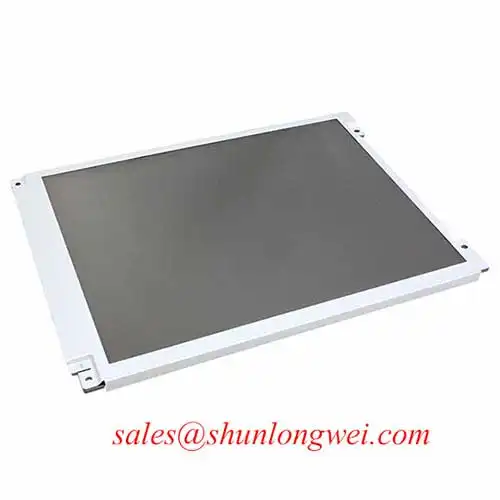
The G238HAN01.2 by AUO is a high-performance 23.8-inch diagonal a-Si TFT-LCD display panel designed for medical diagnostic imaging and premium industrial human-machine interfaces (HMIs) requiring professional-grade color accuracy. Featuring a native 1920x1080 (FHD) resolution, a high-contrast ratio of 1000:1, and a wide 83% NTSC color gamut, this model provides excellent color fidelity. For engineers evaluating backlight driver configurations, the panel requires an external constant-current source to support its integrated WLED layout.
Application Scenarios & Value
Navigating Integration Challenges in Clinical Diagnostics and Industrial HMIs
For medical imaging systems requiring precise color mapping, this 83% NTSC FHD display provides the necessary color accuracy. Engineers often face challenges with viewing angle limitations when installing large displays in clinical diagnostic areas or multi-user industrial control rooms. Off-axis viewing on standard panels can lead to color shift and severe grayscale inversion, undermining critical visual assessments. Utilizing Advanced Hyper-Viewing Angle (AHVA) technology, the G238HAN01.2 delivers wide viewing angles of 89°/89°/89°/89° (left/right/up/down), ensuring uniform image quality from virtually any perspective.
While this high-gamut display is optimized for clinical applications and diagnostic monitors, other applications might benefit from different feature sets. For systems where color accuracy can be balanced with standard industrial monitoring requirements, alternative options like the related G238HAN01.0 or the lower-power MV238FHM-N30 are often evaluated. Choosing the right display technology depends closely on specific ambient light conditions and operational environments, as detailed in our technical guide on TN vs IPS technology.
Technical Deep Dive
Analyzing AHVA Architecture and Backlight Configuration
The core of the G238HAN01.2 is its AHVA cell structure, which functions similarly to in-plane switching (IPS) by aligning liquid crystal molecules parallel to the glass substrate. This horizontal rotation eliminates the optical distortion common in traditional twisted nematic panels. By maintaining consistent light transmission across wide viewing angles, the panel avoids the loss of color fidelity in critical diagnostic environments. Further technical details regarding horizontal alignment structures are explained in our resource on TFT-LCD industrial applications.
Powering the illumination system is an 18S4P White LED array, structured as 18 series LEDs in 4 parallel strings. Because this panel is supplied without an internal backlight driver, system designers must select an external constant-current driver matching the required input voltage of 45.9V to 57.8V and a typical current of 280mA (70mA per string). Think of the 18S4P LED array as a multi-lane highway; if one lane encounters an electrical bottleneck, it can lead to uneven brightness across the panel, making precise constant-current regulation essential for uniform illumination.
Interface signals are routed through a 2-channel, 8-bit LVDS Interface using a 30-pin connector. This setup supports a palette of 16.7 million colors while keeping electromagnetic interference low. The typical logic interface supply voltage (VDD) is specified at 5.0V. To prevent voltage fluctuations from impacting signal transmission, engineers should implement adequate decoupling capacitors near the logic power input pins.
What display technology does the G238HAN01.2 use? It uses Advanced Hyper-Viewing Angle (AHVA) technology.
What is the NTSC color gamut of G238HAN01.2? It features an 83% NTSC color gamut.
Key Parameter Overview
Factual Specifications for High-Performance Visuals
The following table lists the verified electrical, mechanical, and optical specifications of the display panel as documented in its technical product data sheet.
| Specification Parameter | Value / Rating |
|---|---|
| Panel Size & Type | 23.8 inch diagonal a-Si TFT-LCD, LCM |
| Resolution | 1920x1080 (FHD), 92 PPI |
| Active Area | 527.04 (W) x 296.46 (H) mm |
| Outline Dimensions | 543.0 (W) x 317.4 (H) x 11.65 (D) mm |
| Luminance (Brightness) | 400 cd/m² (Typical) |
| Contrast Ratio | 1000:1 (Typical) |
| Viewing Angles | 89° / 89° / 89° / 89° (L / R / U / D) |
| Color Gamut | 83% NTSC (CIE1931), 100% sRGB coverage |
| Signal Interface | LVDS (2 ch, 8-bit), 30 pins |
| Logic Input Voltage (VDD) | 5.0V (Typical) |
| Backlight Layout | WLED (18S4P), without integrated driver |
| Backlight Requirements | 51.0V Typical forward voltage, 280mA Total current |
| Operating Temperature (Top) | 0°C to 50°C |
Download the G238HAN01.2 datasheet for detailed specifications and performance curves.
Frequently Asked Questions
Resolving Engineering Implementation Questions
How should the external backlight driver be configured for the G238HAN01.2?
The panel contains a WLED backlight arranged in an 18S4P configuration. System designers must utilize an external constant-current LED driver capable of delivering 280mA (70mA per channel) with an output voltage range matching 45.9V to 57.8V. Proper thermal management of the driver and feedback loops is necessary to ensure consistent luminance over the lifetime of the backlight.
What are the benefits of the 83% NTSC color gamut in professional applications?
The 83% NTSC gamut (which translates to approximately 100% sRGB coverage) provides rich color reproduction, making the panel well-suited for medical imaging. The broad range ensures that delicate variations in shading and complex color-coded diagnostic data are rendered accurately, reducing reading errors compared to standard 72% NTSC displays.
Does this display panel support installation in portrait orientation?
Yes, the AHVA cell structure allows the panel to be mounted in either landscape or portrait orientations. Because it maintains an 89-degree viewing angle across all axes, there is no risk of the color shifting or contrast loss commonly associated with standard TN panels when rotated.
Strategic Integration Outlook
Evaluating Next-Generation Display Trends in Industrial Design
The industrial and medical sectors continue to transition toward larger displays featuring wider viewing angles and higher color fidelity. Standardizing on interfaces like LVDS ensures long-term system design compatibility, while the shift to high-gamut panels supports accurate diagnostic visualization. By decoupling the backlight driver from the panel, manufacturers can customize their driver circuits for specific energy efficiency targets, thermal constraints, and dimming requirements.