
Content last revised on September 27, 2026
Industrial Bezel Envelope and Mounting Checks
Read the label on the removed display before ordering a replacement: the requested identifier LM64P83 does not exactly match the supplied Sharp hardware reference LM64P837. The specifications below apply to LM64P837 and should not be assigned to an LM64P83 unit until its full part number is confirmed.
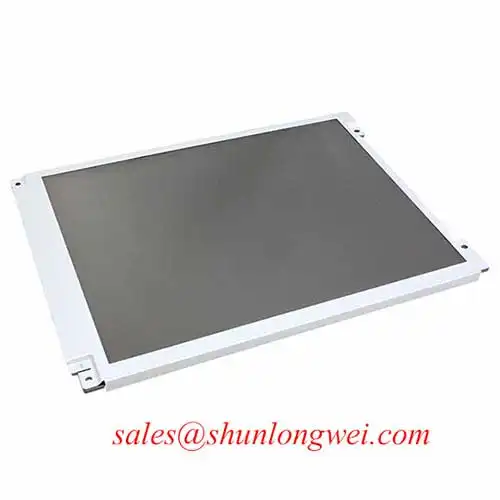
The supplied official specifications identify LM64P837 as a Sharp 9.4 inch (24 cm) monochrome STN LCD with a 253.0 × 174.0 × 7.0 mm module envelope and a 192.0 × 144.0 mm active display area. Its native image is 640 × 480 pixels. These are useful first checks when assessing a legacy HMI opening, but the module envelope alone does not establish mounting hole positions, bezel clearance or connector reach.
On the bench, compare the removed unit with the candidate panel at the label, mounting points, connector position and active image location. Then offer the module to the enclosure without tightening the fasteners. If the bezel bears on the viewing area or the chassis twists as screws are seated, stop and check the mechanical drawing and surrounding hardware. Fastener torque is not specified in the supplied data, so a generic screw torque must not be treated as a Sharp limit for this panel. This is a Design Consideration: mounting pressure should be distributed according to the equipment drawing and verified by inspection with the display operating.
The official operating temperature range is 0°C to +50°C. A cold start below that range is outside the stated specification; slower or otherwise altered image response must not be converted into a claimed low temperature capability. For an enclosed marine radar or navigation bridge console, engineers should evaluate ambient temperature, enclosure sealing and sunlight readability against the complete equipment requirements. The supplied panel data does not establish salt mist resistance, an anti glare coating or optical bonding.
When checking another panel in the same general size class, LM64P10 can be placed on the comparison list. It should not be treated as a direct replacement without matching its drawing, electrical interface, display behavior and backlight requirements to the installed assembly.
Single CCFL Backlight and Inverter Diagnosis
LM64P837 is specified with one CCFL backlight lamp. That fact matters during a black screen callout: a dark panel can still be receiving image data. With the equipment isolated, inspect the lamp lead and inverter connections for looseness or visible damage, then follow the equipment service procedure for live measurements. A flashlight held across the display surface may reveal a faint image; that observation directs attention toward the illumination path, but it does not by itself identify a failed lamp or inverter.
The supplied specifications do not state an inverter input rating, lamp striking voltage, operating current, dimming method or backlight life. An LED constant current driver is not an interchangeable supply for the specified CCFL. As a Design Consideration, verify inverter compatibility from the original equipment documentation and the actual lamp connection before energizing a replacement assembly. If illumination briefly appears and then drops out, inspect the inverter supply and its control signals under the conditions defined by the host equipment rather than assuming a single fault.
Keep related display hardware distinct during procurement. LMS700KF01-001 is another display product reference, not an established inverter for LM64P837. Its presence in a parts search does not establish shared power, connector or backlight requirements.
Field Alert: Disconnect power and follow the equipment discharge procedure before reseating the panel connector or handling the CCFL inverter leads.
Digital Parallel Cable Seating and Power Sequence
The official signal interface is digital parallel data, 4 bit or 8 bit. It must not be described as LVDS merely because a host uses a flat cable. Before moving conductors or testing an unfamiliar connector, obtain the original pin assignment for the installed revision. The supplied parameter list does not identify connector pin numbers, logic supply voltage, timing limits or a prescribed power sequence.
For intermittent text, horizontal artifacts or a white screen, first inspect the cable at both ends while power is off. Check that the connector latch is fully seated, the cable is correctly oriented and the contact area is clean and undamaged. Compare the routing with the original installation rather than adding shielding or ferrites on the assumption that every image disturbance is electromagnetic interference. As a Design Consideration, separation from motor drive wiring can reduce coupling risk, but the required routing and any protective measures are determined by the host system and verified during operation.
If the backlight works but no stable image appears, check the host supply and display control signals against the equipment schematic using suitable instruments. Observe startup and shutdown behavior as well as steady operation: an image that appears only during a transition can point toward a supply, connection or control timing issue requiring further measurement. No supply threshold or delay should be inferred from the display dimensions or resolution. Persistent images after shutdown likewise require examination of the host power down behavior before assigning a panel fault.
Long duration static HMI screens deserve an operating test with the actual interface graphics, particularly if a removed panel showed retained patterns. The supplied data provides no image retention test limit or service life figure for LM64P837. For broader context on industrial display selection, The Ultimate Guide to Industrial TFT LCD Technology discusses display technology considerations; its TFT discussion must not be read as an LM64P837 specification.
Incoming Benchtop Inspection and Fault Isolation
Begin incoming inspection by recording the complete label and comparing it with the order and the removed panel. This step is especially important here: LM64P83 is the inquiry term, while LM64P837 is the complete part number in the supplied official specification. Do not close that gap by assuming the shorter identifier denotes the same electrical or mechanical revision.
Inspect the viewing surface, chassis edges, cable connection and lamp leads before applying power. Under controlled bench conditions, use the correct host interface and documented supplies to display a uniform light field, a uniform dark field and representative text or graphics. Because this is a black and white STN display, a three primary color test intended for a color LCD is not an appropriate acceptance test. Look for missing rows or columns, uneven illumination, unexpected shading and unstable text, recording the conditions under which each symptom occurs.
If the screen looks dark, illuminate it obliquely with a flashlight while the host is presenting a known image. A faint readable pattern suggests that image generation and illumination should be investigated separately. If a line defect remains in the same position across different test patterns, compare cable seating and host signals before attributing it to a bonded driver connection. The supplied information does not establish the panel’s internal bonding construction, so a visible line cannot conclusively diagnose a particular internal fracture.
Finish by checking the displayed 640 × 480 image against the active area and observing it throughout the host’s normal startup and shutdown sequence. Record the panel label, test pattern, ambient conditions and any repeatable artifact for the maintenance record. That evidence supports a fit assessment without turning an unverified LM64P83 designation into an LM64P837 specification.


