Content last revised on August 28, 2026
Sharp LQ150X1LCD3 Industrial Display Panel
Highlights & Technical Overview
Evaluating the Sharp LQ150X1LCD3 Industrial Display Panel
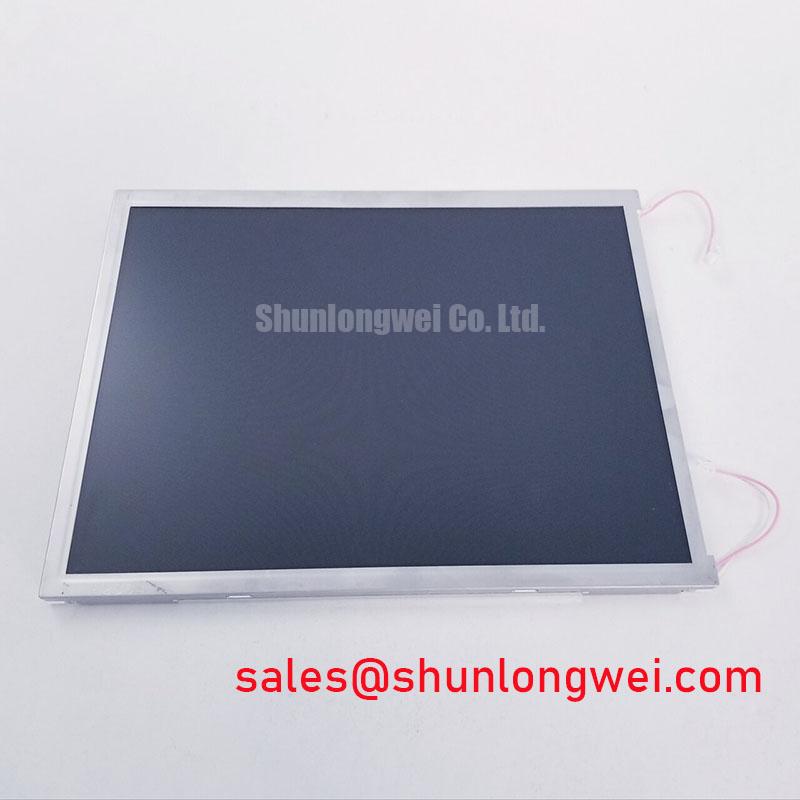
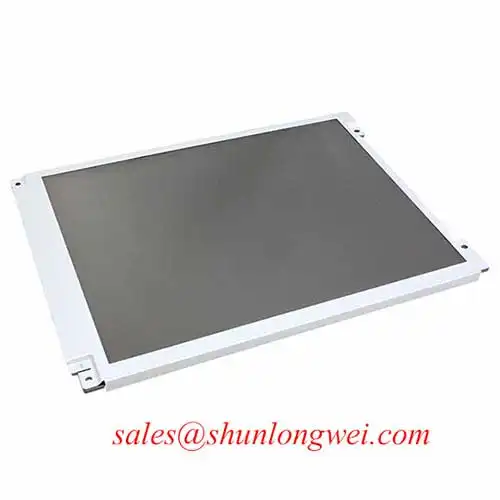
The Sharp LQ150X1LCD3 is a transmissive 15.0-inch a-Si TFT-LCD panel delivering reliable visual feedback for industrial monitor integration. Top Specs: 1024x768 XGA | 400 cd/m² | LVDS (1 ch, 8-bit). Benefits: Stable 400:1 contrast; Simplified 20-pin interfacing. Addressing retrofitting concerns, the panel features a 4-lamp CCFL backlight structure compatible with aftermarket LED upgrade kits to extend service life. Best Fit: For legacy automation systems requiring 4:3 aspect ratio replacements, this XGA transmissive display provides the optimal drop-in fit.
Application Scenarios & Value
System-Level Value in Legacy Industrial Interfaces
Engineers often face the challenge of sourcing reliable replacement displays for legacy factory automation terminals and human-machine interfaces (HMIs) without redesigning the entire controller housing. The LQ150X1LCD3 addresses this lifecycle maintenance hurdle by offering a standard 4:3 aspect ratio display with an active area of 304.128(W) x 228.096(H) mm. This specific layout is common across various heavy-machinery monitoring hubs and legacy control consoles. While this model is suitable for standard industrial XGA setups, system designers requiring alternative backlight longevity may consider the related LQ150X1LGN2A, which offers comparable dimensional compatibility. For modern high-contrast upgrades, the G150XNE-L01 presents a viable alternative from Innolux.
Technical & Design Deep Dive
Understanding Signal Integrity and Backlight Thermal Design
Understanding the optical and electrical characteristics of the LQ150X1LCD3 is essential for optimizing system integration. The 400:1 contrast ratio behaves like the dynamic range of an audio amplifier, isolating the visual signal (white brightness) from the noise floor (black state light leakage). Furthermore, the 20-pin LVDS interface acts like a multi-lane highway, splitting high-frequency video data across parallel lanes to reduce electromagnetic interference (EMI) compared to old parallel TTL ribbons. The signal interface utilizes standard LVDS interface specifications, which minimize noise coupling.
For engineers interested in the core physics of these panels, our TFT-LCD technology guide details the pixel-level modulation of transmissive displays. When evaluating display retrofits, the total cost of ownership (TCO) becomes a critical metric. Comparing industrial vs consumer displays TCO analysis shows that long-term availability reduces downtime. Furthermore, selecting between TN panels like this one and wider-angle options is discussed in our TN vs IPS panel comparison.
What is the signal type of the display? The panel uses a 1-channel, 8-bit LVDS signal.
What is the nominal input voltage? The nominal input voltage for the logic board is 3.3V.
Key Parameter Overview
Decoding the Core Display Specifications
| Specification Parameter | Nominal Rating / Value | Engineering Significance |
|---|---|---|
| Panel Model | LQ150X1LCD3 | Reference part number for procurement |
| Screen Size | 15.0-inch diagonal | Standard retrofitting dimension for legacy HMIs |
| Resolution | 1024x768 (XGA) | 4:3 aspect ratio standard for industrial software layouts |
| Active Area | 304.128 x 228.096 mm | Exact visual opening requirement for bezel design |
| Interface Type | LVDS (1 ch, 8-bit) | Low-voltage differential signaling for noise immunity |
| Pin Count | 20-pin connector | Standard interface routing configuration |
| Supply Voltage (VCC) | 3.3V (Typical) | Standard low-voltage logic rail requirement |
| Luminance / Brightness | 400 cd/m² (Typical) | Suitable for indoor control room illumination levels |
| Contrast Ratio | 400:1 (Typical) | Provides clear character legibility for operators |
| Backlight Type | 4 pcs CCFL edge lamps | Requires external high-voltage inverter driver |
Frequently Asked Questions
Resolving Common Engineering Queries
Does the LQ150X1LCD3 require an external inverter for the CCFL backlight?
Yes, the module uses a 4-lamp CCFL edge-light backlight system and does not contain an integrated backlight driver. An external high-voltage CCFL inverter is required to power the lamps, or it can be replaced with an LED driver if converted.
How does the 25 ms response time affect industrial HMI performance?
A response time of 25 ms (Tr+Td) is sufficient for static and slow-moving industrial GUI displays. It prevents noticeable ghosting in menu transitions while keeping power consumption low.
What is the signal mapping for the 20-pin LVDS interface on this display?
The interface accepts 1-channel, 8-bit LVDS signals. This configuration transmits red, green, blue data, and sync signals over four differential pairs plus a clock pair. Designers must verify compatibility with their display controller's mapping.
Strategically, maintaining legacy display formats like the XGA resolution ensures that critical infrastructure—from manufacturing lines to medical consoles—continues to operate efficiently without undergoing costly full-system recertifications.