Content last revised on September 10, 2026
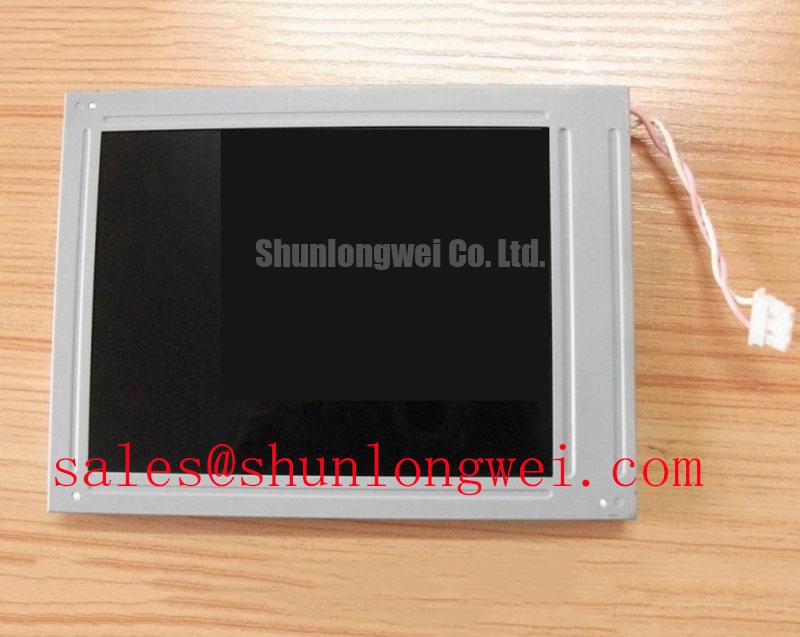
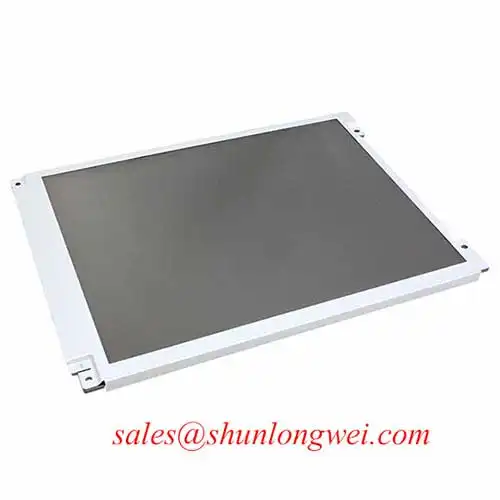
Toshiba LTM15C429: Industrial 15.0-inch XGA TFT-LCD Panel
Architected for demanding operational environments, the Toshiba LTM15C429 delivers robust visual data rendering via its proven analog architecture. Featuring a 1024x768 XGA resolution, 200 cd/m² luminance, and a 250:1 contrast ratio, this display ensures sustained image uniformity across industrial lifecycles. While modern designs favor digital communication, this module natively accepts Analog RGB signals alongside TTL sync pulses, eliminating complex signal conversion overhead in older control networks. For legacy automation systems requiring reliable analog RGB inputs, this 15.0-inch 1024x768 module is the optimal choice.
Key Parameter Overview
Decoding the XGA Specs for System Integration
Proper evaluation of the LTM15C429 requires a rigorous understanding of its electrical and optical characteristics to ensure seamless field deployment.
| Engineering Parameter | Specification Value |
|---|---|
| Resolution | 1024 x 768 pixels (XGA) |
| Active Area | 304.128(W) x 228.096(H) mm |
| Luminance | 200 cd/m² (Typ.) |
| Contrast Ratio | 250:1 (Typ.) |
| Viewing Angle (Horizontal / Vertical) | 120° / 90° |
| Video Signal Interface | Analog R, G, B (0.7Vp-p) |
| Synchronization | TTL Level |
| Backlight Architecture | Two CCFL (Side light) |
| Supply Voltage | 12V DC |
| Power Consumption | 17W (Target) |
Application Scenarios & Value
Achieving System-Level Benefits in Legacy Automation Systems
Engineers often face severe integration challenges when replacing aging Human-Machine Interfaces within CNC machinery or a SCADA terminal. The LTM15C429 directly addresses this hardware integration friction. By accepting native Analog RGB signals, it bypasses the need for active digital-to-analog converter boards. This direct drive capability is highly advantageous for PLC visualization platforms and medical HMI architectures engineered before the mass adoption of modern digital interfaces. Deploying this module minimizes downtime during critical maintenance windows, allowing facilities to maintain operational throughput without overhauling their entire control infrastructure.
When upgrading factory automation displays, ensuring physical and electrical alignment is paramount. This panel operates exclusively on a 12V DC supply rail alongside its dedicated inverter, simplifying the power architecture inside enclosed industrial chassis. While this model is highly effective for legacy analog systems, for systems requiring modern digital integration, the related LQ150X1LGN2A offers an LVDS communication protocol. Additionally, applications prioritizing solid-state LED illumination upgrades might evaluate the G150XTN03.0 for enhanced optical longevity in similar dimensional footprints.
Technical Deep Dive
A Closer Look at the Dual-CCFL Backlight and Analog Interface Architecture
The core of the LTM15C429 TFT-LCD lies in its straightforward yet highly reliable analog signal processing path. Think of the Analog RGB input as a direct linguistic translation mechanism. It receives raw analog voltage variations at 0.7Vp-p and maps them instantly to pixel intensity, completely bypassing the latency inherent in digital packet decoding sequences. This ensures immediate, zero-lag visual feedback, which is absolutely critical when operators are monitoring high-speed mechanical processes in real time.
Furthermore, the Two CCFL side-light structure dictates the thermal and optical stability of the display unit. The dual-tube layout acts much like a meticulously balanced suspension bridge, distributing illumination evenly across the 304.128 mm wide active area without causing localized thermal hotspots that could degrade the underlying liquid crystal layer over time. This precise thermal and optical distribution guarantees that the specified 200 cd/m² luminance remains consistent across thousands of heavy-duty operational hours. For deeper theoretical insights into these display mechanics, engineers can consult The Ultimate Guide to TFT-LCD from Basics to Industrial Applications.
FAQ
Common Engineering Queries on the LTM15C429
- How does the analog RGB interface simplify retrofitting?
By natively accepting a 0.7Vp-p Analog RGB signal, it allows direct physical connection to older industrial graphics controllers without requiring external signal conversion logic. - What is the primary benefit of the dual-CCFL backlight?
It ensures consistent luminance across the 15-inch active area. - Can the 12V DC supply voltage be directly sourced from standard industrial buses?
Yes, the panel requires a clean 12V DC input, which is a standard rail in most automation power distribution blocks, provided a compatible CCFL inverter is utilized. - How does the 250:1 contrast ratio perform in bright factory environments?
While not engineered for direct sunlight visibility, a 250:1 contrast ratio provides sufficient image clarity and data readability under standard ambient factory lighting conditions. - Why is TTL level synchronization critical for this display?
TTL sync ensures that the horizontal and vertical timing pulses from legacy graphics generation cards are accurately read, preventing screen tearing and ensuring a stable image output.
When evaluating legacy component replacements, verifying the mechanical dimensions, analog signal protocols, and power delivery networks strictly dictates the success of the field retrofit. Implementing an industrial panel like this demands precise matching of the original analog timing parameters, ensuring that the entire manufacturing system's operational continuity remains completely unbroken during critical high-volume production cycles.