Content last revised on September 10, 2026
Samsung LTM170W1-T01: High-Brightness 17.0" LCD for Industrial Integration
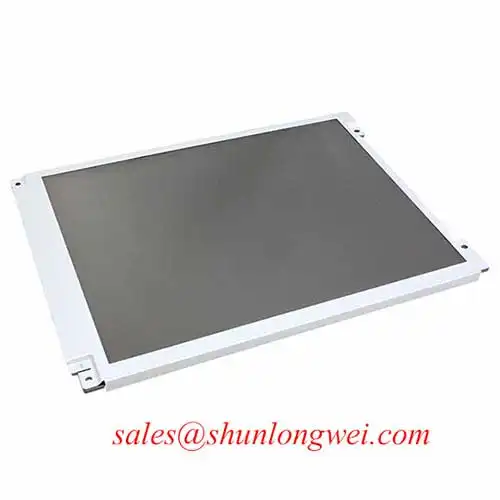
Delivering 450 cd/m² luminance and robust Parallel RGB interfacing, the Samsung LTM170W1-T01 ensures seamless integration and sustained visibility in legacy industrial environments. What is the primary benefit of the parallel interface in the LTM170W1-T01? It provides direct, low-latency timing compatibility for legacy industrial controllers without requiring signal conversion. Featuring a 17.0-inch active area, a sharp 1280x768 WXGA resolution, and a reliable CCFL backlight, this panel bridges the gap between older control architectures and high-performance optics. By eliminating the need for intermediary deserialization, it guarantees low-latency signal transmission while cutting through harsh ambient glare. For legacy CNC controllers requiring direct timing control and high readability, this 450-nit panel is the optimal choice.
Application Scenarios & Value
Overcoming Legacy Integration Challenges in Factory Automation
Engineers often face the critical challenge of replacing displays in legacy factory automation without overhauling the entire control architecture. In aging CNC machinery or early-generation medical imaging systems, the host controller typically outputs native parallel data. Upgrading to modern serial displays introduces the risk of timing jitter and demands costly translation boards. The LTM170W1-T01 circumvents this by utilizing a native Parallel RGB (2 ch, 8-bit) connection via a 76-pin interface. This permits a direct hardware swap, allowing the existing HMI logic to dictate pixel timing directly.
Simultaneously, industrial environments suffer from intense overhead lighting that easily washes out standard commercial screens. The 450 cd/m² brightness rating of the LTM170W1-T01 ensures that operators can accurately monitor complex telemetry and alarm states without eye strain. Furthermore, the 1280x768 resolution provides ample screen real estate for multi-window control software. While this model is ideal for high-brightness parallel integration, for systems demanding modern LVDS architectures, the related G170ETN02.1 offers a streamlined approach for newer builds.
Technical Deep Dive
Decoding the CCFL Architecture and Parallel Interface Performance
Understanding the internal mechanisms of the LTM170W1-T01 reveals why it remains highly relevant for specific industrial upgrades. The panel employs an a-Si TFT active matrix structure, operating in a normally white TN mode. This delivers a dependable 400:1 contrast ratio, which is crucial for distinguishing distinct geometric lines in CAD/CAM applications. To understand the underlying pixel switching mechanisms, reviewing TFT-LCD fundamentals offers excellent context.
Think of the Parallel RGB interface like a multi-lane highway where all vehicle types (red, green, blue data bits, and clock signals) travel side-by-side arriving simultaneously. Unlike a single-lane fast track (serial LVDS) that requires a complex traffic controller (deserializer) at the destination to sort the data, the parallel bus eliminates translation latency entirely. This direct path ensures instantaneous pixel response to controller commands.
Additionally, the CCFL backlight acts like the steady, predictable hum of an industrial generator. It might lack the granular, zone-based dimming of modern LEDs, but it provides proven, highly uniform illumination across the entire 17.0-inch matrix without introducing complex thermal throttling dynamics. Rated for 50,000 hours, this backbone ensures the 450 cd/m² output remains stable across years of continuous deployment. For further reading on panel technologies, consult this guide on TN vs IPS technology.
Key Parameter Overview
Specification Breakdown and Engineering Value
| Manufacturer | Samsung | Ensures tier-1 silicon reliability and consistent manufacturing tolerances. |
| Model | LTM170W1-T01 | Standardized industrial form factor for predictable mechanical mounting. |
| Screen Size | 17.0-inch | Provides sufficient viewing area for complex, multi-variable control dashboards. |
| Resolution | 1280x768 WXGA | Delivers optimal pixel pitch for data-dense interfaces and schematics. |
| Brightness | 450 cd/m² | Maintains stark image clarity and prevents washout under harsh factory lighting. |
| Interface Type | Parallel RGB (76-pin) | Enables latency-free, direct timing control for legacy automation hardware. |
| Backlight | CCFL (50K Hours) | Guarantees long-term, stable luminance with highly uniform light distribution. |
Download the LTM170W1-T01 datasheet for detailed specifications and performance curves.
Frequently Asked Questions
Expert Insights on Integration and Maintenance
- How does the Parallel RGB (2 ch, 8-bit) interface simplify retrofitting in older systems?
By operating natively on parallel data lanes, it bypasses the need for external serializer/deserializer hardware. This allows older motherboards to drive the LTM170W1-T01 display directly, preserving the original timing architecture and minimizing points of failure.
- What is the practical impact of the 450 cd/m² brightness rating on the factory floor?
Standard monitors typically output 250 nits, which can fade under bright industrial metal-halide lamps. The 450 cd/m² output ensures high contrast and readability, preventing operator errors when monitoring critical machinery.
- Can the CCFL backlight on the LTM170W1-T01 be serviced or replaced?
While the cold cathode fluorescent lamps boast a 50,000-hour operational lifespan, they are physically integrated into the panel chassis. In most industrial maintenance protocols, replacing the entire LCD module is more reliable than attempting bare-tube replacements.
- Why is the 1280x768 WXGA resolution advantageous for legacy medical imaging?
This specific resolution offers a wider 15:9 aspect ratio compared to standard XGA displays. It provides the necessary horizontal space to display patient telemetry alongside imaging data without software scaling artifacts.
- How does the 70Hz refresh rate compare to standard 60Hz panels in industrial usage?
The slightly elevated 70Hz refresh rate subtly reduces screen flicker. This minimizes operator fatigue during long shifts and provides smoother rendering of fast-moving data graphs in real-time monitoring applications.
From a system design standpoint, the Samsung LTM170W1-T01 remains a highly pragmatic tool. It circumvents the complexities of protocol conversion, favoring direct, physical data pathways. Bridging the gap between legacy parallel architectures and the stringent optical demands of modern workflows is where this panel truly demonstrates its engineering worth in the field.