Content last revised on September 10, 2026
Samsung LTM270DL09: High-Resolution WQHD Display for Demanding Visual Applications
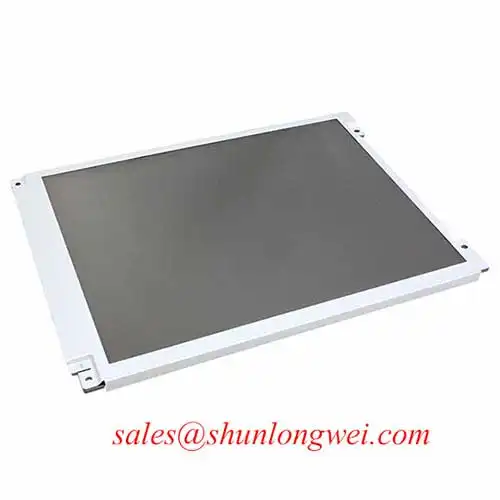
The Samsung LTM270DL09 is a 27.0-inch PLS display offering exceptional WQHD visual fidelity, engineered for streamlined integration into demanding visual systems. Delivering key specifications of 27.0-inch | 2560x1440 WQHD | PLS Technology | LVDS Interface, this module provides two critical engineering benefits: exceptionally wide 178° viewing angles for team collaboration and a standard interface for rapid design-in. This display answers the engineering need for a high-performance panel that combines resolution, color stability, and ease of implementation. Best suited for applications demanding high pixel density and color stability, this 2560x1440 panel is an optimal choice for medical imaging displays and professional-grade desktop monitors.
Application Scenarios & Value
Delivering Precision Imaging from the Desktop to the Control Room
The LTM270DL09 is engineered to excel in environments where visual detail and accuracy are paramount. Its primary application is in high-end desktop monitors for graphic design, CAD/CAM, and software development, where the 2560x1440 WQHD resolution allows users to manage complex visual information without constant scrolling or zooming. In the context of an industrial HMI, this resolution provides operators a comprehensive view of complex process diagrams, enhancing situational awareness and reducing response times. The panel's core strength lies in its ability to render fine lines and sharp text, a direct result of its 108 PPI pixel density.
A key engineering challenge in collaborative environments, such as a medical diagnostics room or a control center, is ensuring that all viewers see the same image regardless of their position. The LTM270DL09 utilizes PLS (Plane to Line Switching) technology to provide a symmetrical viewing angle of 89/89/89/89 degrees. This effectively eliminates color and contrast shift when viewed off-axis, ensuring that critical decisions are based on consistent, accurate visual data. While this model delivers exceptional WQHD detail, for systems where Full HD resolution is sufficient, the related G270HAN01.0 offers a different performance profile within a similar 27-inch form factor.
Key Parameter Overview
Decoding the Specifications for Seamless System Integration
The technical specifications of the LTM270DL09 are tailored for performance and straightforward implementation. The use of a standard LVDS (2 ch, 8-bit) interface is a significant advantage for system designers, ensuring broad compatibility with a wide range of commercially available display controller boards and reducing development timelines. The panel's luminance of 350 cd/m² and a static contrast ratio of 1000:1 produce a bright, clear image suitable for standard indoor operating conditions.
| Parameter | Specification |
| Manufacturer | Samsung Display |
| Screen Size | 27.0 inches |
| Resolution | 2560(RGB)×1440 [WQHD] |
| Panel Technology | a-Si TFT-LCD, PLS, Normally Black |
| Luminance | 350 cd/m² (Typ.) |
| Contrast Ratio | 1000:1 (Typ.) |
| Viewing Angle | 89/89/89/89 (Typ.)(CR≥10) |
| Interface Type | LVDS (2 ch, 8-bit), 30 pins Connector |
| Backlight | WLED |
| Operating Temperature | 0 ~ 50 °C |
Application Vignette
Enhancing Diagnostic Confidence in Medical Imaging Systems
In the field of medical imaging, diagnostic accuracy is non-negotiable. Radiologists and clinicians rely on displays to reveal subtle pathologies in MRI, CT, and digital X-ray scans. The primary challenge is visualizing extremely fine details and slight variations in grayscale tones, which can be easily missed on lower-resolution or color-inaccurate screens. The LTM270DL09 directly addresses this challenge with its 2560x1440 WQHD resolution, providing the pixel density required to render anatomical structures with exceptional clarity.
The panel's 1000:1 contrast ratio is crucial in this context. This specification means the brightest white is 1000 times more luminous than the darkest black. This is analogous to the difference between reading black text on a pure white page versus grey text on a light-grey page. For diagnostic purposes, this high contrast makes it easier to differentiate between tissues of varying densities, allowing critical details to stand out. Combined with the color stability of its PLS technology and the ease of integration offered by its standard LVDS Interface, the LTM270DL09 serves as a reliable foundation for building next-generation medical review stations. For a broader understanding of display technologies, see this guide to TFT-LCD.
Frequently Asked Questions
Engineering Inquiries on Integration and Performance
How does the PLS (Plane to Line Switching) technology in the LTM270DL09 benefit collaborative work environments?
PLS technology, a type of IPS (In-Plane Switching) technology, ensures that color and contrast remain consistent even at wide viewing angles up to 178°. In a collaborative setting like a design review or a medical consultation, this means everyone in the room sees the same accurate image, eliminating ambiguity and fostering better decision-making without being restricted to a narrow, head-on viewing position.
What type of controller is needed to drive the LTM270DL09?
To drive this panel, an engineer would need a display controller board that supports a dual-channel, 8-bit LVDS output compatible with a WQHD (2560x1440) resolution at a 60Hz refresh rate. The 30-pin connector specification further defines the required physical connection. The use of this industry-standard interface simplifies the selection of an appropriate controller from numerous third-party suppliers.
What is the significance of the 108 PPI (Pixels Per Inch) pixel density for professional applications?
A pixel density of 108 PPI creates exceptionally sharp and smooth images, where individual pixels are not easily discernible at a normal viewing distance. For professional applications like graphic design or medical imaging, this translates to the ability to render fine text, intricate lines in CAD drawings, and subtle textures in images with high fidelity, reducing eye strain and improving the accuracy of detailed work.
From a strategic perspective, the LTM270DL09 represents a durable and high-performing display solution that aligns with the industry's sustained demand for higher resolutions and superior image quality. Its reliance on proven, standardized technologies ensures it can be designed into systems with long life cycles, offering a stable platform for applications where visual performance cannot be compromised. The choice between panels often comes down to balancing initial cost with long-term value, an issue explored in the context of industrial vs. consumer displays.