Content last revised on February 6, 2026
M185XW01 VC: An Engineer's Guide to the 18.5" WXGA Integration-Ready TFT-LCD Module
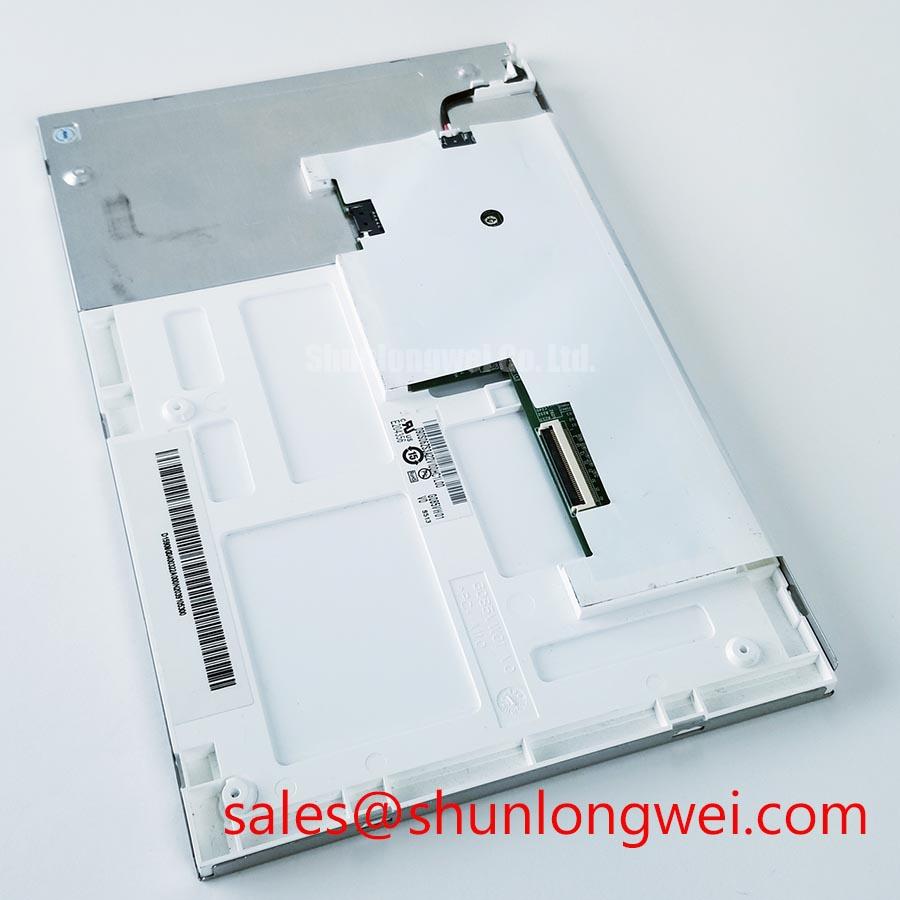
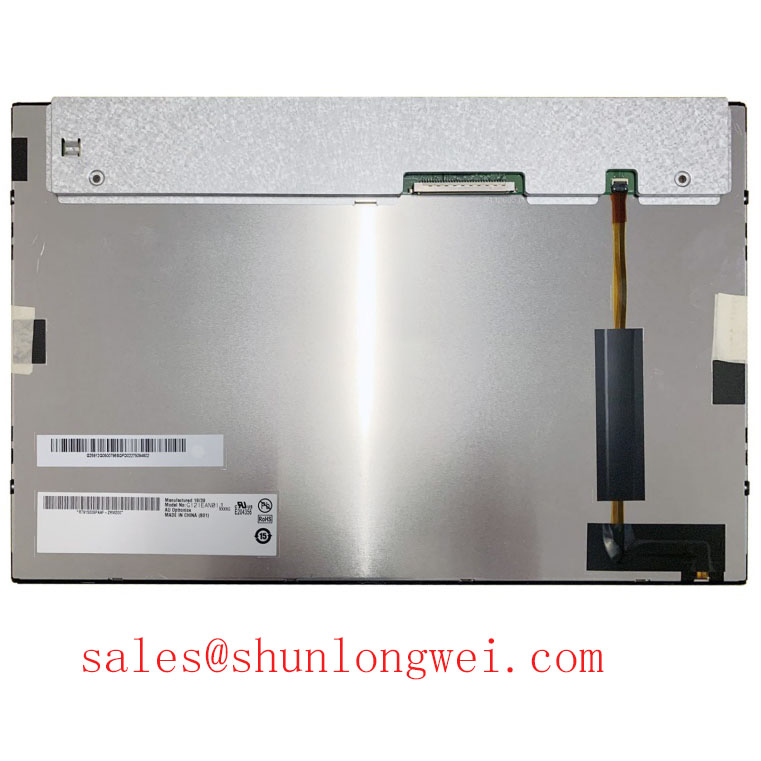
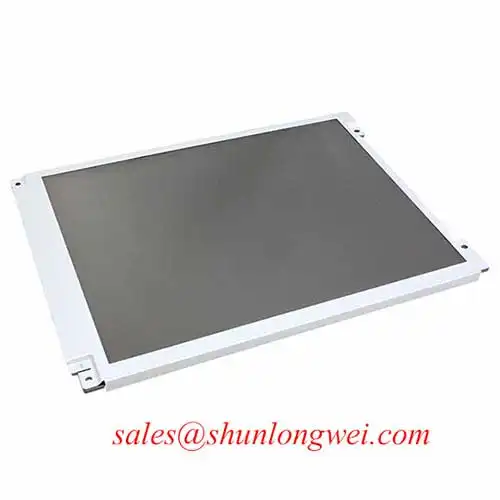
The AUO M185XW01 VC is a versatile 18.5-inch a-Si TFT-LCD panel designed to accelerate the development of cost-effective HMIs and commercial displays. Delivering a core specification of 1366x768 WXGA resolution and a standard LVDS Interface, it prioritizes rapid integration with common controllers and reliable, long-life performance from its WLED backlight system. It simplifies system design by utilizing a standard 1-channel, 8-bit LVDS interface, ensuring broad compatibility with readily available scaler boards and reducing custom engineering efforts.
Application Scenarios & Value
System-Level Benefits in Commercial and Industrial Interface Design
For system integrators targeting mainstream industrial HMIs or Point of Sale (POS) systems, the M185XW01 VC offers a proven, cost-effective path to a modern widescreen interface. Consider an engineer tasked with designing a new POS terminal, upgrading from a legacy 4:3 display to a contemporary 16:9 format without a complete overhaul of the controller electronics. The M185XW01 VC's standard 1ch, 8-bit LVDS interface is the key enabler, allowing the use of an off-the-shelf scaler board to drive the native 1366x768 WXGA resolution. This approach circumvents significant NRE costs and development delays associated with custom hardware. Furthermore, the panel's Anti-Glare surface treatment ensures excellent screen legibility for operators under the diverse and often challenging lighting conditions found in retail and industrial settings.
Beyond POS and industrial control panels, this module is well-suited for applications such as information kiosks and lightweight digital signage, where reliability and ease of integration are paramount. For applications demanding Full HD resolution within the same physical footprint, the related G185HAN01.1 provides a higher pixel density option.
Key Parameter Overview
Decoding the Specs for Integration and Performance
The technical specifications of the M185XW01 VC are optimized for a balance of performance, reliability, and ease of implementation. The following table highlights key parameters and their direct engineering value.
| Feature Group | Specification & Engineering Value |
| Display Core | Screen Size: 18.5-inch Resolution: 1366x768 (WXGA), 16:9 Aspect Ratio Value: Provides a modern widescreen format ideal for contemporary graphical user interfaces (GUIs) in industrial and commercial applications. |
| Optical Performance | Brightness: 250 cd/m² (Typ.) Contrast Ratio: 1000:1 (Typ.) Viewing Angle (H/V): 85°/85°/80°/80° (Typ.) Surface: Anti-Glare, Hard Coating (3H) Value: Delivers solid image clarity and readability for typical indoor environments, with the anti-glare surface being critical for usability under varied lighting. |
| Integration & Power | Signal Interface: LVDS (1 channel, 8-bit) Backlight: WLED System with 30,000-hour lifetime (Typ.) Supply Voltage: 5.0V (Typ.) Value: The standard LVDS interface ensures maximum compatibility and simplifies the connection to host systems, while the long-life WLED backlight reduces the Total Cost of Ownership (TCO). |
| Mechanical & Environmental | Outline Dimensions: 430.4(W) × 254.6(H) × 10.4(D) mm (Typ.) Operating Temperature: 0°C to 50°C Storage Temperature: -20°C to 60°C Value: A standard form factor and robust operating range for commercial and light-industrial indoor applications. |
Application Vignette
Integrating the M185XW01 VC into a Mid-Range Industrial HMI
An engineering team at a control panel manufacturer is tasked with updating its flagship HMI product line. The primary objective is to transition to a widescreen GUI for enhanced data visualization in industrial automation settings, all while adhering to a strict budget and an aggressive time-to-market schedule. The legacy system used a 15-inch XGA panel, which constrained the software's user interface design.
The M185XW01 VC is selected as the display component. Its 18.5-inch diagonal and 1366x768 resolution provide a substantial upgrade in usable screen real estate. However, the decisive factor is the industry-standard LVDS interface. This allows the engineers to bypass proprietary solutions and pair the display directly with a widely available, cost-effective single-board computer (SBC) featuring a native LVDS output. Think of the LVDS interface as a universal port for displays; instead of a complex, custom-engineered connection, it provides a standardized, reliable link between the panel and the processor, dramatically simplifying the video signal chain and system validation process.
The direct result is a significantly accelerated product launch. Engineering resources are reallocated from low-level driver development to refining the HMI software and core application logic. The specified 30,000-hour backlight lifetime provides a strong reliability argument, lowering the predicted Total Cost of Ownership (TCO) for the end customer—a crucial competitive advantage in the industrial market.
Frequently Asked Questions (FAQ)
Engineering Inquiries on the M185XW01 VC
What is the primary benefit of the M185XW01 VC's WXGA (1366x768) resolution over legacy formats?
The 16:9 widescreen aspect ratio is better suited for modern GUIs than older 4:3 formats (like XGA 1024x768). It allows for more efficient layout of control menus, status bars, and data visualization fields side-by-side, enhancing operator workflow.
How does the anti-glare surface treatment impact usability in real-world applications?
The anti-glare surface diffuses ambient light reflections, preventing bright spots and glare that can obscure the screen. In an industrial plant or retail store with overhead lighting, this significantly improves readability, reduces eye strain, and allows the panel to be used in a wider range of mounting orientations.
What type of controller board is required to drive this display?
You will need a controller or host system with an LVDS output that supports a 1-channel, 8-bit configuration and can generate the timing signals for a 1366x768 resolution. Due to its standardized nature, many commercial and industrial single-board computers and scaler boards offer this capability.
What does the 1000:1 contrast ratio signify for a typical industrial HMI application?
A 1000:1 contrast ratio indicates a strong differentiation between the brightest whites and darkest blacks the panel can produce. For an HMI, this translates to crisp, clear text and sharply defined graphics and status indicators, which is critical for at-a-glance readability in a control environment.
Is the backlight in the M185XW01 VC a WLED or CCFL system?
The M185XW01 VC (and similar variants like the VD) utilizes a White LED (WLED) backlight system. This offers benefits over older CCFL technology, including lower power consumption, longer operational lifetime (typically 30,000 hours), and mercury-free construction. Note that some earlier versions of the M185XW01 family used CCFL.
From an engineer's perspective, the M185XW01 VC is not defined by bleeding-edge specifications but by its role as a reliable, predictable, and easy-to-integrate workhorse. Manufactured by AUO, it occupies a strategic sweet spot of size, resolution, and standardized interfacing that enables the rapid development of mainstream industrial and commercial systems without introducing unnecessary project risk or cost.