Content last revised on August 28, 2026
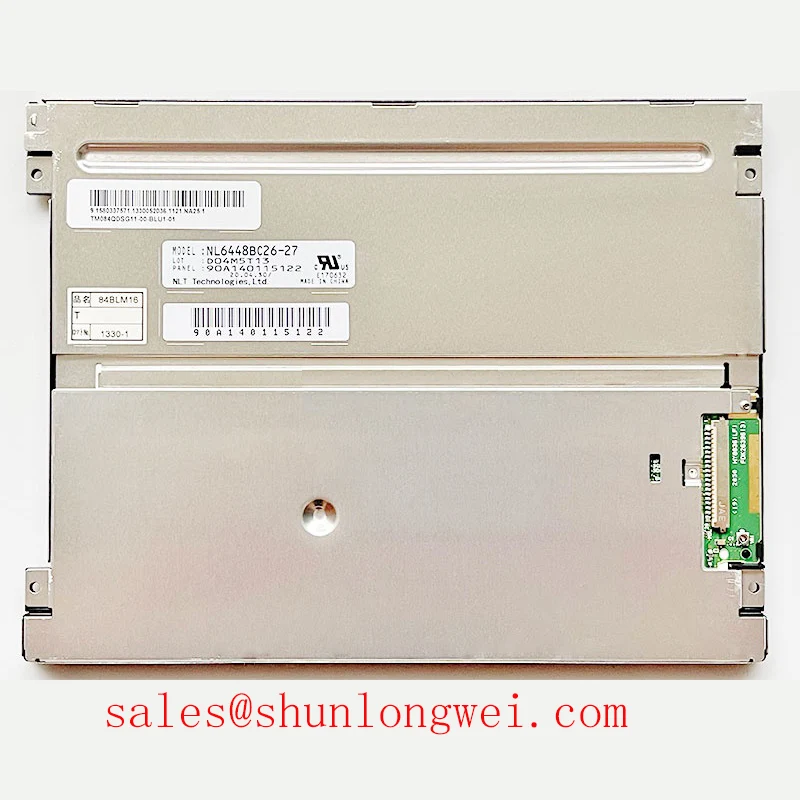
NEC NL10276BC16-04D 8.4-inch TFT-LCD: XGA Resolution & UA-SFT Wide Viewing Angle for Industrial HMIs
The NL10276BC16-04D simplifies compact system integration by delivering high-density 1024x768 XGA resolution within a rugged 8.4-inch footprint. Designed by NEC, this a-Si TFT-LCD features an active area of 170.496 x 127.872 mm and utilizes advanced UA-SFT technology. Key specifications include a wide 88/88/88/88 viewing angle, a 600:1 contrast ratio, and a robust LVDS interface. It offers seamless integration for engineers upgrading legacy operator panels. Does this display support clear visibility from off-axis positions? Yes, its UA-SFT architecture ensures image fidelity regardless of the operator's vantage point. What is the primary benefit of the UA-SFT design? It prevents color inversion at extreme angles for multi-operator environments. For space-constrained industrial control enclosures requiring multi-angle readability, this 8.4-inch module is the optimal choice.
Key Parameter Overview
Decoding the Specs for Enhanced Visual Reliability
| Feature Category | Specification | Engineering Impact |
|---|---|---|
| Resolution & Size | 1024x768 XGA, 8.4-inch | High pixel density enables rendering of complex control schematics. |
| Display Mode | UA-SFT, Normally Black | Blocks unpowered pixel light leakage to ensure deep blacks. |
| Viewing Angle | 88° (Left/Right/Up/Down) | Exceptional off-axis readability for active workstation operators. |
| Signal Interface | LVDS (1 ch, 6/8-bit) | High-speed data transmission with minimal electromagnetic interference. |
Application Scenarios & Value
Achieving System-Level Benefits in Compact Interfaces
Engineers face significant physical constraints when modernizing legacy equipment in tight industrial spaces. In a demanding SCADA interface upgrade, operators require precise visual feedback without being restricted to a direct line of sight. The detailed 1024x768 XGA resolution accurately maps complex system parameters directly onto a compact 8.4-inch screen, maximizing spatial efficiency.
The NL10276BC16-04D addresses visibility hurdles through its Ultra-Advanced Super Fine TFT (UA-SFT) technology. Think of UA-SFT like a premium omnidirectional speaker; just as the speaker projects sound evenly across a room, this display projects accurate color and contrast across an expansive 88-degree arc in all directions. This structural design completely eliminates the visual "sweet spot" limitation typical of older TN panels.
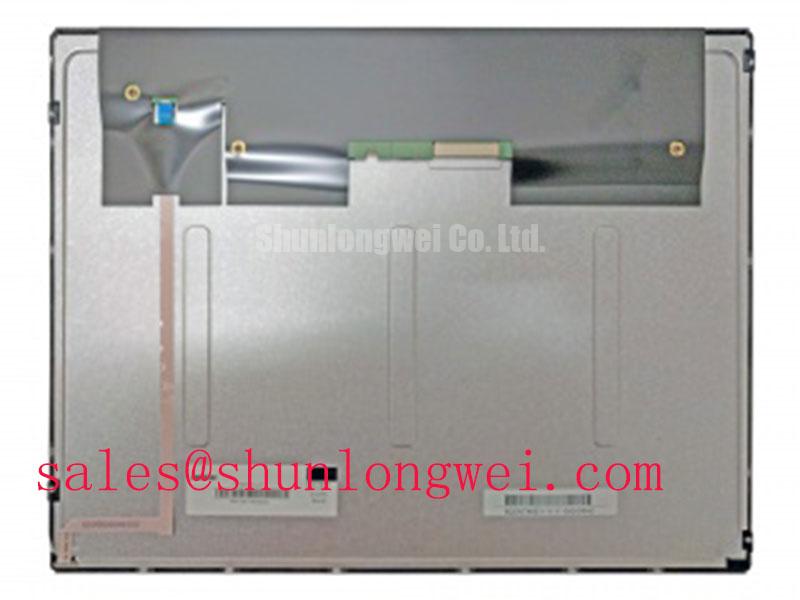
Furthermore, integrating this panel into a highly sensitive medical imaging device is streamlined by its standardized signaling. The LVDS protocol significantly reduces electromagnetic interference (EMI), which is critical for compliance in strict diagnostic environments. While this 8.4-inch model is perfect for highly compact setups, for systems requiring a larger visual canvas, the related NL10276AC30-42D offers a 15-inch footprint with the same resolution.
Technical Deep Dive
A Closer Look at UA-SFT and Signal Integrity
The core engineering foundation of the NL10276BC16-04D lies in its Normally Black UA-SFT liquid crystal alignment. Unlike standard TFT variants, the liquid crystals in this 8.4-inch panel rotate parallel to the substrate. This physical orientation strictly prevents light leakage when pixels are in the unpowered state, yielding the precise contrast strictly required for its 600:1 rating.
This precise light control prevents the dreaded grayscale inversion phenomenon. Imagine trying to read a critical architectural blueprint through a polarizing filter that randomly changes opacity based on your height; that is grayscale inversion. UA-SFT removes this optical filter effect entirely, guaranteeing stable image reproduction regardless of the viewer's physical position. By adopting principles akin to In-Plane Switching (IPS), NEC ensures the display strictly meets high industrial performance metrics.
Additionally, implementing a 1-channel, 6/8-bit LVDS interface optimally balances data flow with noise immunity. Driving high-density 1024x768 XGA video data requires robust signaling architecture. The LVDS signaling uses a differential approach to effectively reject common-mode noise. To fully understand these system-level reliability benefits, review our insights on TN vs IPS display selection.
Frequently Asked Questions
Field-Tested Answers for Display Integration
- How does the UA-SFT technology in the NL10276BC16-04D impact multi-operator workstations?
By delivering a symmetrical 88-degree viewing angle across all primary axes (Up/Down/Left/Right), it allows multiple operators to read the 1024x768 XGA screen simultaneously without experiencing destructive color shifting or loss of contrast. - Why is an LVDS interface specifically preferred for this 8.4-inch industrial display?
LVDS (Low-Voltage Differential Signaling) significantly minimizes radiated electromagnetic emissions. This is crucial for maintaining digital signal integrity when routing high-speed video data near noisy industrial power supplies or fast-switching variable frequency drives. - What does the "Normally Black" display mode indicate for system developers?
In a "Normally Black" liquid crystal configuration, the pixels naturally block backlight transmission when no driving voltage is applied. This inherently yields superior contrast and ensures that an unpowered pixel never produces a distracting bright spot on a dark HMI interface.