Content last revised on September 10, 2026
PM100RSD060 Mitsubishi Electric Intelligent Power Module
How can power electronics engineers eliminate parasitic ring noise and prevent thermal runaway in 3-phase motor control stages?
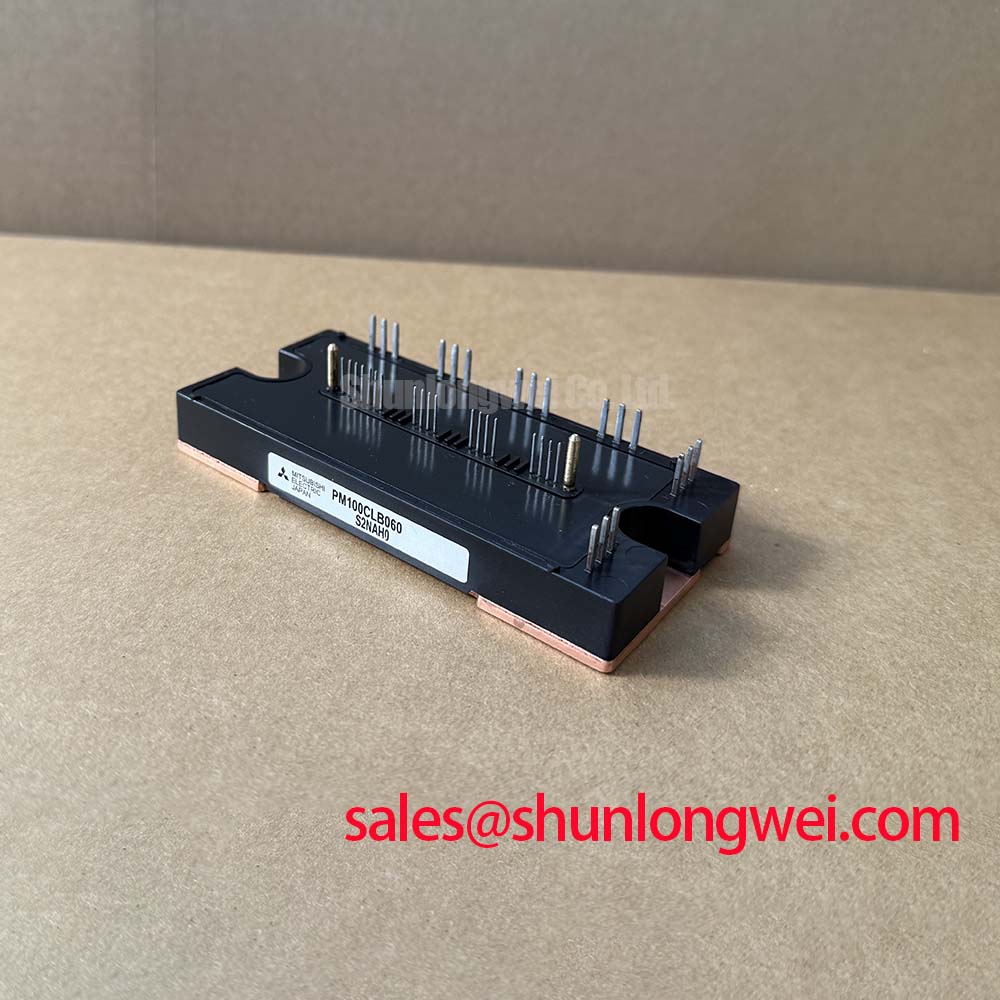
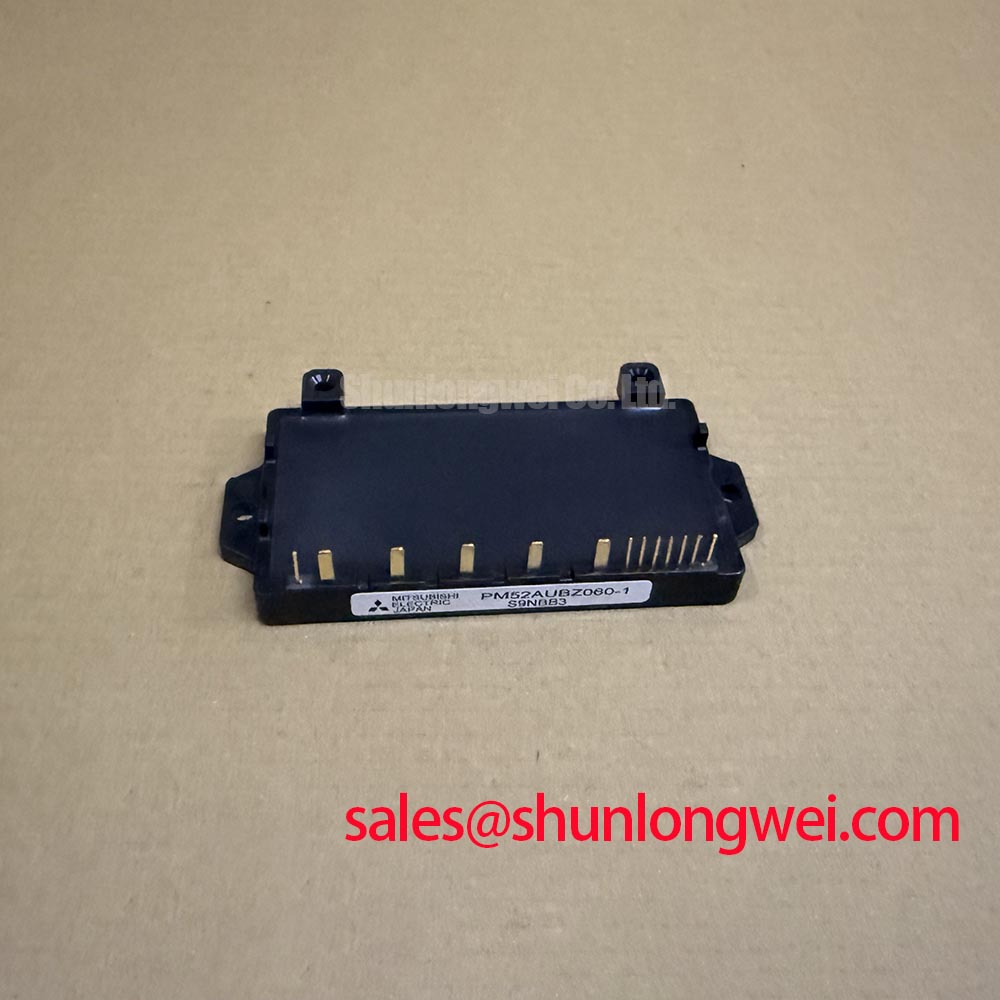
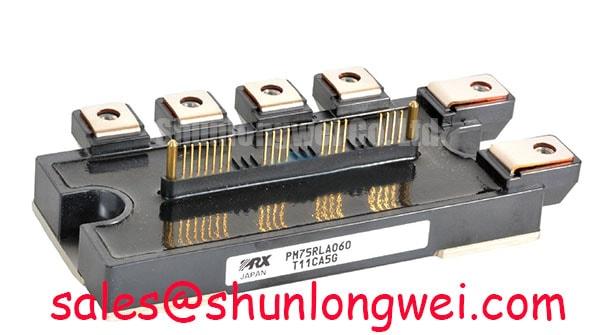
The PM100RSD060 is an insulated, flat-base Intelligent Power Module (IPM) designed by Mitsubishi Electric. This module integrates a 3-phase inverter, a brake circuit, and internal gate drives with system protection logic. By combining power transistors and control electronics in one package, it minimizes development cycles and design footprint.
Top specifications include: 600V | 100A | VCE(sat) 1.7V.
Key engineering benefits:
- Eliminates discrete gate drive layout complexities.
- Features built-in fault protection circuitry.
Our engineering analysis shows that placing the gate drive directly adjacent to the power chip suppresses layout inductance. This design mitigates common signal integrity issues in high-frequency applications. For 3-phase motor drives requiring a compact 600V footprint with integrated fault safety, the PM100RSD060 is the optimal choice.
Frequently Asked Questions
Addressing Common Engineering Queries on IPM Reliability
Q1: What is the primary benefit of its integrated protection?
It prevents damage from overcurrent, overtemperature, and undervoltage conditions.
Q2: How does the built-in gate driver improve performance?
It minimizes parasitic loop inductance and simplifies the overall system layout.
Q3: How should engineers handle overcurrent fault states in field operations?
When the PM100RSD060 detects an overcurrent state, it drives the fault output pin low. Designers should immediately inhibit the input control signals. After checking the load for phase-to-phase shorts, verify that the control supply voltage stays within the recommended 13.5V to 16.5V range.
Q4: Is the PM100RSD060 interchangeable with the PM100RSD120?
The PM100RSD120 operates at a higher 1200V rating, which alters design dimensions and isolation requirements. Although the PM100RSE060 shares the 600V rating, developers must verify package dimensions and terminal configurations before attempting any PCB drop-in replacements.
Key Parameter Overview
Decoding the Specs for Enhanced Thermal and Electrical Reliability
| Parameter | Symbol | Rating / Value | Key Indicator Focus |
|---|---|---|---|
| Collector-Emitter Voltage | VCES | 600 V | Design ceiling for DC bus systems up to 400V |
| Continuous Collector Current | IC | 100 A (at TC = 25°C) | Maximum continuous current capacity for phase outputs |
| Collector-Emitter Saturation Voltage | VCE(sat) | 1.7 V (Typical at Tj = 25°C) | Directly determines conduction losses under load |
| Isolation Voltage | Viso | 2500 Vrms (AC, 1 minute) | Ensures safety and isolation from the cooling plate |
| Control Supply Voltage | VD | 15 V (Recommended: 13.5V to 16.5V) | Internal control circuit operating window |
Download the PM100RSD060 datasheet for detailed specifications and performance curves.
Technical Deep Dive
A Closer Look at Integrated Protection and Thermal Management
The internal structure of the PM100RSD060 simplifies complex power designs. The module integrates high-voltage gate drive ICs (HVICs) that translate logic-level signals directly into gate currents. This integration reduces parasitic loop inductance. It acts like a localized nervous system, bypassing the signal lag common in discrete gate drivers.
In discrete configurations, driving the gate is like shouting commands down a long corridor. In contrast, the built-in gate driver functions like a headset system, delivering switching instructions directly to the gate terminal with minimal distortion. What is the primary benefit of its integrated protection? It prevents damage from overcurrent, overtemperature, and undervoltage conditions. How does the built-in gate driver improve performance? It minimizes parasitic loop inductance and simplifies the overall system layout.
Conduction losses are governed by the Collector-Emitter Saturation Voltage (VCE(sat)). Rated at a typical 1.7V at 100A, this saturation limit limits energy dissipation in the on-state. The thermal energy is managed through the insulated copper baseplate. This baseplate provides an isolation rating of 2500 Vrms for safe heatsink mounting.
The integrated overtemperature protection functions like a thermal tripwire. Similar to a pressure relief valve on a boiler, the internal sensor automatically shuts down power transfer if junction temperatures exceed safe limits. This preventive action keeps the device safely within its Safe Operating Area (SOA).
Application Scenarios & Value
Achieving System-Level Benefits in High-Efficiency Inverters
The PM100RSD060 is widely utilized in industrial motor drive systems. In these environments, Variable Frequency Drives (VFDs) and AC servo robots face constant torque variations. These load swings generate sudden current spikes during startup or acceleration. The built-in gate drive simplifies path layouts, aligning with standard Mitsubishi Electric motor drive resources.
By leveraging built-in short-circuit protection, the module prevents driver failure during overload conditions. This level of safety is crucial for maintaining overall power quality and preventing system downtime. Designing with an IPM also helps systems meet industrial standards like IEC 61800-3 for electromagnetic compatibility.
The module is also suitable for UPS (Uninterruptible Power Supply) systems and solar inverters. For systems requiring alternative topologies, designers can explore the PM100RSE060 for potential optimizations. However, if your design requires a higher voltage margin for 690V line operations, the PM100RSD120 provides a 1200V rating.
To further explore integration strategies, engineers can consult the IPM vs. discrete IGBT design guide. Choosing between topologies is simplified by referring to a comprehensive power semiconductor selection guide.
As industries align with global sustainability targets and carbon-neutral initiatives, energy recovery and efficiency become vital. Implementing integrated modules like the PM100RSD060 directly contributes to reduced conversion losses in industrial plants. These advancements support the strategic evolution of automated, low-emission factories worldwide.