

Content last revised on September 19, 2026
MMF200ZB040DK1 Inspection and Replacement Checks
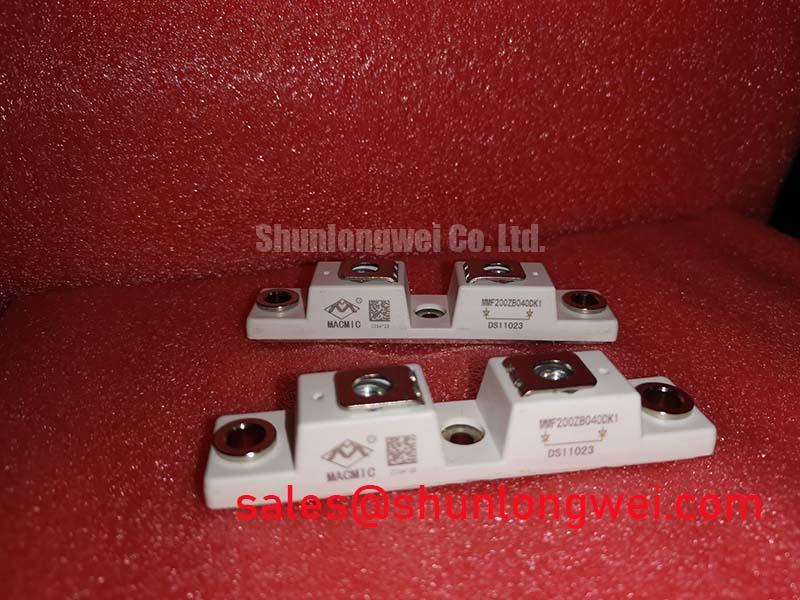
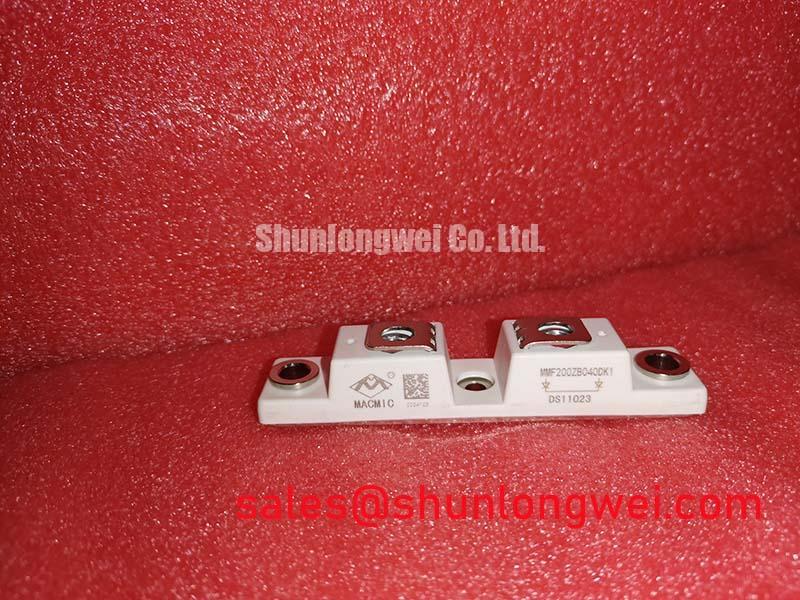
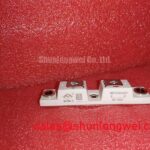
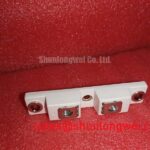
Before connecting the MMF200ZB040DK1, record cold resistance and diode mode readings between every accessible power terminal, then compare the pattern with the original circuit documentation or a known good inverter assembly. The device is a MacMic IGBT Power Module rated at 600 V and 100 A, according to the official specification information supplied for this model. Its electrical topology, terminal assignment, gate drive requirement, isolation rating, thermal impedance, and mounting dimensions should be verified from the original equipment documentation before replacement work begins.
| Parameter | Value | Classification |
|---|---|---|
| Product model | MMF200ZB040DK1 | Official product identification |
| Manufacturer | MacMic | Official manufacturer identification |
| Voltage rating | 600 V | Official Specification |
| Current rating | 100 A | Official Specification |
| Package category | Power Module | Official Specification |
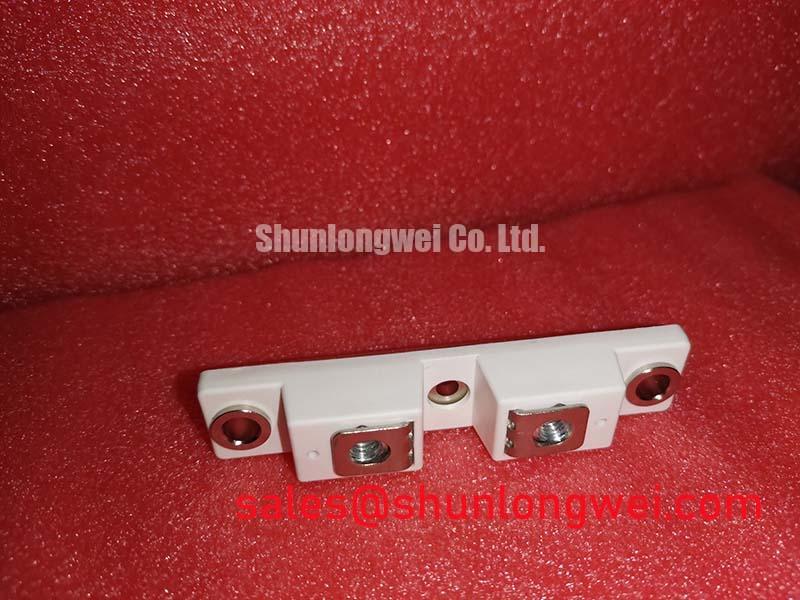
For incoming inspection, examine the molded case, terminal surfaces, mounting base, and gate connections under adequate light before any energized test. Look for distortion, contamination, cracked insulation, loosened terminals, or signs that the former mounting interface was uneven. A diode mode test can identify whether the observed terminal relationship is broadly consistent with the expected inverter power path, but it cannot validate switching performance, insulation capability, or load current capability. Gate related checks must use the actual terminal map supplied by the equipment maker rather than assumed pin positions.
💡 Bench Tip: Keep the module and test leads protected from electrostatic discharge, and capture cold state readings before applying a gate drive or connecting a charged DC link.
Assembly Integrity & Layout Architecture: Implementing Galvanic Gate Drive Isolation, Reinforced for MMF200ZB040DK1
The 600 V rating is the confirmed voltage boundary for the MMF200ZB040DK1, while the gate driver isolation barrier is a property of the surrounding control system rather than an established module parameter. When repairing or integrating an inverter, the engineer should review whether the isolation architecture has sufficient separation between control electronics and the switching power stage. A reinforced isolation target greater than 5 kV and common mode transient immunity above 100 kV/µs can be relevant system level verification criteria where the original drive board specifies them, but neither value should be treated as a MacMic module rating without manufacturer documentation.
Gate leads should follow the original routing as closely as practical. A gate loop sharing a long route with collector or emitter current paths can pick up switching noise and create an apparent gate command that the controller did not intend. Keep the command and return path close together, avoid unnecessary loop area, and inspect solder joints or connector crimps for discontinuity. These are Design Considerations intended to suppress parasitic inductance and capacitive coupling; the final result must be verified with switching measurements against the actual DC link and load conditions.
During a repair evaluation, isolate the control board from the power stage first and inspect the gate driver supply rails, isolation barrier, connector seating, and gate return continuity. If a power stage appears to turn on without a valid command, possible causes can include gate drive reference displacement, a damaged driver channel, a routing problem, or test setup interference. An oscilloscope measurement referenced with an appropriate isolated probing method is needed to distinguish among these conditions.
Electric material handling and forklift traction controllers are one possible application area for a 600 V, 100 A power module, subject to confirmation of the original inverter architecture. Where a repair requires comparison with another power module family, SKM100GB063D can be reviewed as a separate reference part. Ratings alone do not establish mechanical, terminal, driver, diode, or control compatibility.
Published technical literature remains useful for examining converter switching behavior and gate drive measurement practice. Engineers investigating transient behavior can consult IEEE Transactions on Industrial Electronics for peer reviewed power electronics research, while retaining the original controller documentation as the authority for a specific repair.
MMF200ZB040DK1 Circuit Protection & Reliability: Calibrating Output Sinusoidal Filter vs dv/dt Reactor
The MMF200ZB040DK1 should be assessed as part of the complete inverter rather than as an isolated switch. Long motor cables can behave as transmission lines, and impedance discontinuities can reflect switching edges toward the inverter terminals. Under particular cable and load conditions, reflected voltage can approach twice the DC link voltage. This is a system behavior, not an official performance statement for the module. Measure the voltage waveform at the relevant inverter and motor locations with a suitable high voltage probe before deciding whether a dv/dt reactor, sinusoidal filter, revised cable arrangement, or another mitigation method is required.
A dv/dt reactor primarily moderates the edge presented to the cable and motor. A sinusoidal filter is evaluated when the required motor side waveform and cable environment call for stronger attenuation of switching components. Selection depends on motor cable length, switching frequency, control method, filter saturation characteristics, motor insulation condition, and allowable voltage margin. The system engineer should validate peak voltage, current waveform, acoustic behavior, thermal rise, and control stability under the actual operating cycle.
Switching frequency affects the balance between audible behavior, switching loss, motor waveform quality, and cooling demand. A range from 2 kHz to 16 kHz is commonly encountered in inverter service discussions, but it is not an approved operating range for this specific MacMic module. The appropriate frequency must come from the inverter design and be checked against the original semiconductor and drive board documentation. High ambient temperature, restricted airflow, dirty heatsinks, and an obstructed fan path can all reduce thermal operating margin, so service personnel should inspect the cooling path before attributing a fault to the power module.
Protection coordination also deserves direct inspection. Semiconductor fuses are selected by the equipment designer using time current behavior and I²t coordination with the inverter’s prospective fault energy. Their role cannot be replaced by a generic fuse value. Likewise, a metal oxide varistor or snubber network should be evaluated as a coordinated part of the DC link overvoltage strategy. Discoloration, cracking, altered capacitance, damaged busbar joints, or loose DC link connections can affect switching overshoot and should be investigated objectively.
The freewheel diode’s reverse recovery behavior can influence ringing and conducted or radiated noise, but reverse recovery softness factor values are not established in the supplied official information for the MMF200ZB040DK1. Do not infer a softness factor from the voltage and current ratings. Capture current and voltage waveforms at relevant load conditions, then compare them with the original control and filter design expectations. For broader high voltage switching margin discussions, The 1200 V CoolSiC™ MOSFET Advantage in Three offers a separate technical reference; it does not establish specifications or substitution compatibility for this 600 V IGBT module.
Assembly Integrity & Layout Architecture: Implementing Static and Dynamic Current Distribution for MMF200ZB040DK1
If multiple inverter legs, modules, or parallel current paths are being examined, static and dynamic current distribution must be treated separately. In many IGBT operating regions, a positive temperature coefficient of collector emitter saturation voltage can support stable steady state current sharing. This is a Design Consideration, not a confirmed current sharing specification for the MMF200ZB040DK1. The actual balance depends on matched devices, temperature distribution, busbar resistance, gate drive timing, switching conditions, and the original inverter control strategy.
For static checks, compare power path resistance, fastener condition, terminal contact surfaces, heatsink contact quality, and cooling exposure across corresponding positions. A high resistance connection can create localized heating and can alter the apparent current distribution even when the semiconductor devices are healthy. If the equipment includes parallel assemblies, measure each path using the same instrument setup and cable placement. Meaningful comparison requires a repeatable baseline rather than isolated readings taken under different conditions.
Dynamic current distribution is especially sensitive to gate loop symmetry. Differences in gate wiring length, return path location, connector quality, driver channel behavior, or gate resistance can make one path switch earlier or later than another. The repair objective is to restore the original symmetry, not to impose unverified component values. Confirm timing and voltage response on a controlled test setup using suitable probes, then evaluate whether the observed switching behavior remains within the equipment designer’s intended limits.
Battery powered material handling systems can add another layer of variation because traction inverters may experience charge and discharge cycles, changing battery voltage, regenerative operation, and temperature. A bidirectional DC to DC stage, if present in the machine, should be reviewed as a separate subsystem. Its thermal cycling and control state can affect the available DC bus environment, but the MMF200ZB040DK1 official information supplied here does not define battery cycling life, regenerative capability, or DC to DC converter compatibility.
Where a controller includes a display or operator interface, its power and communication behavior should be diagnosed independently from the traction inverter. Industrial display documentation, such as information available from Truly Semiconductors Industrial Display Modules, can help technicians maintain proper separation between display integration requirements and power semiconductor fault analysis.
MMF200ZB040DK1 Circuit Protection & Reliability: Calibrating Thermal Paste Degradation Prevention
Before mounting the MMF200ZB040DK1, clean the mating surfaces using a process compatible with the equipment service procedure. The baseplate and heatsink should be free from hardened thermal compound, trapped particles, oil residue, corrosion products, and raised burrs. Check heatsink flatness and any visible baseplate curvature without attempting to force the module into contact by uneven tightening. Uneven contact can concentrate stress and reduce heat transfer in a way that may only become apparent after a loaded run.
Thermal interface material thickness is controlled to fill microscopic surface irregularities while avoiding an unnecessarily thick insulating layer. A 50 to 100 µm layer is a common industry reference range for carefully applied thermal paste, but it is a Design Consideration rather than an official MacMic instruction for this model. The correct material, amount, and application method should follow the original equipment service documentation and the thermal material supplier’s guidance. Verify coverage after any controlled trial assembly when the service process permits it.
Use a sequential tightening pattern that seats the module progressively across the mounting surface. The required screw size, torque, washer arrangement, and sequence are not supplied in the official parameters available for the MMF200ZB040DK1, so they must not be guessed. The technician should follow the inverter manufacturer’s mechanical drawing and torque specification. Terminal hardware also requires independent verification because poor power terminal contact can produce heat and waveform distortion that resemble a semiconductor issue.
After assembly, inspect the gate connection, power terminal seating, heatsink interface, insulation barriers, and airflow path before performing a controlled functional test. Begin with the equipment’s approved commissioning procedure and observe DC link behavior, gate command integrity, output current balance, and temperature response. If the inverter exhibits abnormal current, repeated protection trips, or unexpected waveform ringing, return to objective checks of driver timing, cable routing, DC link connections, filter condition, and mechanical contact rather than assigning a single cause from one symptom.