
Content last revised on September 10, 2026
PMC20U060: 600V 20A Intelligent Power Module (IPM) for Compact Motor Drives
Introduction: Streamlining Inverter Design with Integrated Intelligence
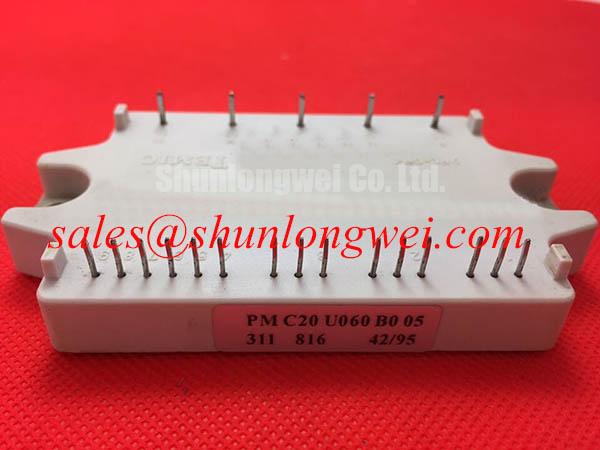
The PMC20U060 is an advanced Intelligent Power Module (IPM) engineered to deliver exceptional system reliability for compact motor drives by integrating a full suite of protection features within a thermally efficient design. This device combines six IGBTs in a three-phase inverter configuration with the necessary gate drivers and protection logic, drastically reducing external component count and design complexity. Key specifications include 600V collector-emitter voltage and a 20A continuous collector current, supported by comprehensive integrated protection. This integration provides tangible engineering benefits, including a simplified PCB layout and an accelerated time-to-market for new designs. For space-constrained inverter designs up to 1.5 kW requiring robust, built-in protection, the PMC20U060 offers a streamlined and highly reliable solution.
Application Scenarios & Value
System-Level Benefits in Compact Motor Control Systems
The PMC20U060 is purpose-built for low-power, three-phase motor control applications where reliability, efficiency, and a compact footprint are critical design criteria. Its primary value is demonstrated in systems like residential HVAC compressors, industrial pumps, fans, and automated conveyor systems. In these environments, designing a compact and robust Variable Frequency Drive (VFD) that can withstand common electrical faults is a significant engineering challenge. The PMC20U060's integrated short-circuit (SC), over-temperature (OT), and under-voltage (UV) protection circuits directly address this. This built-in intelligence autonomously safeguards the module from catastrophic failure, a crucial function for complying with industrial standards like IEC 61800-5-1. By eliminating the need for complex external protection and drive circuitry, engineers can achieve smaller, more reliable, and cost-effective final products. For applications requiring a different package or mounting style but with similar electrical ratings, the PM20CSJ060 provides a viable alternative.
Key Parameter Overview
Decoding Electrical and Thermal Specifications for Robust Design
The performance of the PMC20U060 is defined by its electrical and thermal characteristics, which are optimized for efficient and reliable power conversion. Understanding these key parameters is essential for successful system integration and thermal management. The collector-emitter saturation voltage (V_CE(sat)) is a critical metric for efficiency; it can be thought of as the electrical "friction" the device exhibits when active. The low V_CE(sat) of this module ensures that less energy is wasted as heat, directly contributing to higher overall inverter efficiency. This, combined with its defined thermal resistance, provides designers with the data needed for precise heatsink selection. For a deeper understanding of designing with intelligent power modules, explore this guide on IPM vs. Discrete IGBTs.
| Parameter | Symbol | Condition | Value | Unit |
|---|---|---|---|---|
| Collector-Emitter Voltage | V_CES | V_GE = 0V | 600 | V |
| Collector Current (DC) | I_C | T_C = 25°C | 20 | A |
| Collector-Emitter Saturation Voltage | V_CE(sat) | I_C = 20A, V_GE = 15V | 2.7 (Max) | V |
| Isolation Voltage | V_iso | AC, 1 minute | 2500 | Vrms |
| Operating Junction Temperature | T_j | - | -20 to +150 | °C |
Technical Deep Dive
Inside the U-Series IPM: A Look at Integrated Protection and Gate Drive Logic
The core innovation of the PMC20U060 lies in its high level of integration, which provides robust, self-contained protection. The short-circuit protection, for example, uses an on-chip current sensor. If the collector current exceeds a predefined threshold, the control IC initiates a soft shutdown of the corresponding IGBT and sends a fault signal to the host microcontroller. Think of this feature as an automotive airbag; it's an autonomous safety system that reacts instantaneously to prevent catastrophic damage to the entire system in the event of a high-impact electrical 'collision.' Similarly, the under-voltage lockout (UVLO) ensures the module only operates when the control supply voltage is sufficient for proper IGBT gate drive. This prevents operation with an insufficient gate voltage, a condition that can lead to increased conduction losses, thermal stress, and eventual device failure. This intelligent management of fault conditions is fundamental to the module's reliability. For more on gate drive design, refer to these practical tips for robust gate drive design.
Frequently Asked Questions
Engineering Questions on Integration and Reliability
What is the primary benefit of the integrated bootstrap diodes in the PMC20U060?
The integrated bootstrap diodes, complete with current-limiting resistors, simplify the high-side gate drive power supply design. This reduces the bill of materials (BOM), saves PCB space, and eliminates the need for designers to select and qualify external components for this critical function.
How do the built-in protection features (SC, OT, UV) simplify the design of a motor inverter?
They transform a complex design task into a managed one. Instead of designing, tuning, and laying out discrete circuits for short-circuit detection, over-temperature sensing, and supply monitoring, the engineer can rely on the pre-qualified, optimized functions within the IPM. This significantly reduces design time, risk, and component count, leading to a more reliable and compact end product.
What considerations are necessary for the control supply and logic interface of the PMC20U060?
The module requires a stable 15V supply for the control logic and gate drivers. It is critical to use proper bypassing capacitors located close to the supply pins to ensure low-noise operation. The logic inputs are typically compatible with 3.3V or 5V CMOS/TTL levels, and a fault output pin (Fo) provides direct feedback to the system's microcontroller, allowing it to take appropriate action during a fault event.
How does the module's thermal resistance impact heatsink selection for a 1.5kW motor application?
The specified junction-to-case thermal resistance (Rth(j-c)) is a direct measure of how efficiently heat can be transferred from the semiconductor chip to the module's baseplate. A lower value allows for more effective cooling. For a 1.5kW application, designers use this Rth value along with calculated power losses (conduction and switching) to determine the required performance of the heatsink to keep the junction temperature (Tj) well below its 150°C maximum rating, ensuring long-term reliability. A comprehensive analysis is provided by a resource like IPM (Intelligent Power Module) resources.
Strategic Integration for Future-Ready Designs
Integrating a device like the PMC20U060 is a strategic decision that extends beyond simplifying a single design. It represents a shift toward building more resilient, compact, and efficient power systems with accelerated development cycles. As industries continue to demand higher power density and greater operational reliability in motor control, the value of pre-validated, protected, and integrated power stages like this Intelligent Power Module becomes increasingly critical for maintaining a competitive edge.