

Content last revised on August 28, 2026
6MBP20RTA060-01 | 600V 20A PIM IGBT Module | Engineering Review
An In-Depth Analysis for Power System Engineers
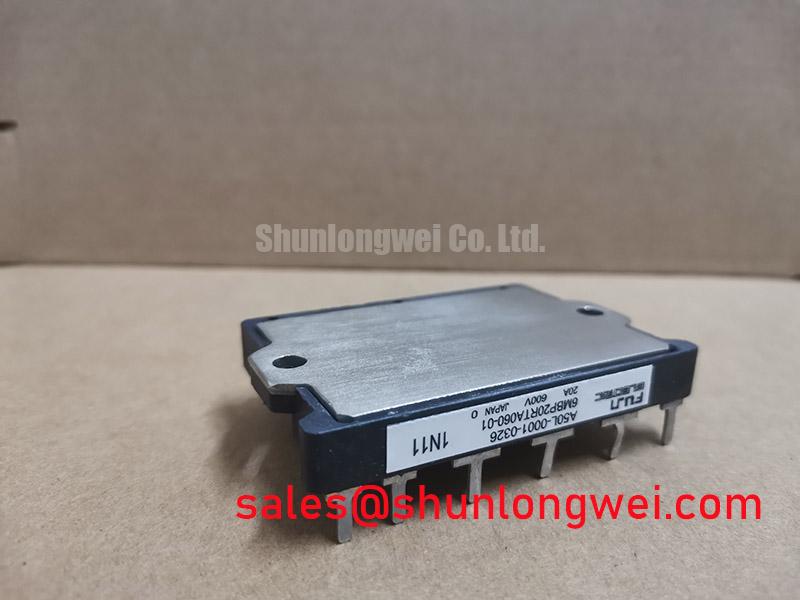
This Fuji Electric PIM delivers thermally stable and reliable performance for compact motor drives through its highly integrated Converter-Inverter-Brake (CIB) topology. Featuring key specifications of 600V | 20A | VCE(sat) 1.9V (typ) | Tj 150°C, the module provides the core benefits of simplified system design and enhanced operational reliability. It integrates a full 3-phase converter, brake, and inverter, significantly reducing the design complexity and footprint for low-power Variable Frequency Drives (VFDs). For sub-2kW motor drives requiring a compact and reliable power stage, the 6MBP20RTA060-01 is a highly effective solution.
Key Parameter Overview
Decoding the Specs for Thermal Stability and Efficiency
The performance of the 6MBP20RTA060-01 is defined by its electrical and thermal characteristics, which are critical for system-level design. The parameters below have been selected to highlight the module's capabilities in its target applications. A low collector-emitter saturation voltage (VCE(sat)) is analogous to low friction in a mechanical system; it directly reduces the heat generated from conduction losses, improving overall energy efficiency.
| Parameter | Symbol | Condition | Value |
|---|---|---|---|
| Collector-Emitter Voltage | Vces | - | 600V |
| Continuous Collector Current (Inverter) | Ic | Tc = 80°C | 20A |
| Collector-Emitter Saturation Voltage (Inverter) | VCE(sat) | Ic = 20A, Tj = 125°C | 1.9V (typ) / 2.4V (max) |
| Forward Voltage (FWD) | Vf | If = 20A, Tj = 125°C | 1.8V (typ) / 2.3V (max) |
| Thermal Resistance (Inverter IGBT) | Rth(j-c) | Junction to Case | 1.7 °C/W |
| Maximum Junction Temperature | Tj max | - | 150°C |
Download the 6MBP20RTA060-01 datasheet for detailed specifications and performance curves.
Application Scenarios & Value
Accelerating Time-to-Market for Compact Motor Drives
The 6MBP20RTA060-01 is engineered specifically for low-power motion control systems where space, assembly cost, and reliability are primary design constraints. Its greatest value is realized in applications like AC induction motor drives, pump and fan controllers, and other small industrial automation equipment.
Consider the engineering challenge of designing a compact Variable Frequency Drive (VFD) for a conveyor belt system. The control cabinet has limited volume, making the use of discrete components for the rectifier, brake, and inverter stages impractical due to the large PCB footprint and complex wiring. The 6MBP20RTA060-01 directly addresses this by integrating all three power stages into a single, compact P1 package. What is the primary benefit of its CIB topology? A significant reduction in system size and design complexity. This integration not only shrinks the required board space but also simplifies the thermal management to a single heatsink interface, reducing assembly time and potential points of failure.
While this module is well-suited for its 20A rating, systems demanding higher power throughput may require a component like the 6MBP50RTA060-01, which offers a 50A capacity within a similar integrated family. For applications operating on higher industrial bus voltages, the 1200V-rated 7MBR25SA120-50 provides the necessary voltage headroom.
Frequently Asked Questions (FAQ)
What are the key advantages of using the integrated Converter-Inverter-Brake (CIB) topology in the 6MBP20RTA060-01?
The primary advantage is system simplification. By combining the AC-DC rectification, DC-link braking, and DC-AC inversion stages into one module, it dramatically reduces the number of components, minimizes PCB layout complexity, and lowers stray inductance. This leads to a more compact, cost-effective, and reliable design with a faster assembly process.
How does the integrated overcurrent (OC) protection function simplify the gate drive and control circuit design?
The module includes an on-chip LVIC that monitors the IGBTs' current. If an overcurrent event is detected, it triggers a fault signal (Fo pin). This allows the system's microcontroller to take immediate protective action, such as initiating a soft shutdown. This built-in feature reduces the need for external current sensing and protection circuitry, simplifying the control logic and improving the system's response to fault conditions.
With an Rth(j-c) of 1.7°C/W for the inverter IGBT, what does this imply for heatsink selection in a fanless design?
This thermal resistance value is a direct measure of how efficiently heat can be transferred from the silicon chip to the module's case. A lower value is better. At 1.7°C/W, the module demonstrates effective heat transfer, which is crucial for fanless or convection-cooled designs. Engineers can use this precise value in their thermal calculations to select a smaller, more cost-effective heatsink while ensuring the junction temperature remains safely below the 150°C maximum, thereby maximizing the system's operational life. For more on this topic, see our guide on unlocking IGBT thermal performance.
Technical Deep Dive
A Closer Look at Integrated Protections and Thermal Design
The reliability of a power module is not just a function of its raw specifications but also its inherent design features. The 6MBP20RTA060-01 integrates key functions that enhance its robustness. The built-in overcurrent (OC) and supply under-voltage (UV) protections provide a critical layer of safety. The module's thermal resistance (Rth) can be thought of as the "insulation" of a house in reverse; a low Rth value is like having thin walls, allowing heat to escape easily from the internal chip to the external heatsink. This is exactly the desired characteristic to keep the electronics cool and reliable.
The module's LVIC provides a fault signal, but it is the responsibility of the system designer to correctly interpret this signal and implement a safe shutdown procedure via the controlling microprocessor. This intelligent integration offers a superior alternative to relying solely on external protection circuits, which can have longer response times. This design philosophy aligns with modern Fuji Electric PIMs, which focus on embedding intelligence to create more resilient power systems. For a broader understanding of how such modules compare to other solutions, our analysis on IPM vs. discrete IGBTs provides a useful framework.
Strategic Implications for System Design
Opting for a highly integrated module like the 6MBP20RTA060-01 is a strategic choice that prioritizes total cost of ownership and speed to market over granular component selection. It enables engineering teams to focus on higher-level system software and control algorithms rather than the intricacies of power stage layout and component matching. As the demand for decentralized and compact industrial automation grows, such integrated solutions will become increasingly critical for developing competitive and reliable products.