Content last revised on September 10, 2026
Overcoming Thermal Fatigue in High-Current Rectification Systems
Addressing the Challenge of Sustained Power Loads in Industrial Environments
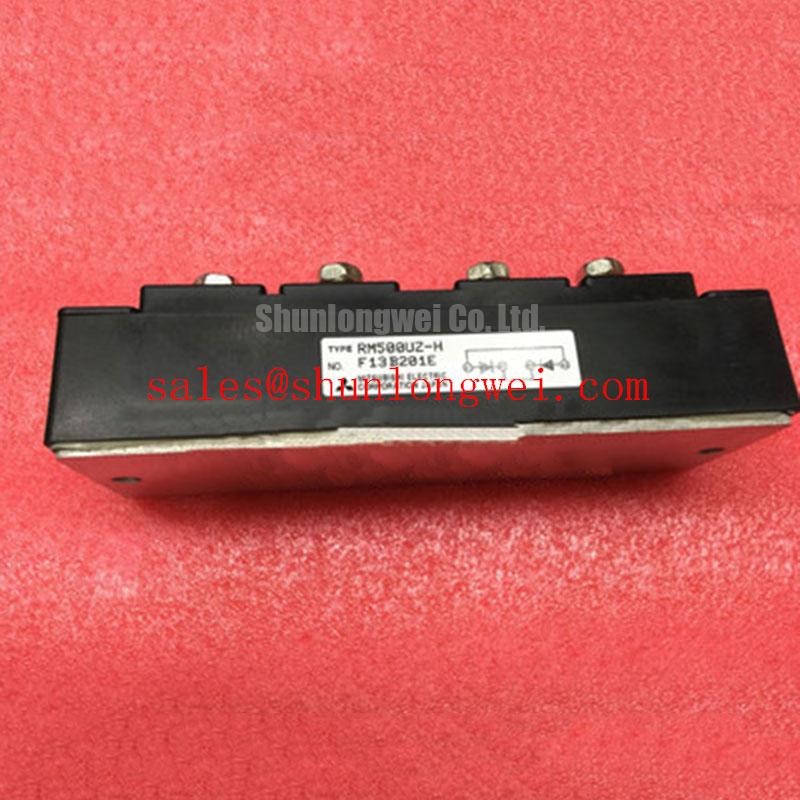
Engineering high-current rectification stages often presents a significant hurdle: how to maintain electrical integrity when continuous current exceeds 400A in non-ventilated or high-ambient temperature enclosures. Standard discrete components often fail due to localized thermal hot spots and internal stress. The RM500CZ-24, a high-power diode module from Mitsubishi Electric, provides a solution designed specifically to handle these demanding conditions. What is the primary benefit of its massive copper baseplate design? It ensures superior heat dissipation to minimize junction temperature fluctuations. For 400V–480V AC line rectification requiring massive current headroom and thermal stability, the RM500CZ-24 is the optimal choice.
Frequently Asked Questions
Technical Insights into High-Power Diode Performance
How does the repetitive peak reverse voltage of 1200V influence the safety margin in 480V AC industrial systems?
In a typical 480V AC system, the peak line voltage reaches approximately 678V. Utilizing a 1200V rated module like the RM500CZ-24 provides a safety overhead of nearly 75%. This margin is critical for absorbing transient voltage spikes often found in heavy industrial grids, adhering to IEC 61800-3 EMC standards without requiring oversized snubber circuits.
Can the RM500CZ-24 handle high-surge motor starting currents in VFD DC bus pre-charging?
Yes. With a non-repetitive surge forward current (IFSM) rating typically reaching several thousand amperes for a 10ms half-sine wave, this module is built to withstand the initial inrush associated with large capacitor bank charging in a Variable Frequency Drive (VFD) or high-power UPS (Uninterruptible Power Supply).
Key Parameter Overview
Decoding the Specs for Enhanced Thermal Reliability
The following technical specifications are derived from official engineering documentation to assist in precise system sizing and thermal calculations.
| Technical Parameter | Official Specification Value | Design Impact |
|---|---|---|
| Repetitive Peak Reverse Voltage (VRRM) | 1200V | High voltage headroom for 440V/480V AC lines. |
| Average Forward Current (IF(AV)) | 500A (at TC = 84°C) | Supports high-density power rectification. |
| Isolation Voltage (Viso) | 2500V AC (1 minute) | Ensures safety compliance for chassis mounting. |
| Thermal Resistance (Rth(j-c)) | 0.08°C/W (Typical) | Critical for reducing heatsink size requirements. |
Technical & Design Deep Dive
A Closer Look at the Heavy-Duty Construction for Long-Term Reliability
The RM500CZ-24 utilizes a specialized pressure-contact internal structure. Unlike solder-bonded small diodes, the large-area silicon wafer in this module is held in place by calibrated mechanical pressure. This design significantly mitigates the risk of power cycling failure caused by different coefficients of thermal expansion between materials. Think of the internal structure as a heavy-duty industrial bridge; while a wooden bridge (standard discrete) might warp under the sun’s heat over time, a steel-suspension bridge (pressure-contact module) expands and contracts predictably without structural degradation.
Furthermore, the Thermal Resistance of approximately 0.08°C/W is among the lowest in its class. This enables engineers to push the device toward its 500A limit while maintaining a safe junction temperature. In the context of Thermal Management, this efficiency allows for smaller airflow requirements, directly impacting the total cost of ownership (TCO) by reducing cooling fan energy consumption. For designs requiring slightly lower current handling but similar reliability, the RM100DZ-H offers a compact alternative within the same technological lineage.
Application Scenarios & Value
Achieving System-Level Benefits in High-Power Rectification
The RM500CZ-24 is frequently integrated into the front-end rectification stages of Welding Power Supplies and large-scale battery charging stations. In a high-duty cycle welding environment, the diode module must handle rapid "on-off" cycles that cause significant thermal stress. The robust 1200V and 500A ratings ensure that the rectifier remains the most reliable part of the power train, preventing costly downtime in automated manufacturing lines.
In addition to industrial power, this module serves as a critical component in the DC bus of heavy-machinery drives. For systems where space is a premium but power demand is high, the integration of the RM500CZ-24 simplifies the mechanical layout compared to paralleling multiple smaller diodes. For engineers evaluating more complex power stages, understanding why Rth matters is essential for unlocking the full potential of these high-power modules. If your system requires integrated switching alongside rectification, consider the related QM150DY-24 for a cohesive design approach. For broader design guidance, our Field Engineers Handbook provides additional strategies for ensuring long-term reliability in harsh environments.
Strategically, selecting a high-current module with established field performance reduces the risk of early-stage infant mortality in power system deployments. As global industrial standards move toward higher efficiency and higher power density, the thermal characteristics of the RM500CZ-24 remain a benchmark for robust electrical design.