Content last revised on October 16, 2026
Transient Dynamics & Electrical Design: Evaluating Post Surge Reverse Voltage Block on SKD 160 18
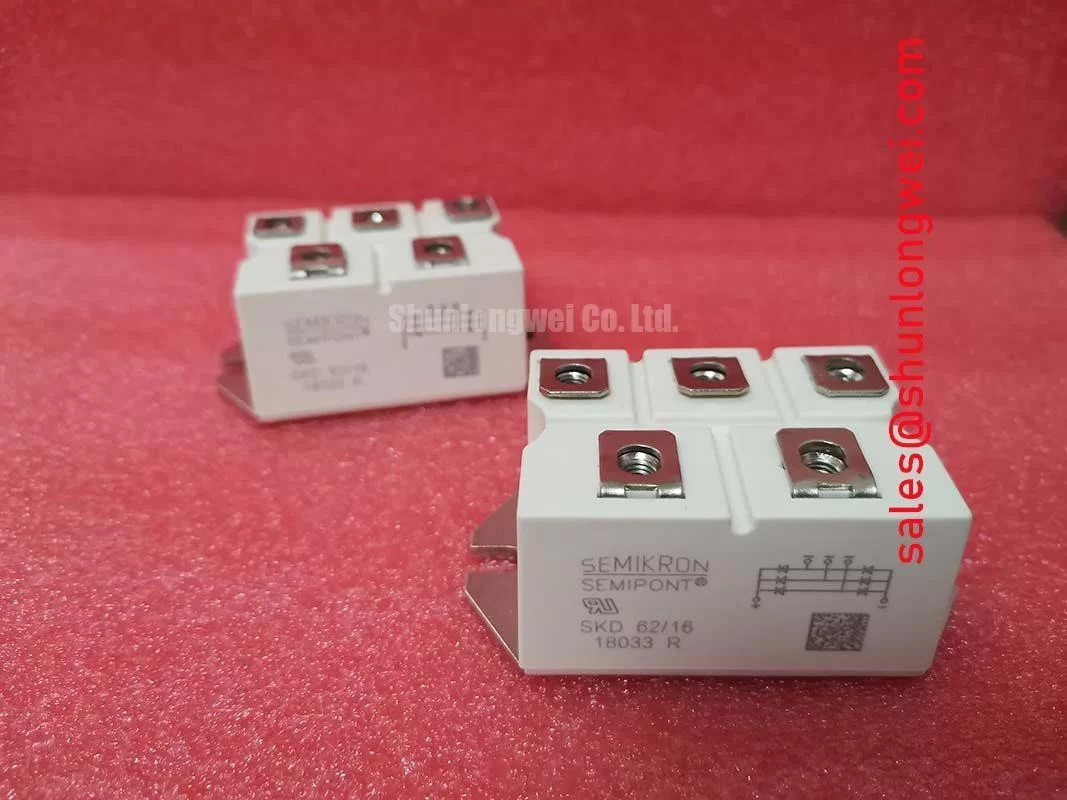
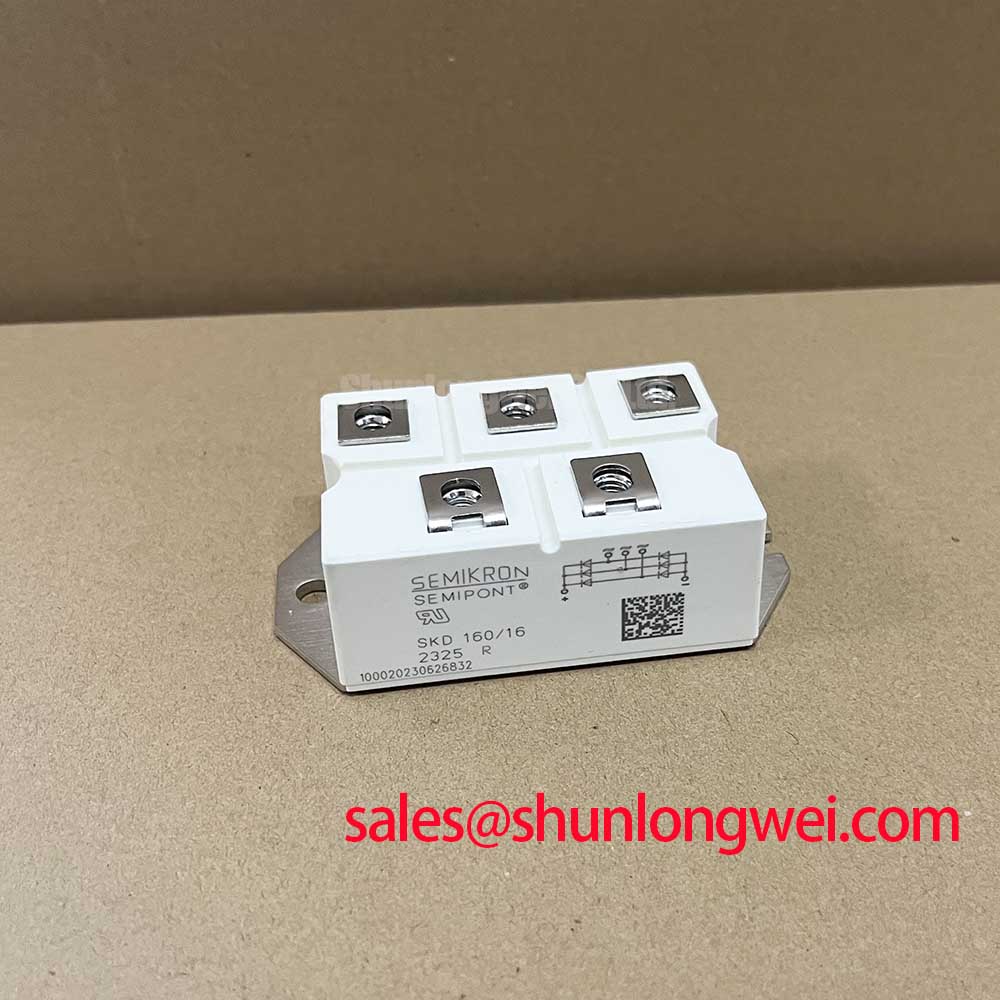
When a grid-tied compensator shows abnormal commutation current, isolate the power stage, inspect the terminal condition, and compare the installed device with the equipment records before re-energizing it. The SKD 160/18 is a Semikron bridge rectifier module listed with a specified voltage rating of 1800 V, a rated current of 160 A, and a Semipont 3 package. These values identify the component class, while the actual operating point remains dependent on cooling, waveform, duty cycle, and protection coordination.
Post-surge inspection should begin with the reverse-voltage condition that appears immediately after a sinusoidal half-cycle surge, such as a 10 ms half cycle in a 50 Hz system. The relevant factory reference is the published repetitive and non-repetitive current data, especially ITSM, together with the applicable junction-temperature conditions. A surge event should not be judged from current alone. Record the pre-event temperature, surge duration, line impedance, and the time allowed before reverse voltage is reapplied.
Fuse coordination is part of the same decision. Compare the protective device clearing characteristic and available I2t with the rectifier’s published surge withstand information. This is an engineering coordination exercise rather than a universal fuse recommendation. The selected fuse must limit fault energy while remaining compatible with the inrush and switching profile of the SVC or thyristor-switched capacitor branch.
Terminal preparation also affects transient behavior. Clean the mating surfaces using the approved maintenance procedure, inspect for heat discoloration or looseness, and apply the fastening method specified for the installed hardware. The heat sink must be flat, clean, and free from aged thermal interface material. Maintenance Note: Monitor contact temperature during scheduled service and verify that the cooling path remains free of dust, blocked vents, and condensation.
For grid-tied static var compensator equipment, verify the reverse-voltage waveform at the module terminals rather than only at the upstream bus. Minimize stray inductance in the high-current loop, route sensing leads away from commutation conductors, and check peak voltage against the device rating during controlled commissioning. The Semikron-Danfoss Power Electronics and Modules Official Hub provides the appropriate manufacturer reference point for product-family documentation.
Benchtop Waveform Tuning: Mitigating Reverse Recovery Charge Temperature Effects on SKD 160 18
Reverse-recovery evaluation should compare diode peak recovery current, recovery time, and recovery softness across the temperature range used by the converter. The terms Irrm and trr are waveform measurements, not substitute ratings for the module’s specified 1800 V voltage rating and 160 A current rating. Capture the commutation event at the actual firing or control condition, then compare current overshoot, voltage ringing, and thermal rise between cold and hot operating points.
A softer recovery response can reduce the rate of change that excites cabinet wiring and bus structure, but the practical result depends on loop inductance, snubber placement, transformer leakage, and measurement bandwidth. Use a properly compensated differential probe and a current sensor with sufficient bandwidth. The purpose is to distinguish genuine reverse-recovery behavior from probe ground inductance or an incorrectly positioned measurement loop.
| Evaluation item | SKD 160 18 | SKD82 16 cross-reference review |
|---|---|---|
| Manufacturer | Semikron | Semikron product reference |
| Rated voltage | 1800 V specified rating | Check the original equipment requirement |
| Rated current | 160 A rated value | Check the original equipment requirement |
| Package | Semipont 3 | Confirm mechanical and electrical compatibility |
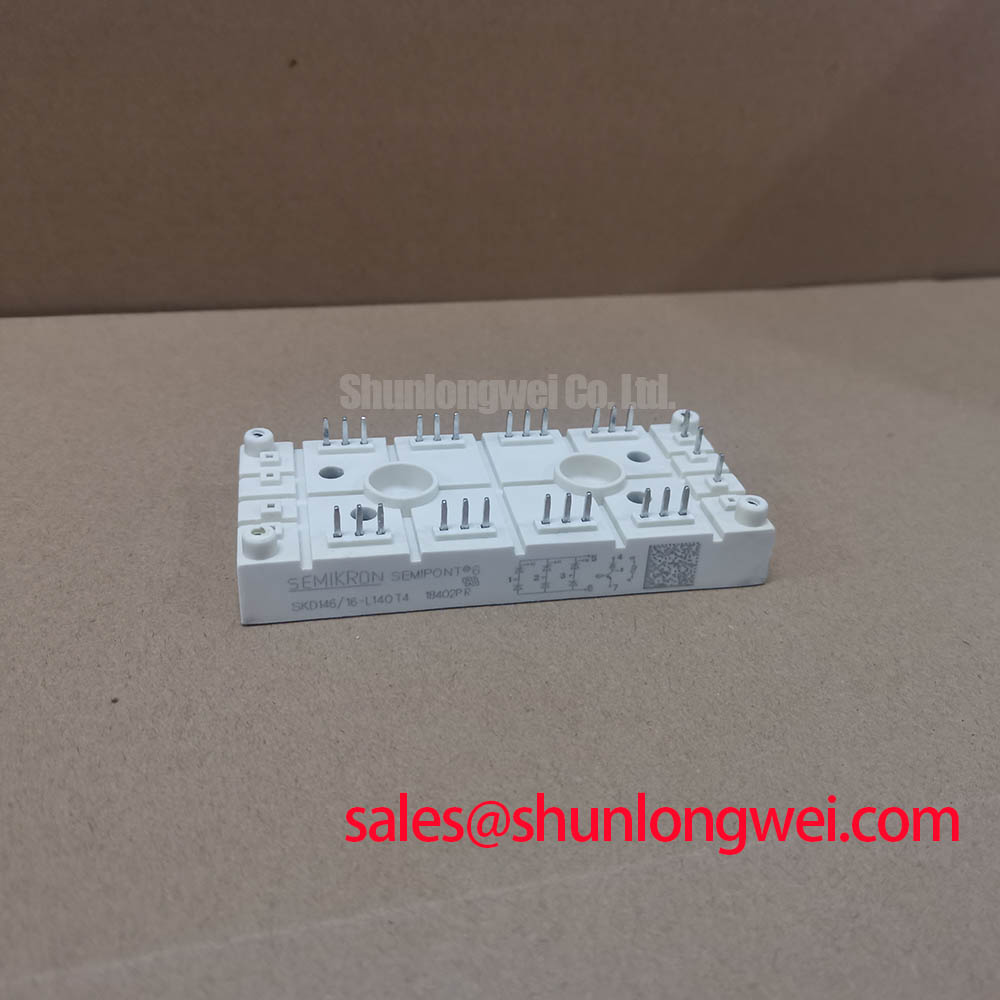
The linked SKD82 16 can be included in a neutral replacement study, but its voltage, current, terminal arrangement, thermal interface, and surge characteristics must match the original circuit before any substitution decision. Do not infer equivalence from current marking alone. The Semikron MiniSKiiP product information is useful for understanding a different Semikron power-module product line and should not be treated as a package definition for this Semipont device.
SKD 160 18 Thermal Electrical Optimization: Dynamic Voltage Sharing and RC Damping in Practical Tuning
RC damping should be tuned from the measured switching waveform, not selected from the rectifier current label. During a controlled test, observe the voltage rise at the module terminals, the duration of ringing, and the temperature rise in the resistor and capacitor. The network must be rated for repetitive pulse energy, insulation stress, and the actual switching frequency of the installation. Its placement should keep the damping loop short while avoiding interference with current sensing.
Where a series saturable reactor is considered, evaluate its effect on commutation overlap, recovery current, voltage sharing, and thermal loading. The system designer should select the magnetic component from the measured di/dt profile and verify that it does not create unacceptable conduction loss or unequal sharing between parallel paths. Spurious turn-on is commonly investigated by correlating the voltage transition at the device terminals with the control timing and the return-path impedance.
Thermal optimization is equally important after waveform changes. Recheck heat-sink contact, airflow, terminal temperature, and cabinet humidity after the converter reaches steady duty. Condensation control is a design consideration for equipment that cycles between cold storage and energized operation. For long-term analytical reference on switching behavior and protection principles, engineers may consult The Ultimate IGBT Knowledge Base. Any final RC, reactor, fuse, or cooling selection should be validated on the complete SVC power stage under its intended electrical and environmental conditions.