Content last revised on September 10, 2026
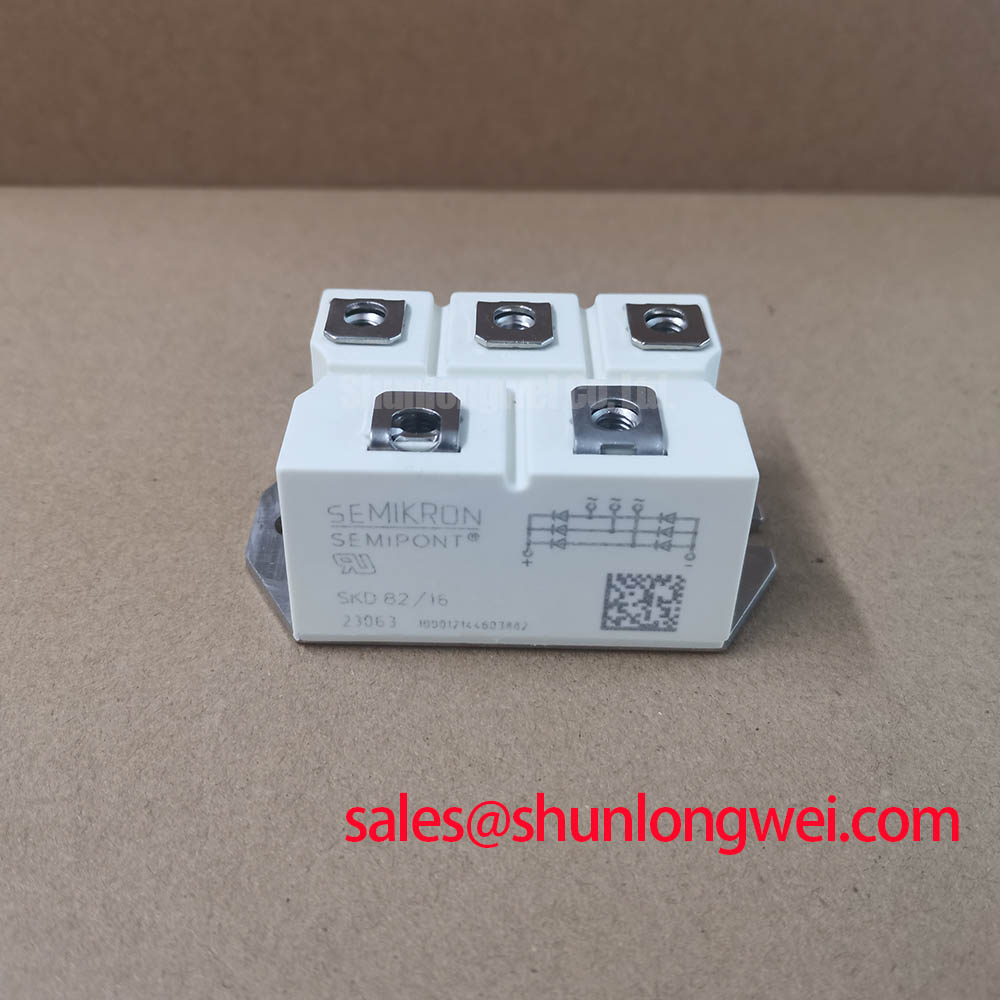
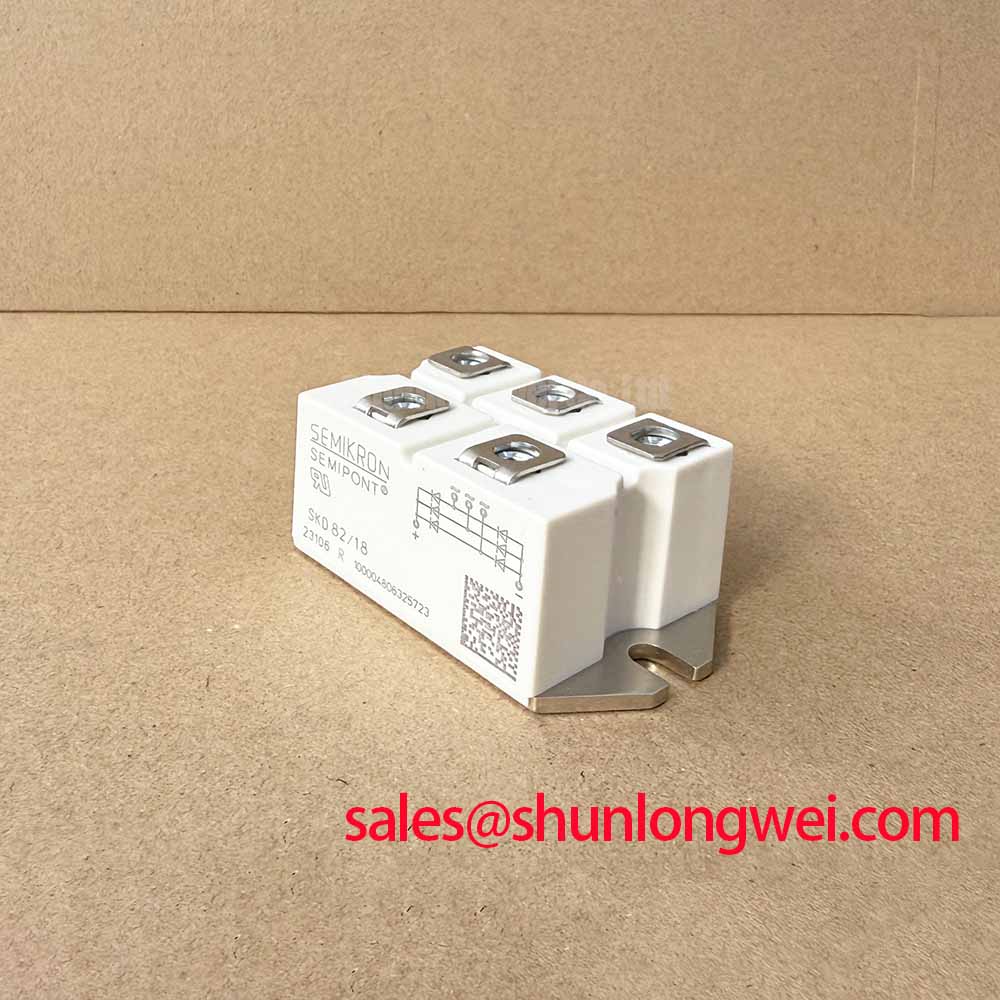
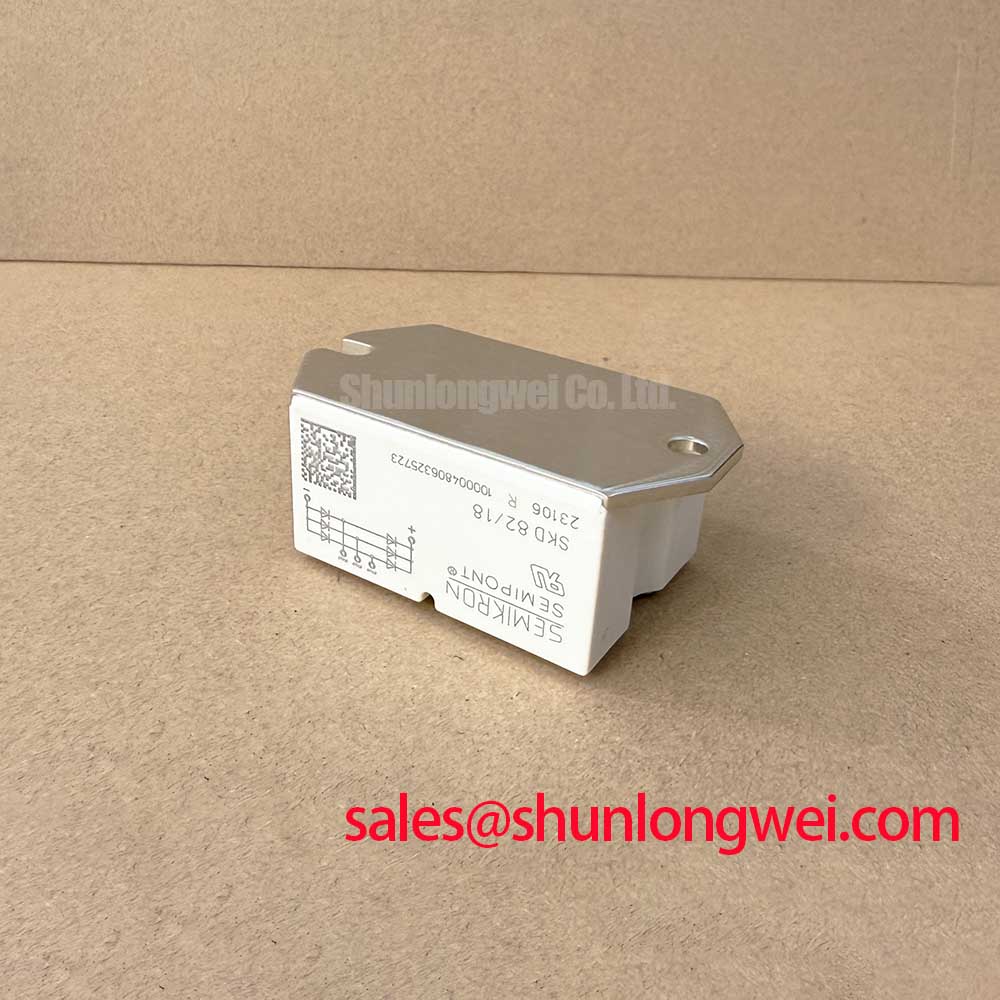
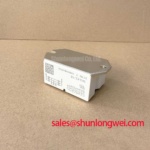
Semikron SKD82/18 Three-Phase Bridge Rectifier Module
The Semikron SKD82/18 is an industrial-grade three-phase diode bridge rectifier module engineered in the robust SEMIPONT® 3 package to deliver reliable AC-to-DC conversion across demanding power electronics applications. Combining a high reverse blocking voltage of 1800V with a continuous output current rating of 80A at 110°C case temperature, this module serves as a dependable front-end rectifier for industrial drives and heavy machinery power units. What is the primary benefit of the isolated base plate in the SKD82/18? It ensures efficient heat transfer while maintaining 3600V AC isolation safety. Key benefits include superior surge current protection up to 750A and low total thermal resistance of 0.183 K/W. For 480V industrial systems prioritizing thermal margin and transient voltage protection, this 1800V bridge module is the optimal choice.
Key Parameter Overview
Decoding High-Voltage Rectifier Ratings for Thermal Reliability
Engineers evaluating power rectification stages require accurate electro-thermal data to ensure thermal stability and safe operating margins. The following parameters highlight the core ratings of the Semikron SKD82/18, derived directly from official manufacturer documentation.
| Parameter | Symbol | Test Conditions | Value |
|---|---|---|---|
| Repetitive Peak Reverse Voltage | VRRM | Tvj = 25°C | 1800V |
| Maximum Output Current | ID | Tcase = 110°C, resistive/inductive load | 80A |
| Surge Forward Current | IFSM | Tvj = 25°C, 10 ms half-sine wave | 750A |
| I²t Value for Fusing | i²t | Tvj = 25°C, 10 ms | 2800 A²s |
| Maximum Forward Voltage Drop | VF | Tvj = 25°C, IF = 150A | 1.6V |
| Threshold Voltage | V(TO) | Tvj = 150°C | 0.85V |
| Slope Resistance | rT | Tvj = 150°C | 5 mΩ |
| Thermal Resistance (Junction to Case) | Rth(j-c) | Total 3-phase bridge conduction | 0.183 K/W |
| Thermal Resistance (Case to Heatsink) | Rth(c-s) | Total module mounting surface | 0.07 K/W |
| Isolation Voltage | Visol | AC 50Hz, r.m.s., 1 s / 1 min | 3600V / 3000V |
Download the SKD82/18 datasheet for detailed specifications and performance curves.
Application Scenarios & Value
Enhancing Power Conversion Stability in Harsh Industrial Grids
In modern industrial manufacturing lines, power converters face severe electrical stress due to grid fluctuations, inductive load switching, and harmonic distortion. A common challenge faced by OEM design engineers is preventing bridge rectifier failure when a Variable Frequency Drive (VFD) experiences sudden line voltage spikes or motor startup surge currents. The SKD82/18 addresses this issue directly through its generous 1800V blocking voltage headroom—well above standard 1200V requirements for 480V lines—and a non-repetitive surge rating (IFSM) of 750A.
Typical application fields for the SKD82/18 include:
- Industrial Motor Drives & Inverters: Serves as a rugged front-end input rectifier converting utility AC into stable DC link voltage.
- Uninterruptible Power Supplies (UPS): Delivers continuous line-rectified DC power to high-capacity battery chargers and inverter stages.
- DC Motor Field Supplies: Controls field current in heavy-duty industrial DC motors with consistent forward conduction performance.
- Industrial Power Supplies & Welders: Provides robust rectification under repetitive duty cycles and cyclic thermal loading.
How does a surge rating of 750A protect industrial drives? It absorbs line transients during heavy inductive load switching without diode breakdown. While the SKD82/18 provides 80A continuous output capacity, systems requiring lower current throughput may utilize the related SKD62/16, whereas higher power installations often integrate the higher-capacity SKD160/16 module.
Technical Deep Dive
A Closer Look at SEMIPONT 3 Packaging and Low Thermal Resistance Design
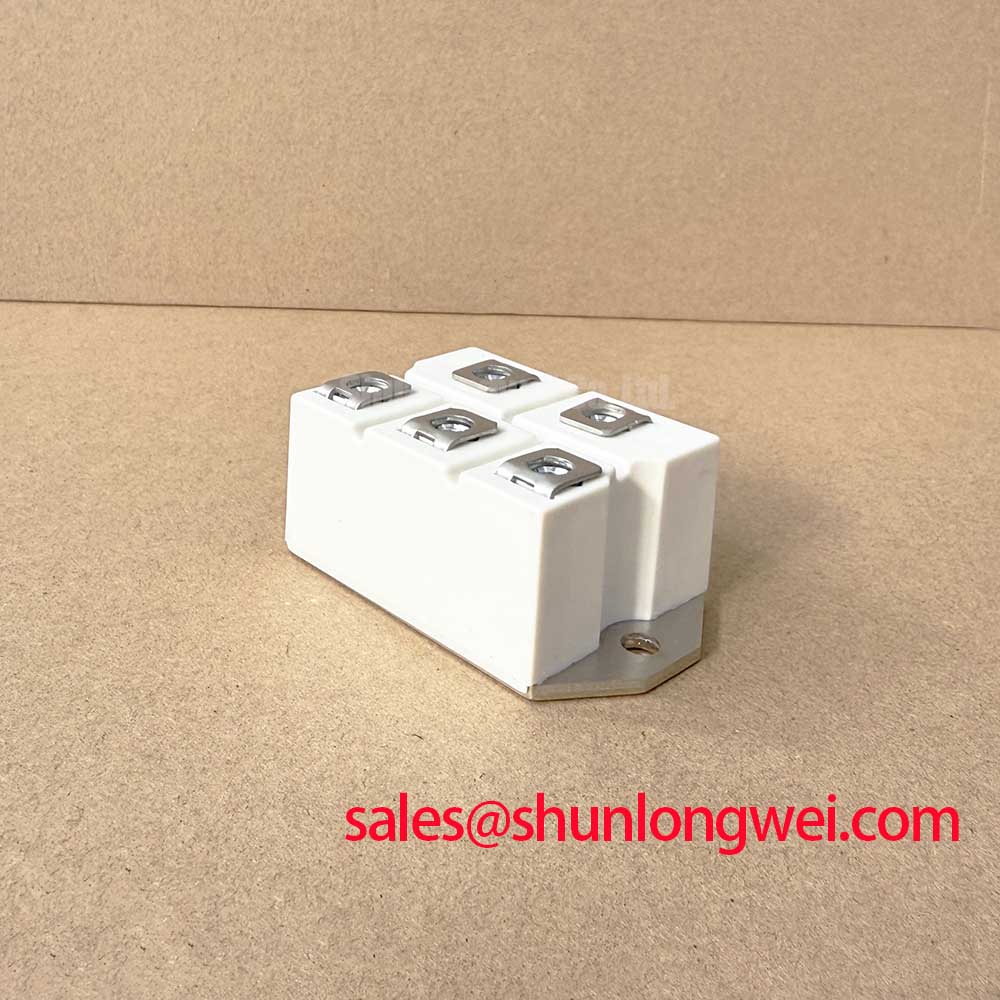
The mechanical and thermal architecture of a power diode bridge dictates its long-term operational lifespan under continuous industrial service. Semikron housing technology in the SEMIPONT® 3 package features a large, electrically isolated metal base plate combined with heavy-duty screw terminals for secure chassis mounting. This isolated construction permits multiple modules to be mounted onto a shared heatsink without separate isolation washers, simplifying assembly and reducing overall enclosure footprint.
From a thermal design standpoint, junction-to-case Thermal Resistance is the governing metric that limits continuous current handling. Think of thermal resistance as a bottleneck in a water pipe: a lower Rth rating widens the pipe, letting heat flow rapidly out of the semiconductor dies into the heatsink. The total Rth(j-c) of 0.183 K/W across the SKD82/18 bridge allows internal heat generated by the 1.6V forward voltage drop at 150A to dissipate effectively. By maintaining junction temperatures well below the maximum 150°C limit, system integrators achieve exceptional power density and extended mean time between failures (MTBF). Reviewing strategic insights on thermal resistance optimization further assists engineers in optimizing cooling system parameters for demanding industrial drive applications.
Frequently Asked Questions
Engineering Solutions for Three-Phase Power Rectification
How does the 1800V blocking voltage rating benefit 480V three-phase industrial systems?
A 1800V reverse blocking voltage (VRRM) provides a substantial voltage safety margin for 400V–480V AC three-phase lines. It protects internal diode junctions against severe line surges, lightning-induced transients, and inductive kickback without requiring secondary surge suppression components.
What role does the 750A peak surge current (IFSM) play in preventing module failure?
The 750A (10 ms) surge current rating allows the diode bridge to withstand initial inrush current during DC-bus capacitor charging or sudden line short-circuit conditions. Combined with an i²t rating of 2800 A²s, it simplifies semiconductor fuse selection and prevents premature diode rupture.
How does the 0.183 K/W total thermal resistance simplify heatsink design?
A low total Rth(j-c) of 0.183 K/W ensures rapid thermal dissipation from diode junctions to the module base plate. This low thermal impedance enables design engineers to specify smaller, lighter heatsinks or operate the module safely at elevated ambient temperatures up to 110°C case temperature at full 80A output.
As industrial automation systems migrate toward higher power density and stricter efficiency guidelines, select diode bridge rectifiers based on verified electro-thermal data and robust packaging specifications. Engineers seeking complete system design guidelines can consult our comprehensive field engineer handbook to streamline system design and validation.