

Content last revised on September 10, 2026
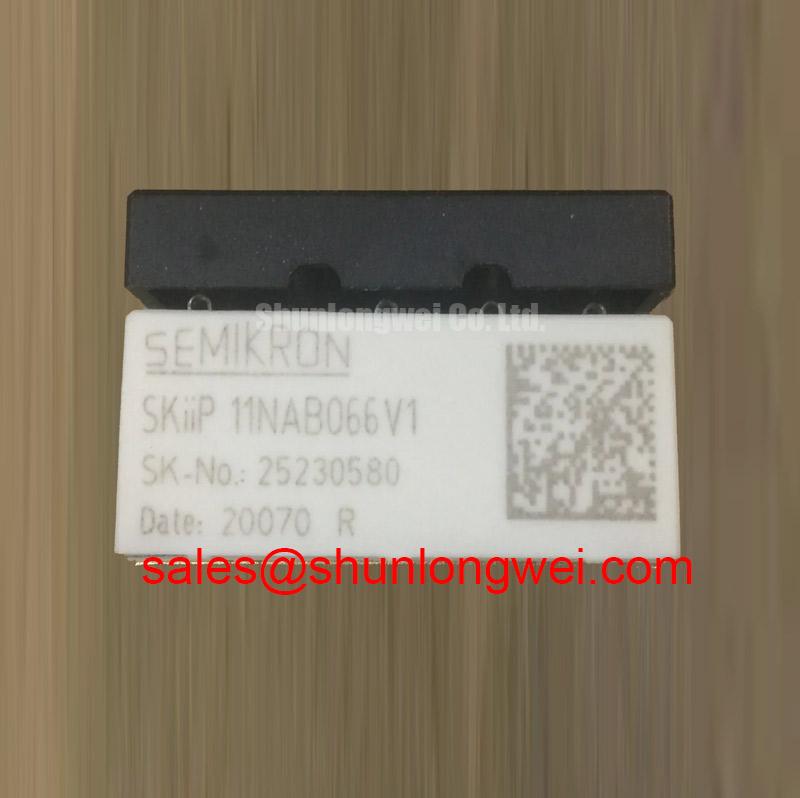
SKiiP 11NAB066V1: 600V 150A IPM Engineered for Unmatched Thermal Reliability
Product Overview & Key Specifications
Maximizing Uptime with Solder-Free Pressure Contact Technology
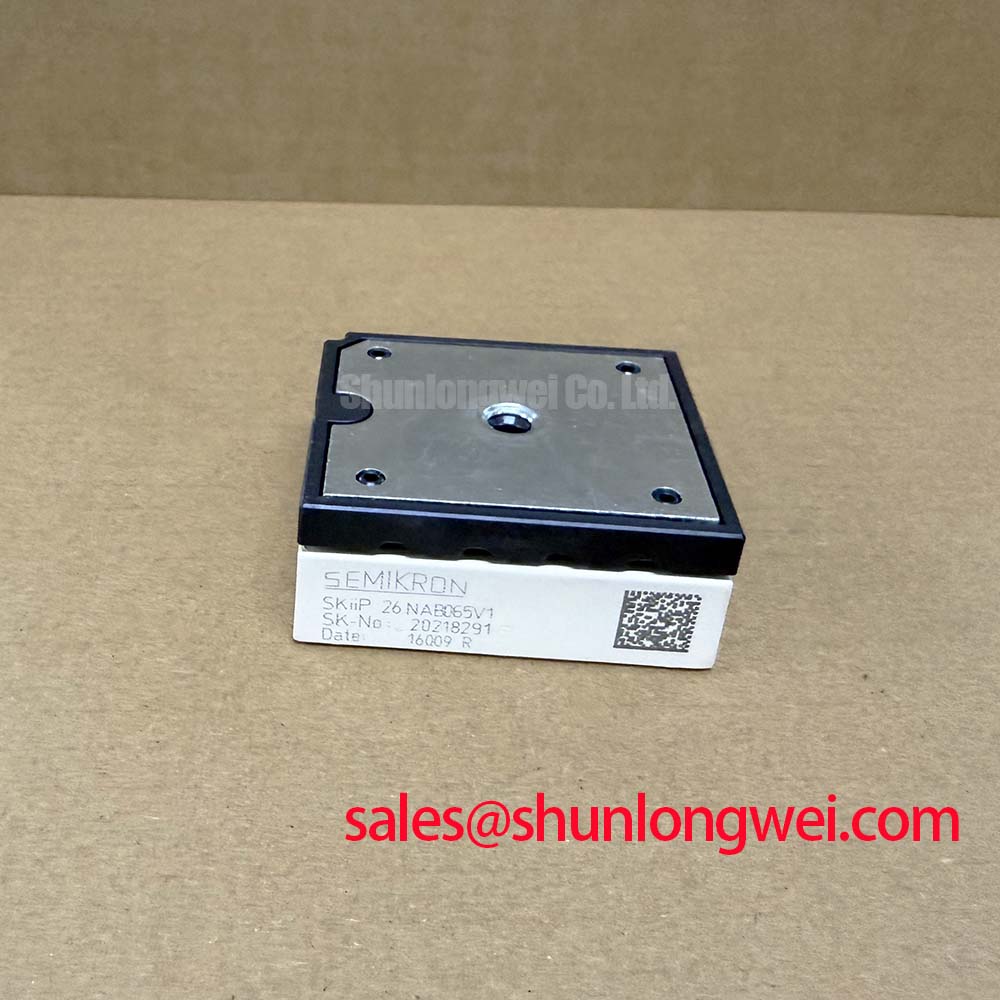
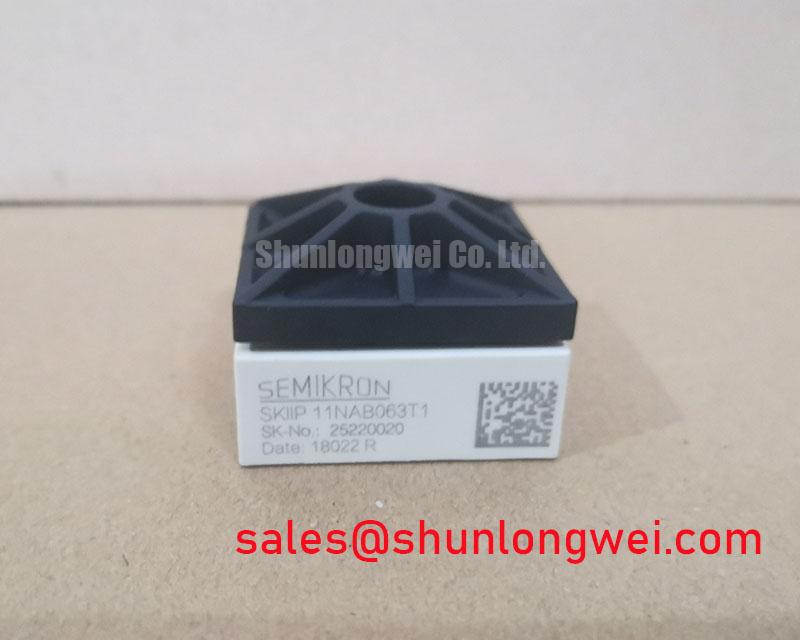
The SKiiP 11NAB066V1 is a highly integrated Intelligent Power Module (IPM) from Semikron's renowned SKiiP 3 series, engineered to deliver exceptional reliability in demanding power conversion systems. At its core, this module provides a complete 3-phase inverter stage leveraging solder-free pressure contact technology, which directly addresses common failure points found in conventional soldered modules. With its robust construction and integrated protection features, it offers a streamlined solution for system designers focused on maximizing operational lifetime and minimizing field failures. What is the key benefit of the SKiiP 11NAB066V1's design? Its solder-free pressure contact system ensures superior long-term reliability. For industrial motor drives up to 55 kW requiring maximum uptime, the SKiiP 11NAB066V1's pressure contact design offers the optimal reliability.
- Core Specifications: 600V | 150A (Nominal Current) | V_CE(sat) 1.9V (typ.)
- Key Advantage 1: Superior thermal cycling and power cycling capability.
- Key Advantage 2: Integrated driver and protection simplifies system design.
Key Parameter Overview
Decoding the Specs for Enhanced Thermal Performance and System Integrity
The electrical and thermal characteristics of the SKiiP 11NAB066V1 are optimized for efficiency and durability. The low typical saturation voltage (V_CE(sat)) of 1.9V minimizes conduction losses, a critical factor in overall system efficiency. More importantly, the thermal resistance from junction to case (R_th(j-c)) is exceptionally low, a direct result of the pressure contact design. This superior thermal pathway allows for more effective heat dissipation, enabling higher power density or the use of smaller, more cost-effective heatsinking solutions.
| Parameter | Value | Engineering Value & Interpretation |
|---|---|---|
| Collector-Emitter Voltage (V_CES) | 600 V | Provides a secure voltage margin for applications operating on 230V to 400V AC lines, ensuring reliability against voltage transients. |
| Nominal Collector Current (I_Cnom) | 150 A | Defines the module's continuous current handling capability, suitable for powering AC motors typically in the 37 kW to 55 kW range. |
| Collector-Emitter Saturation Voltage (V_CE(sat)) at I_Cnom | 1.9 V (Typ.) / 2.3 V (Max.) | A low V_CE(sat) translates directly to lower heat generation during operation, reducing cooling requirements and improving overall inverter efficiency. |
| Thermal Resistance, Junction to Case (R_th(j-c)) per IGBT | 0.19 K/W (Max.) | This is a critical indicator of thermal efficiency. A low value, like 0.19 K/W, means heat moves away from the chip effectively, keeping the junction cooler and extending the module's operational life. |
| Short Circuit Withstand Time (t_psc) | > 10 µs | Offers a robust safety window for the integrated protection circuitry to detect and safely shut down the device during a short-circuit event, preventing catastrophic failure. |
| Isolation Voltage (V_isol) | 4000 V (AC, 1 min.) | Ensures high-voltage safety and reliable electrical isolation between the power circuit and the control logic, meeting stringent industrial safety standards. |
Download the SKiiP 11NAB066V1 datasheet for detailed specifications and performance curves.
Application Scenarios & Value
System-Level Benefits in High-Reliability Industrial Drives
The SKiiP 11NAB066V1 is purpose-built for applications where long-term reliability is not just a feature, but a critical operational requirement. Its primary application is in industrial Variable Frequency Drives (VFDs) and servo drives that control AC motors in machinery such as conveyors, pumps, fans, and automated manufacturing lines. In these environments, downtime for component replacement is extremely costly. The module's pressure contact technology eliminates solder fatigue, a leading cause of failure in conventional power modules subjected to frequent temperature changes, known as power cycling. This makes the SKiiP 11NAB066V1 an ideal choice for systems with frequent start/stop or variable load cycles. How does integrated protection help? It simplifies design and enhances system safety against fault conditions.
This module's integrated gate driver, complete with V_CEsat monitoring for short-circuit protection and an NTC for temperature sensing, simplifies the overall system architecture. Engineers can reduce external component count, shrink PCB size, and accelerate the design-to-market timeline while ensuring the system complies with safety standards like IEC 61800-5-1. For systems operating on higher voltage buses, the related SKiiP 11NAB12T4V1 offers a 1200V rating within a similar technology platform.
Frequently Asked Questions (FAQ)
Engineering Inquiries on the SKiiP 11NAB066V1
What is the primary advantage of the pressure contact system over traditional soldered modules?
The main advantage is a significant increase in reliability and operational lifetime. By eliminating solder layers, which are prone to cracking and degradation over time due to thermal stress, the pressure contact system provides a more robust mechanical and thermal connection. This results in superior Power Cycling Capability, directly translating to a longer service life in the field.
How does the integrated gate driver simplify my design process?
The integrated driver board includes the gate drive circuitry, V_CEsat monitoring for short-circuit protection, undervoltage lockout (UVLO), and an isolated DC/DC power supply. This integration means you do not need to design, source, and validate these critical sub-circuits yourself, reducing board space, component count, and development time. It provides a pre-validated, optimized solution for driving and protecting the IGBTs.
What does the low R_th(j-c) value of 0.19 K/W mean for my thermal design?
This low thermal resistance value is like having a wider, smoother highway for heat to travel from the IGBT chip to the heatsink. It allows for more efficient heat extraction, which means the semiconductor junction will operate at a lower temperature for a given load. This gives the designer two options: either increase the power output for a given heatsink size or reduce the size and cost of the heatsink for a given power output, improving overall system power density.
Is this module suitable for high-frequency switching applications?
The SKiiP 11NAB066V1 is optimized for the typical switching frequencies found in motor drives, generally up to 8-10 kHz. The module's low-inductance design helps to minimize voltage overshoot during switching. For applications requiring significantly higher frequencies, it's essential to analyze the trade-off between switching losses (which increase with frequency) and conduction losses, as detailed in the datasheet's performance curves.
How does the internal NTC thermistor enhance system safety?
The integrated NTC thermistor provides a real-time temperature reading of the module's substrate. This data can be fed back to the system's master controller to implement over-temperature protection. The controller can then trigger alarms, derate the output power, or initiate a safe shutdown if the temperature exceeds predefined limits, preventing thermal runaway and protecting both the module and the wider system from damage.
Technical Deep Dive
A Closer Look at Sintered and Pressure-Contact Technology
The defining feature of the SKiiP 11NAB066V1 is its departure from conventional power module construction. Instead of soldering the semiconductor chips to a Direct Bonded Copper (DBC) substrate and then soldering that assembly to a heavy copper baseplate, this module utilizes SKiiP technology. This involves sintering the chips directly to the DBC. Sintering is a process that forms a strong, continuous metallic bond at a lower temperature than soldering, resulting in a layer with significantly higher thermal conductivity and mechanical strength.
This sintered substrate is then integrated into a pressure contact system. Imagine a sandwich where the DBC substrate is pressed directly onto a heatsink by a precisely calibrated spring system within the module housing. This approach eliminates two entire layers of thermal resistance and mechanical stress: the solder between the DBC and the baseplate, and the thermal grease between the baseplate and the heatsink. This elegant design simplification is the key to the module's enhanced performance, providing a direct, reliable, and highly efficient path for waste heat to exit the system.
An Engineer's Perspective
System-Level Implications of a Solder-Free Design
From a design engineer's viewpoint, the adoption of a module like the SKiiP 11NAB066V1 is a strategic decision that shifts focus from component-level mitigation to system-level optimization. The elimination of solder fatigue as a primary wear-out mechanism fundamentally changes the reliability calculation, allowing for more accurate lifetime predictions and potentially longer warranty periods for the end product. The highly efficient thermal interface reduces the design margin needed for thermal management, freeing up budget and space for other value-adding features. Ultimately, specifying a module with this architecture is an investment in the long-term robustness and total cost of ownership of the entire power system.