Content last revised on August 28, 2026
SKIIP 22NAB126V10: 1200V Intelligent Power Module for High-Reliability Motor Drives
An Engineering-Focused Overview
Defining a New Standard for Integrated Drive Reliability
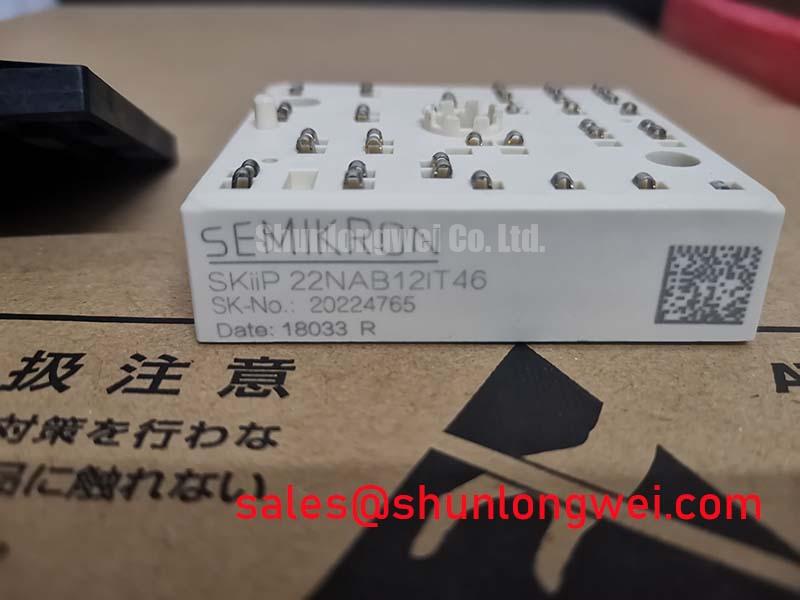
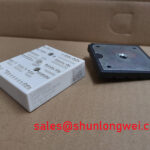
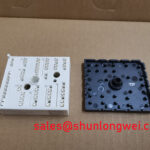
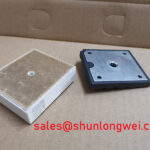
The SKIIP 22NAB126V10 is an intelligent power module (IPM) engineered for superior operational lifetime in demanding industrial motor control applications. Its core value proposition is delivering exceptional reliability through solder-free pressure contact technology. With key specifications of 1200V | 22A (Nominal Current), this module provides two primary engineering benefits: significantly enhanced power cycling capability and a highly simplified system design. The primary advantage of its pressure-contact design is the elimination of solder fatigue, a common failure mechanism in conventional power modules. For compact variable frequency drives where long-term reliability and minimal downtime are critical, this integrated inverter and brake chopper module is an optimal design choice.
Key Parameter Overview
Decoding the Electrical and Thermal Specifications
The technical specifications of the SKIIP 22NAB126V10 are tailored for precision and endurance in motion control systems. The parameters are grouped by function to facilitate a clear evaluation for specific design stages, from the main inverter bridge to the integrated braking and thermal management components. Understanding the thermal resistance (Rth(j-s)) is crucial; its low value indicates efficient heat transfer from the semiconductor junction to the heatsink, which is a direct result of the pressure contact design. A lower Rth allows for more compact heatsink designs or greater thermal margin under heavy loads.
| Inverter Stage - Absolute Maximum Ratings (Tcase = 25°C) | |
|---|---|
| Collector-Emitter Voltage (V_CES) | 1200 V |
| Continuous DC Collector Current (I_C) | 35 A (Tcase = 25°C) |
| Nominal Current (I_Cnom) | 22 A |
| Gate-Emitter Peak Voltage (V_GES) | +/- 20 V |
| Brake Chopper - Absolute Maximum Ratings (Tcase = 25°C) | |
| Collector-Emitter Voltage (V_CES) | 1200 V |
| Continuous DC Collector Current (I_C) | 25 A (Tcase = 25°C) |
| Thermal and Mechanical Specifications | |
| Operating Junction Temperature (T_jop) | -40 to +150 °C |
| Thermal Resistance, Junction to Heatsink (Rth(j-s)) per IGBT | < 1.6 K/W |
| Isolation Test Voltage (V_isol) | 2500 V (AC, 1 min.) |
Download the SKIIP 22NAB126V10 datasheet for detailed specifications and performance curves.
Application Scenarios & Value
System-Level Benefits in Industrial Motion Control
The SKIIP 22NAB126V10 is engineered for high-performance, space-constrained industrial applications where uptime is paramount. Its integrated design and robust construction provide tangible value in systems like multi-axis CNC machines, automated conveyor systems, and robotics.
Consider the design of a compact Variable Frequency Drive (VFD) that must be mounted directly onto a machine frame, where space is limited and vibration is constant. An engineer's primary challenge is ensuring long-term reliability while managing thermal dissipation in a small enclosure. The SKIIP 22NAB126V10 directly addresses this. Its integrated brake chopper eliminates the need for a separate, bulky braking unit, saving significant panel space. More critically, the module’s pressure contact mounting provides superior resistance to mechanical stress and vibration compared to standard soldered modules. The integrated current and temperature sensors feed crucial data directly to the controller, enabling precise motion control systems and offering immediate protection against overload conditions without the complexity and cost of external sensor circuits. What is a key benefit of the integrated sensors? They provide a direct feedback loop for advanced motor control and system protection.
While this module is optimized for applications up to 22A, for higher power requirements within the same technological family, the SKiiP 35NAB126V1 offers a similar 1200V rating with a higher current handling capability.
Technical Deep Dive
A Closer Look at Solder-Free Pressure Contact Technology for Enhanced Longevity
The defining feature of the SKIIP 22NAB126V10 is its reliance on Semikron's SKiiP pressure contact technology. Unlike conventional IGBT modules that use multiple layers of solder to connect the semiconductor die to the baseplate, this design eliminates solder entirely at the critical thermal interfaces. Instead, it uses a precisely engineered spring system to apply high, uniform pressure, creating a direct physical bond between the components and the heatsink.
This approach fundamentally solves one of the most common causes of power module failure: solder fatigue. During operation, thermal cycling causes materials to expand and contract at different rates. Over thousands of cycles, this stress can create micro-cracks in solder layers, increasing thermal resistance and eventually leading to catastrophic overheating. The pressure contact system is analogous to a high-performance engine head gasket; it's designed to accommodate thermal expansion and contraction without degradation, ensuring a consistently low thermal resistance throughout the module's entire operational life. This results in a dramatic increase in Power Cycling Capability and a system that is inherently more robust and reliable.
Frequently Asked Questions (FAQ)
Engineering Inquiries on Integration and Reliability
How does the solder-free pressure contact design of the SKIIP 22NAB126V10 impact maintenance and field replacement?
The pressure contact system simplifies field service. Since the module is not permanently soldered to the heatsink, replacement can be performed more quickly by releasing the mounting pressure, removing the module, applying new thermal paste, and re-mounting the new unit. This can significantly reduce machine downtime and maintenance costs compared to systems requiring de-soldering or complete sub-assembly replacement.
What specific design advantage do the integrated current sensors provide for a motor drive application?
The integrated current sensors provide a high-fidelity, real-time measurement of the phase currents directly at the power stage. This eliminates measurement delays and inaccuracies caused by external sensor wiring, allowing the VFD controller to execute more precise control algorithms, such as Field-Oriented Control (FOC). The result is smoother motor operation, better torque response, and more effective over-current protection.
Is the integrated brake chopper sufficient for high-inertia loads that require significant regenerative braking?
The integrated brake chopper is rated for a continuous DC current of 25A (at Tcase=25°C) and is designed for typical industrial applications involving deceleration or overhauling loads. For applications with extremely high peak braking energy or very high inertia, an external braking resistor of the appropriate power rating is required. The datasheet provides the specifications needed to select a suitable resistor and ensure the braking chopper operates within its Safe Operating Area (SOA).
System Design & Operational Excellence
Leveraging Integration for a Competitive Edge
For engineering teams developing next-generation industrial automation, the SKIIP 22NAB126V10 offers a clear path to creating more compact, reliable, and cost-effective systems. By integrating key functions and employing a fundamentally more robust connection technology, this module allows designers to focus on control software and system features, rather than spending resources on complex power stage design and validation. To further explore the strategic advantages of integrated power modules, consider our guide on IPM vs. Discrete IGBT design. For sourcing inquiries or to discuss how this module can fit into your specific application, please contact our technical sales team.