
Content last revised on September 10, 2026
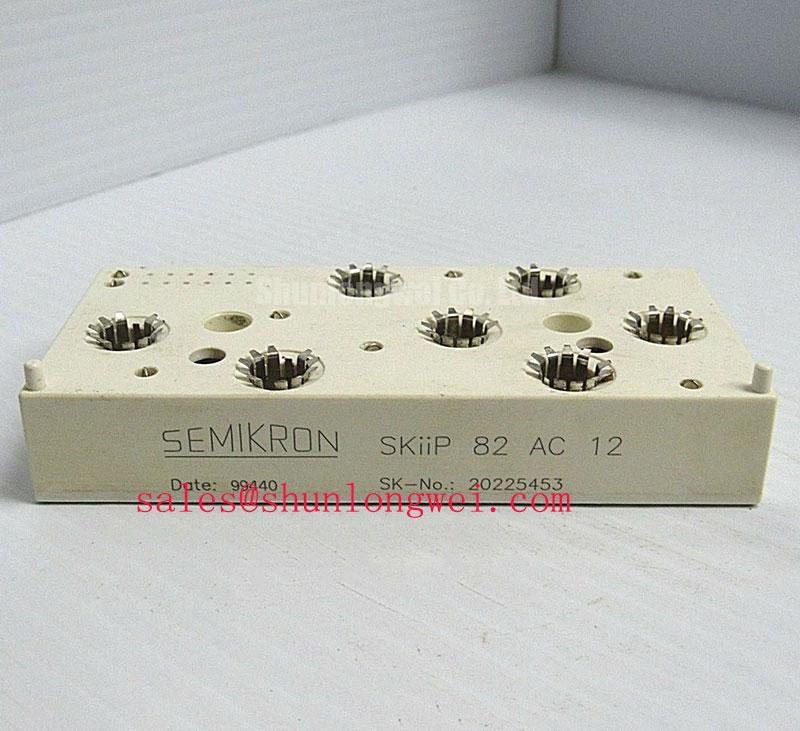
Semikron SKIIP83AC12T1 1200V 85A 3-Phase Inverter IGBT Module
The SKIIP83AC12T1, manufactured by Semikron, is a high-performance three-phase inverter IGBT module housed in a MiniSKiiP 8 package. Solder-free pressure contact technology enables superior power cycling capability and thermal reliability in compact motor drives. Key Specifications: 1200V | 85A | Rth(j-h) 0.25 K/W. Key Benefits: Solderless pressure contact, Integrated temperature sensor. By eliminating the solder layer between the ceramic substrate and the heatsink, this module avoids the primary failure mechanism of thermal cycling fatigue. For industrial motor drives requiring high thermal cycling reliability and simple assembly, this 1200V module is the optimal choice.
What is the primary benefit of its pressure-contact design? Enhanced long-term reliability by eliminating solder fatigue. How does the integrated temperature sensor protect the module? It enables active thermal monitoring for real-time protective derating.
Key Parameter Overview
Maximizing Power Density with the MiniSKiiP 8 Platform
The table below details the electrical and thermal limits of the module. These values serve as the baseline for drive inverter design and thermal system validation.
| Parameter | Conditions / Notes | Nominal Value |
|---|---|---|
| Collector-Emitter Voltage (VCES) | Tj = 25°C | 1200 V |
| Continuous Collector Current (IC) | Theatsink = 80°C | 85 A |
| IGBT Saturation Voltage (VCE(sat)) | IC = 100 A, Tj = 125°C (typ.) | 3.1 V |
| Diode Forward Voltage (VF) | IF = 75 A, Tj = 125°C (typ.) | 1.8 V |
| IGBT Thermal Resistance (Rth(j-h)) | Per IGBT, including thermal paste | 0.25 K/W |
| Isolation Voltage (Visol) | AC, 1 minute duration | 2500 V |
Download the SKIIP83AC12T1 datasheet for detailed specifications and performance curves.
Application Scenarios & Value
Empowering Efficient Variable Frequency Drives in Industrial Environments
For design engineers constructing compact IGBT modules for industrial motor control, managing transient startup surges is a common challenge. Standard solder-based modules are highly susceptible to thermal fatigue when subjected to repetitive startup surges. The SKIIP83AC12T1 solves this issue by utilizing solder-free pressure contact technology that mounts the module directly to the heatsink. Further details on this interface can be found in the documentation on Semikron SKiiP® Technology.
In high-power industrial conveyor systems, this pressure contact arrangement maintains structural integrity over millions of power cycles. The design aligns with the strict requirements of servo drives and PFC stages under heavy load conditions. By lowering thermal degradation, it extends system lifetime and minimizes maintenance downtime in automated production lines.
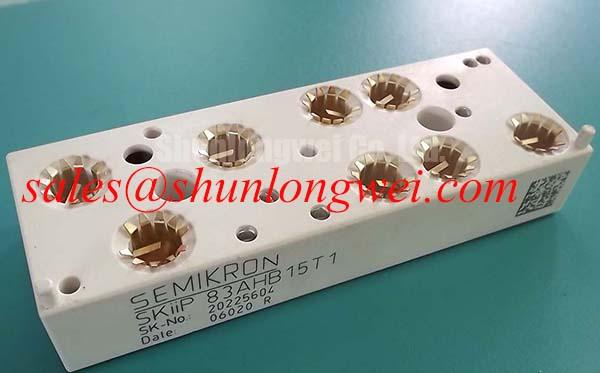
For systems requiring alternative topologies or higher current capability, the related SKIIP83AHB15T1 offers a half-controlled configuration, whereas the SKIIP83ANB15T5 provides a tailored solution for brake-chopper applications.
Industry Insights & Strategic Advantage
Addressing the Modern Demand for Solder-Free Power Stage Reliability
In traditional power electronics, the multiple solder layers within an IGBT module behave much like the structural adhesive in a bridge. Under cyclic load, different materials expand at varying rates, causing the adhesive layers to crack and fail. By replacing these solder layers with mechanical pressure contact, this module eliminates the main root cause of thermal fatigue. This matches the industry-wide transition towards maintenance-free industrial drives. Integrating this module into a comprehensive thermal management strategy helps prevent thermal degradation.
Think of the thermal resistance Rth(j-h) of 0.25 K/W as a narrow thermal highway. A lower resistance value acts like adding extra lanes, allowing heat to flow away from the junction with minimal resistance. This highway keeps the silicon temperature safely below the 150°C limit. Furthermore, regulatory mandates for higher energy efficiency are pushing engineers to design power stages that operate closer to their thermal limits. The integration of an internal temperature sensor in the T1 variant provides real-time diagnostic capabilities. These diagnostics support predictive maintenance algorithms, helping to prevent catastrophic over-temperature events.
Frequently Asked Questions
Addressing Critical Integration and Maintenance Inquiries
Does the pressure-contact design of the SKIIP83AC12T1 require a specific thermal interface material thickness?
Yes. To achieve the specified Rth(j-h) of 0.25 K/W, a uniform, high-quality thermal paste thickness of 20 to 30 micrometers must be applied. This prevents air entrapment and ensures optimal heat transfer.
How does the 1200V rating benefit 400V AC line applications?
The 1200V VCES rating provides a robust safety margin against transient voltage spikes and inductive kickback. This safety margin eliminates the need for large, expensive external snubber circuits in the system.
What is the primary benefit of the integrated temperature sensor in this module?
The integrated temperature sensor allows real-time temperature tracking at the heatsink level. This enables the gate driver or system controller to implement protective derating schemes before overheating occurs. For engineers performing diagnostic checks on older systems, a guide on testing an IGBT module can assist in identifying thermal or gate failures.
Why does the MiniSKiiP 8 package omit a copper baseplate?
By eliminating the copper baseplate, the module reduces parasitic inductance and thermal mass. This design allows direct pressure contact from the ceramic substrate to the heatsink for faster heat dissipation.