


Content last revised on October 1, 2026
Benchtop Waveform Tuning: Checking Trigger Assumptions on SKKD380-18
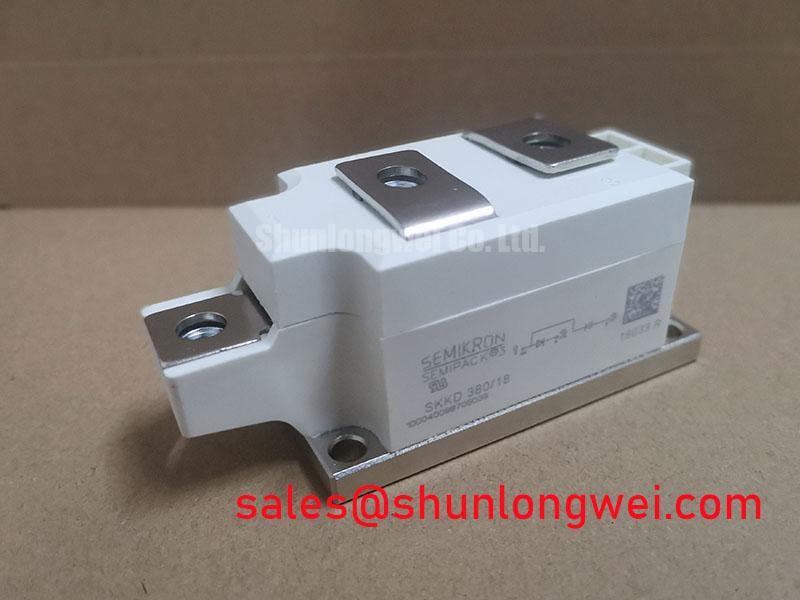
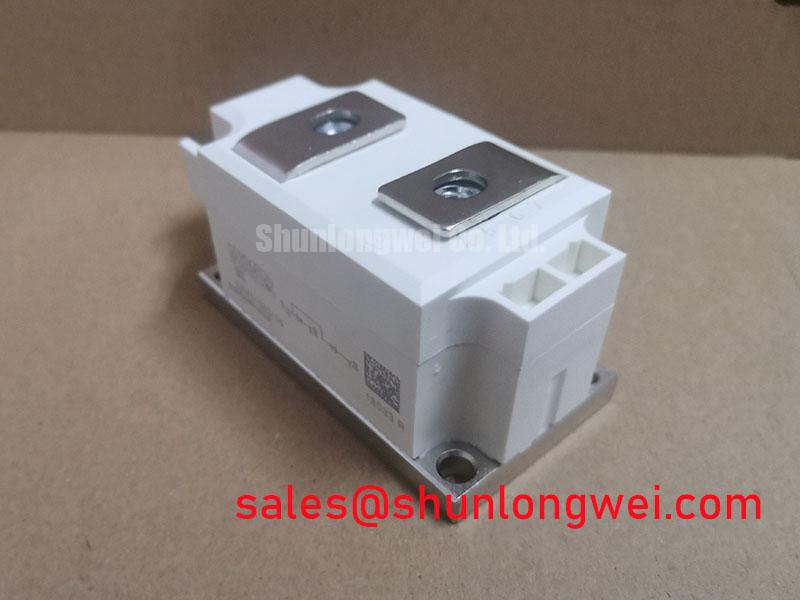
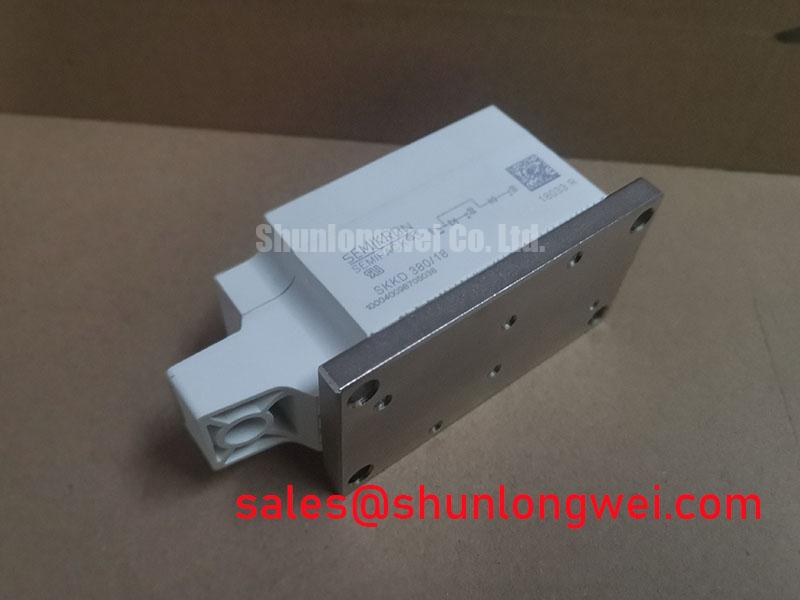
Probe the proposed trigger connections against the equipment schematic: SKKD380-18 is identified as a diode module, so a gate firing waveform is not an applicable acceptance test for this part. Gate pulse rise time, back-porch current and multi-pulse firing belong to thyristor checks; assigning those tests to diode terminals could conceal a wiring or part-selection error. Semikron’s SEMIPACK thyristor and diode module information distinguishes the product families.
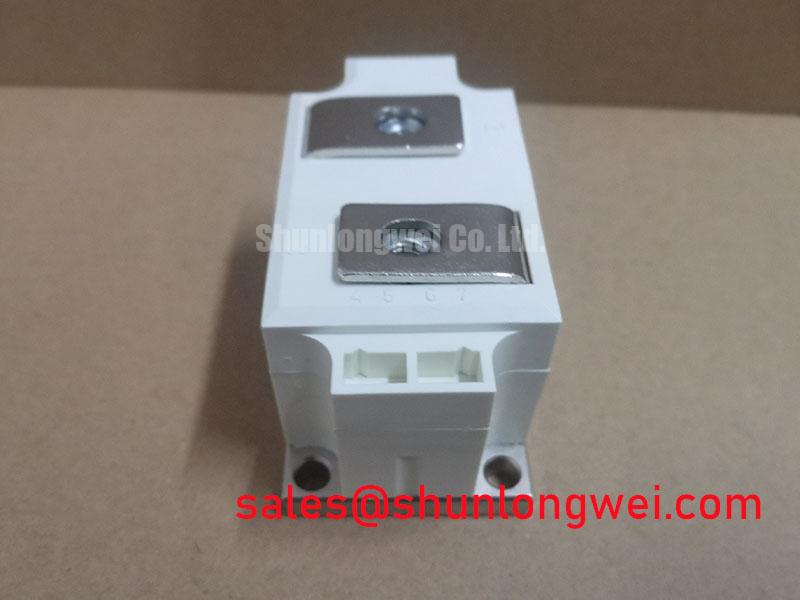
With the assembly isolated and discharged, trace each external terminal to the circuit drawing. Use a multimeter’s diode mode to compare forward and reverse indications across each intended diode path, then compare the readings with a known-good assembly under similar test conditions. A handheld meter does not establish high-current on-state performance or a safe reverse-voltage limit. 💡 Bench Tip: Record probe polarity alongside every cold reading so a reversed lead pair is not mistaken for a changed junction.
The available rating information is not sufficient to establish a safe substitution: confirm the voltage and current rating definitions for the exact module. For a comparison candidate such as SKKD260/08, check the manufacturer ratings, terminal arrangement and Semipack outline independently rather than assuming interchangeability from the shared prefix.
Field Diagnostics & Commissioning: Checking Non-Repetitive Surge Exposure
Inspect the surge recorder and protection log after a fault, then compare the event’s current waveform with the manufacturer’s non-repetitive surge-current conditions for the exact module revision. A peak-current value without its pulse duration and starting junction temperature cannot establish whether the assembly remained within its rating. The available specification record does not state an IFSM value or its test conditions, so it cannot support a numeric surge-pass decision.
Repeat the cold polarity check after the event and investigate any change against the original readings. Where the equipment permits controlled recommissioning, observe current sharing, heatsink temperature and reverse-voltage reapplication during the actual operating cycle. Design Consideration: allow for junction heating from a surge before assessing the next reverse-voltage interval; the permissible interval depends on the documented device limits and the measured system waveform.
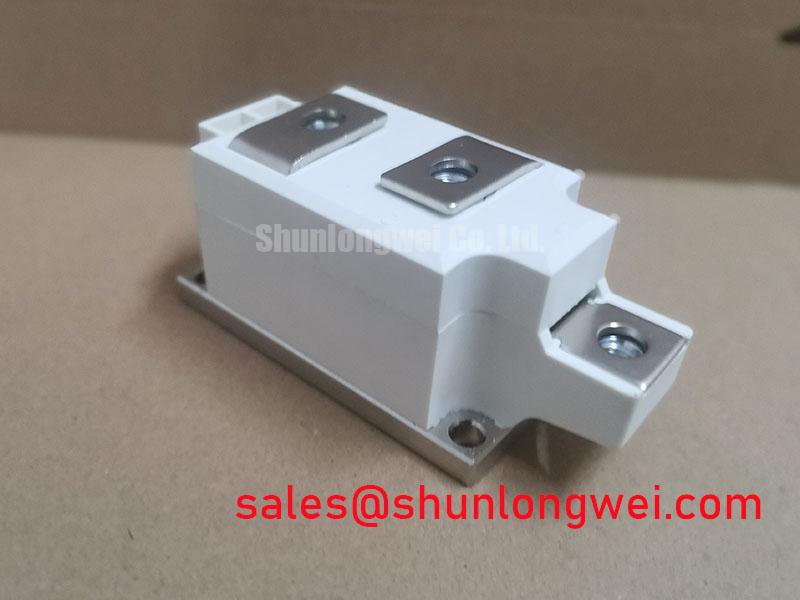
Examine terminal seating and the thermal interface while the assembly is accessible. Obtain mounting torque from the applicable Semipack mechanical documentation rather than applying a generic fastener value. For thermal-path assessment methods, The Advanced Thermal Management Revolution provides background; it does not replace the module’s mounting instructions.
SKKD380-18 Operational Boundaries: Evaluating Reverse Recovery
Capture diode current and reverse voltage through commutation when the repaired equipment can be tested safely. A current reversal followed by ringing may reflect recovery behavior, circuit inductance or both; compare the capture with a known-good channel before changing the surrounding circuit. The available rating record contains no reverse-recovery charge, peak recovery current or recovery-time limits for SKKD380-18. Do not assign those values from another diode family.
Design Consideration: reverse-recovery behavior can affect switching loss and conducted or radiated disturbance, but the outcome depends on the complete commutation loop. Keep the test loop representative of the installed wiring and let the system engineer assess measured voltage peaks against the verified device rating. Semikron’s bare-die technology information offers context for diode behavior, not a reverse-recovery specification for this packaged part.
A medium-frequency induction melting or hardening furnace supply is one possible compatibility assessment, not an established application for every SKKD380-18. Match its rectifier topology, cooling arrangement and commutation conditions to the exact module documentation before integration.
SKKD380-18 Operational Boundaries: Coordinating Short-Circuit Protection
Read the installed fuse identification and the fault record, then obtain the fuse maker’s total-clearing I²t at the circuit’s prospective fault current. Compare that value with the module manufacturer’s applicable I²t rating, if specified, under the relevant conditions. Neither a fuse coordination table nor a device I²t limit is present in the available specification record, so no numerical coordination result or damage-free fault claim is justified.
Check for loose connections, altered buswork and signs of uneven contact before re-energizing. After confirming the exact part documentation, the protection engineer can assess fuse clearing, fault-current contribution and thermal recovery together. Do not use an unverified current entry in fuse-selection calculations until its meaning and source are reconciled with the manufacturer’s rated-current definition.