



Content last revised on September 10, 2026
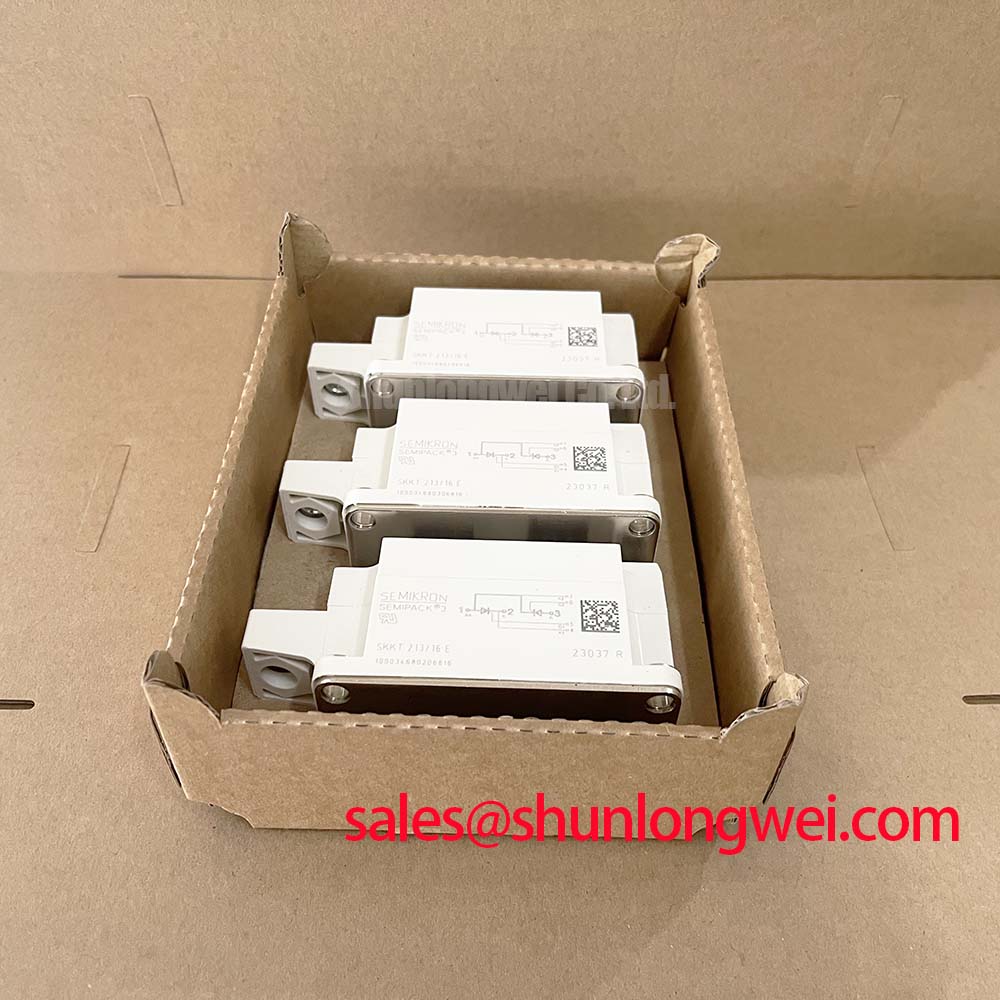
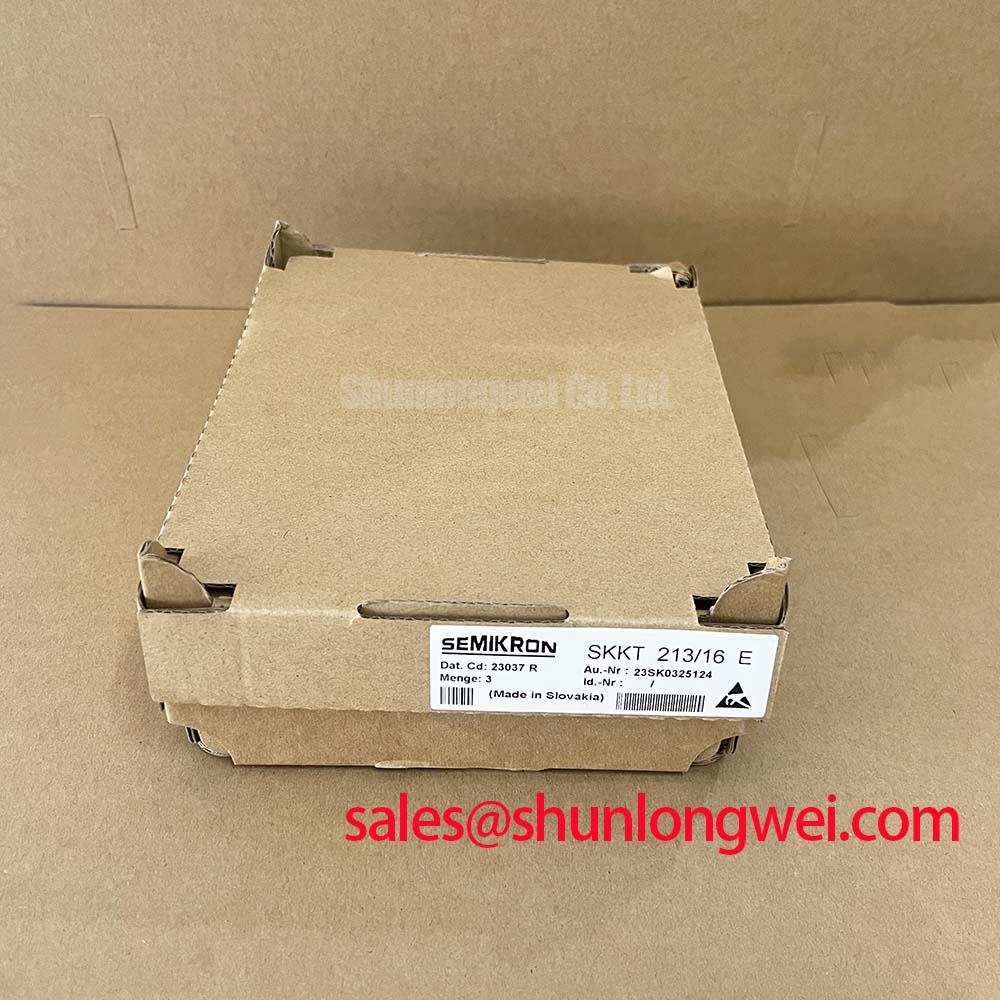
SKKT213/16E: A Deep Dive into Semikron's High-Reliability Thyristor/Diode Module
Engineered for Durability in Demanding Power Control Systems
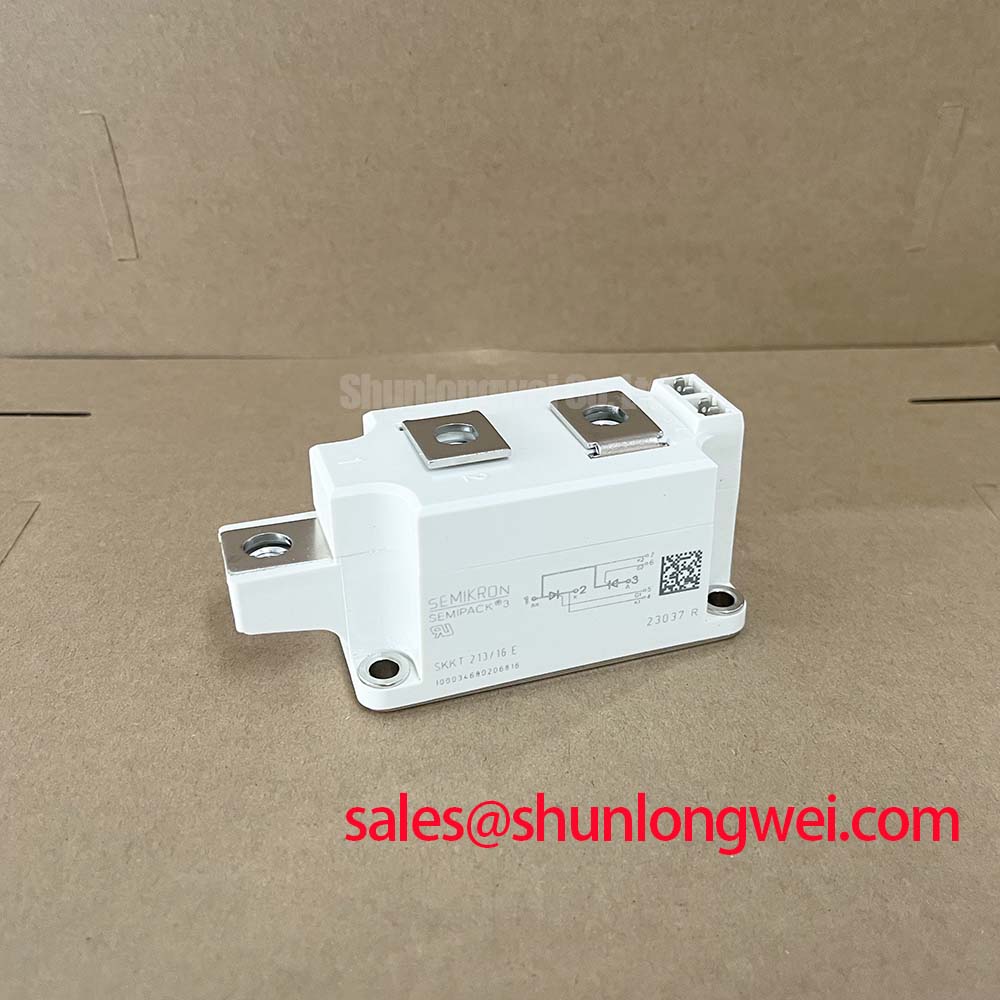
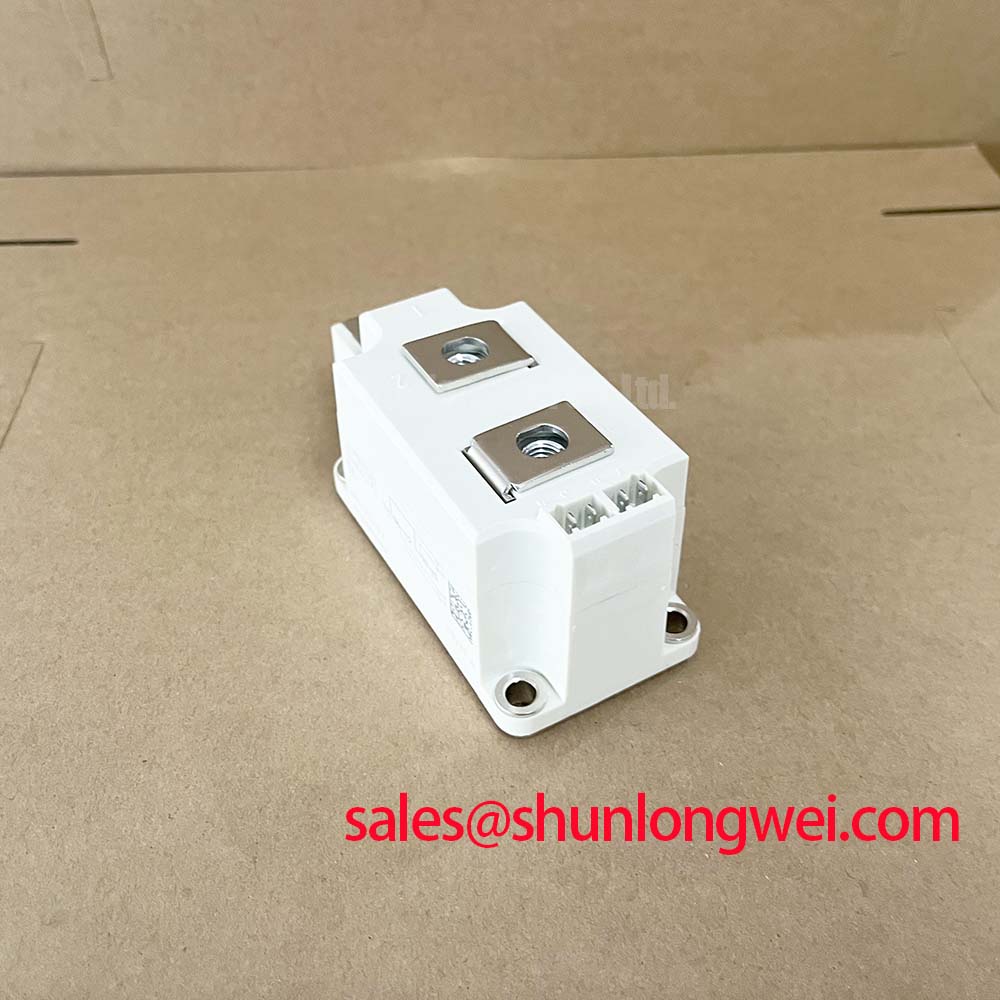
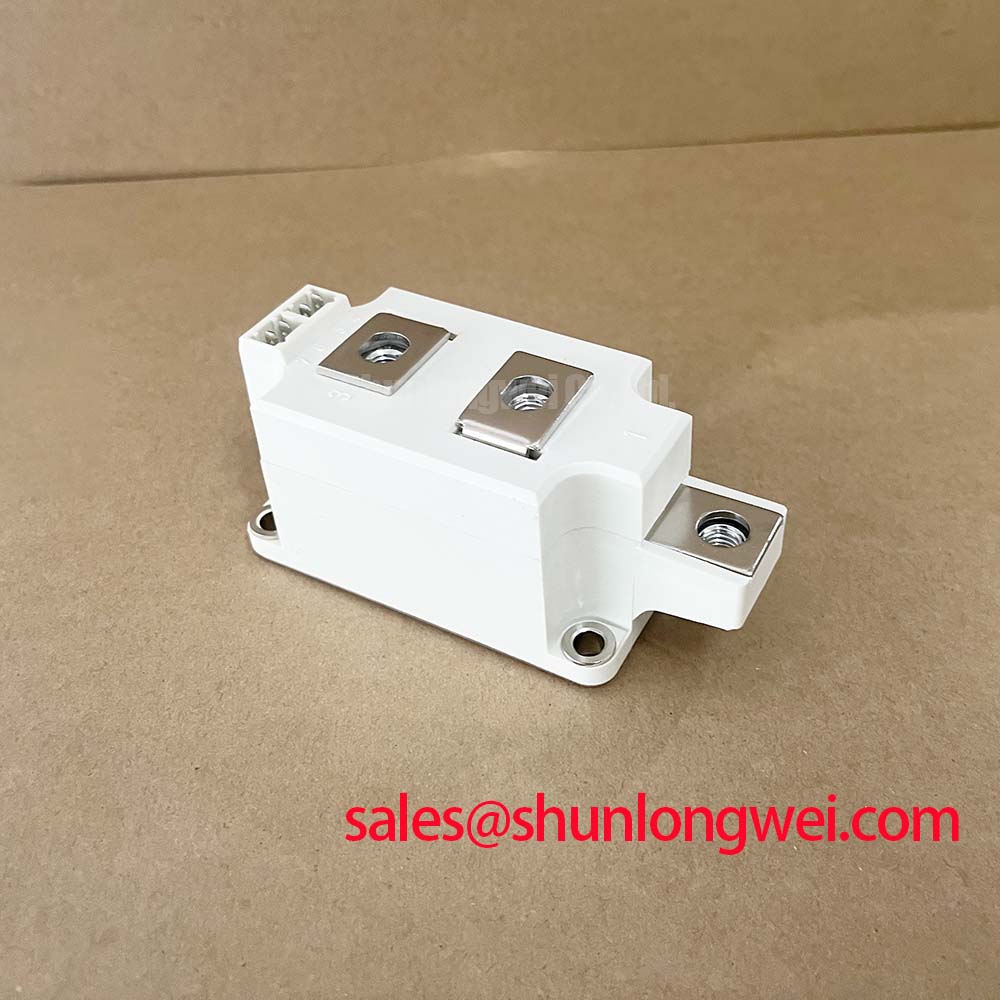
The SKKT213/16E is a high-performance thyristor/diode module from Semikron, engineered to deliver precise control and long-term reliability in demanding power conversion systems. At its core, this module provides robust performance with specifications of 1600V repetitive peak reverse voltage and an average on-state current of 210A. Key benefits include exceptional thermal management via its isolated baseplate and high operational robustness ensured by glass-passivated thyristor chips. This design directly addresses the engineering challenge of maintaining performance and longevity in industrial environments subject to high electrical and thermal stress. For applications requiring robust phase control with a priority on thermal stability, this 1600V module stands out as a premier choice.
Key Parameter Overview
Decoding the Specs for Enhanced Thermal Reliability
The technical specifications of the SKKT213/16E are foundational to its performance in power control circuits. Each parameter is optimized to ensure stable operation, efficient thermal transfer, and a long service life. The module's low thermal resistance is a critical attribute for designers aiming to create compact and efficient systems. Understanding this value is key to effective heatsink selection and overall thermal design. Think of thermal resistance, or Rth(j-c), as the narrowness of a channel for heat to escape. The SKKT213/16E's low Rth(j-c) per arm acts like a wide, unobstructed channel, allowing heat to move efficiently from the active silicon to the heatsink, thereby keeping the junction temperature in a safe operating range.
| Parameter | Symbol | Value | Unit |
|---|---|---|---|
| Electrical Characteristics (per thyristor/diode) | |||
| Repetitive Peak Reverse Voltage | VRRM, VDRM | 1600 | V |
| Average On-State Current (Tcase = 85 °C) | ITAV | 210 | A |
| RMS On-State Current (Tcase = 70 °C) | ITRMS | 330 | A |
| Surge On-State Current (10 ms, 50 Hz) | ITSM | 6500 | A |
| I²t Value (10 ms, 50 Hz) | I²t | 211000 | A²s |
| Gate Trigger Current | IGT | max. 150 | mA |
| Thermal and Mechanical Characteristics | |||
| Operating Junction Temperature Range | Tvj | -40 to +130 | °C |
| Thermal Resistance, Junction to Case | Rth(j-c) | max. 0.10 | K/W |
| Insulation Test Voltage | Visol | 3000 | V~ |
| Weight | approx. 300 | g | |
Download the SKKT213/16E datasheet for detailed specifications and performance curves.
Application Scenarios & Value
System-Level Benefits in Industrial AC Power Control
The robust design of the SKKT213/16E makes it an ideal component for a range of high-power industrial applications where precise control and unwavering reliability are non-negotiable. Its primary value is demonstrated in systems that experience significant inrush currents or require dependable power regulation under fluctuating loads.
A prime engineering scenario is in the design of a soft starter for large three-phase AC induction motors. During startup, these motors can draw currents many times their nominal rating. The SKKT213/16E's high surge current capability (ITSM up to 6500A) provides the necessary headroom to manage these intense, short-duration events without device degradation. This ensures a smooth, controlled motor ramp-up, reducing mechanical stress on the powertrain and electrical stress on the grid. The module's precise gate control allows for accurate phase angle adjustment, enabling fine-tuned torque control. Furthermore, its use is critical in applications like industrial heating control and large-scale DC Power Supply units for electroplating or welding. For systems demanding even higher current handling, the related SKKT250/16E offers an increased current rating within a similar package footprint.
Technical Deep Dive
A Closer Look at the Construction for Long-Term Reliability
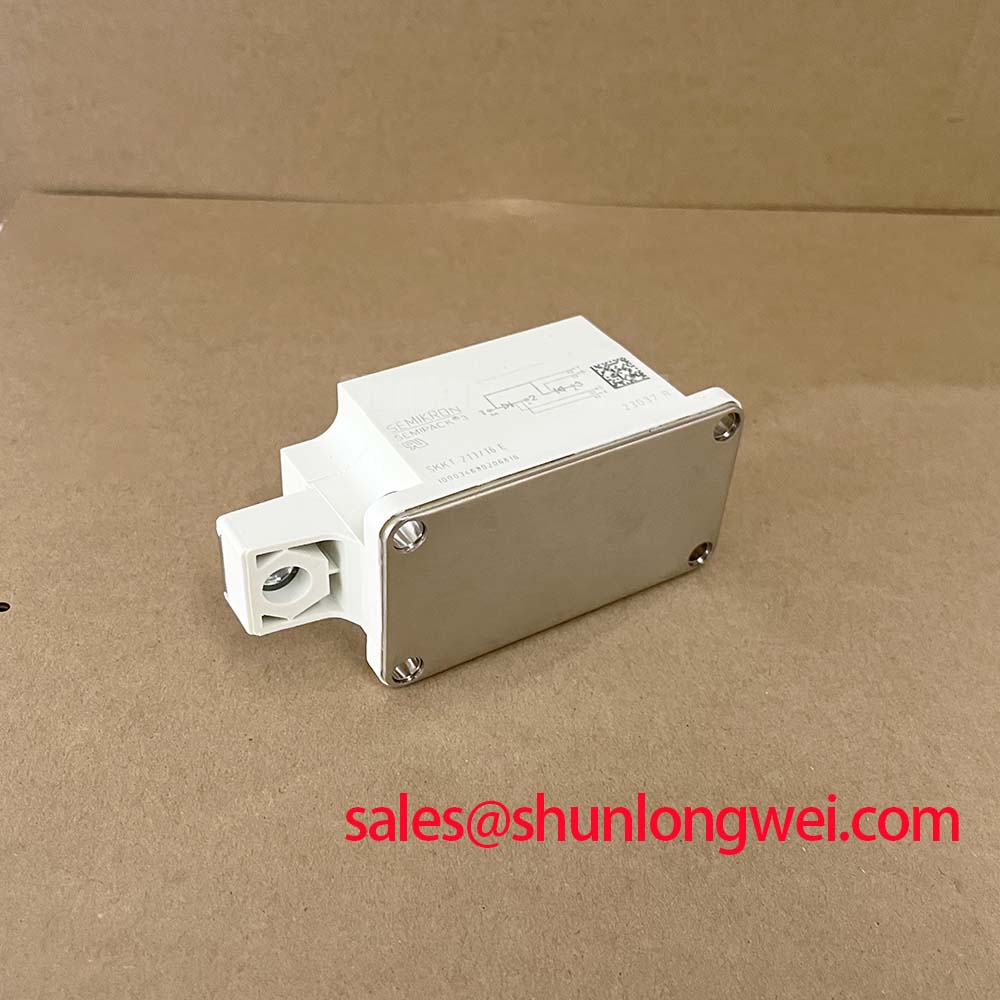
The longevity of a power module is not determined by its electrical ratings alone but is heavily influenced by its mechanical and thermal construction. The SKKT213/16E incorporates key design features aimed at maximizing operational life. The use of an aluminium oxide (Al₂O₃) ceramic isolated metal baseplate is central to its performance. This material provides excellent electrical isolation (rated for 3000V~) while simultaneously offering superior thermal conductivity compared to older technologies. This dual-functionality simplifies the assembly process for engineers, as it eliminates the need for separate, thermally-inefficient insulating pads, enabling a direct, low-resistance thermal path to the heatsink.
Furthermore, the internal construction with hard-soldered joints is a critical factor for reliability. Comparing this to conventional solder is like contrasting a welded structural frame with a bolted one. The hard-soldered connections are inherently more robust and resistant to the mechanical fatigue induced by repeated thermal cycling—the expansion and contraction that occurs as the module heats up and cools down. This resistance to solder fatigue is a key reason for the module's extended service life in applications like motor drives or power supplies that operate in start-stop or cyclical load patterns. Explore more about how robust module design impacts system performance in our guide to mastering thermal management.
Frequently Asked Questions (FAQ)
What is the primary benefit of the aluminium oxide ceramic isolated baseplate?
Its primary benefit is providing both high electrical isolation and excellent thermal conductivity, which simplifies heatsink mounting and improves overall system thermal performance.
How does the glass passivation of the thyristor chips contribute to the module's reliability?
Glass passivation creates a hermetic seal around the thyristor junction, protecting it from environmental contaminants and ensuring stable blocking voltage characteristics over the module's entire operational life, especially at high temperatures.
To evaluate the SKKT213/16E for your power control system or to verify its technical specifications against your design requirements, please request a detailed quote from our technical support team.


