Content last revised on September 10, 2026
SKM195GB124DN: Engineering High-Efficiency Power Conversion
A Technical Introduction to the SEMITRANS 2 NPT IGBT Module
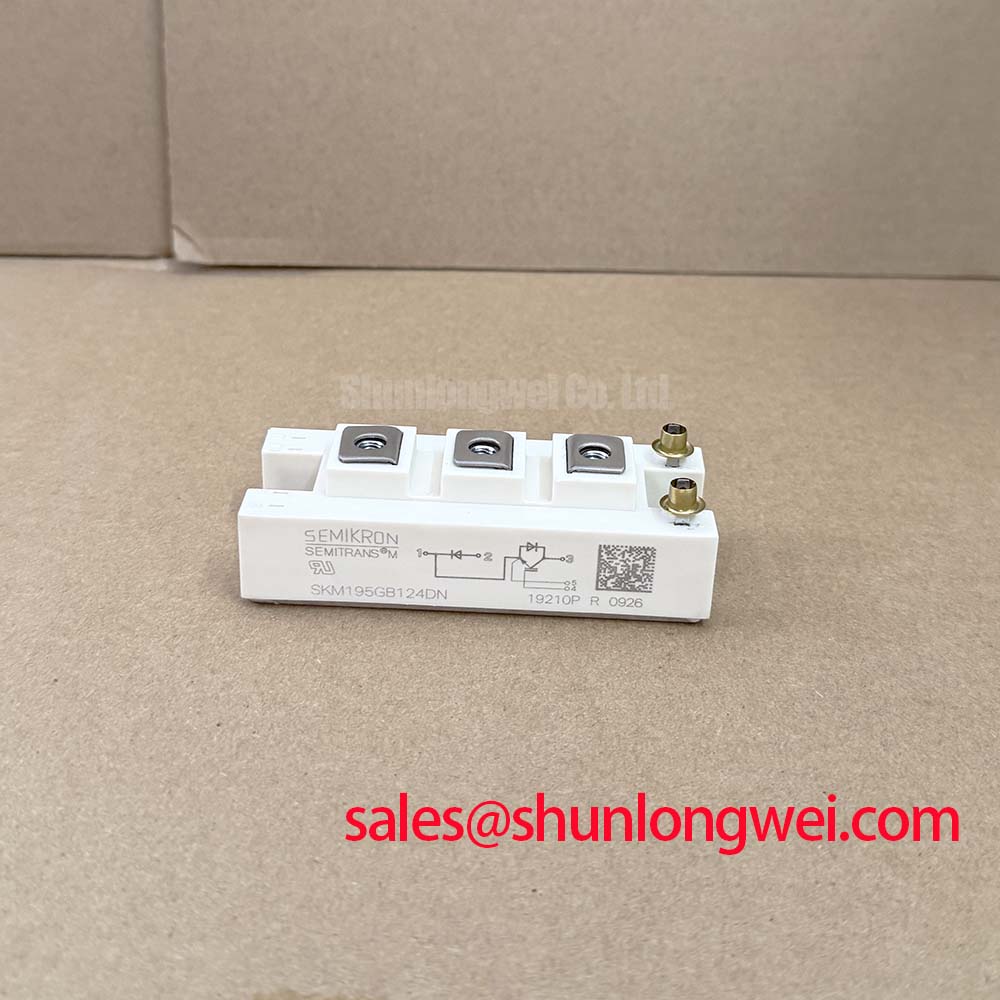
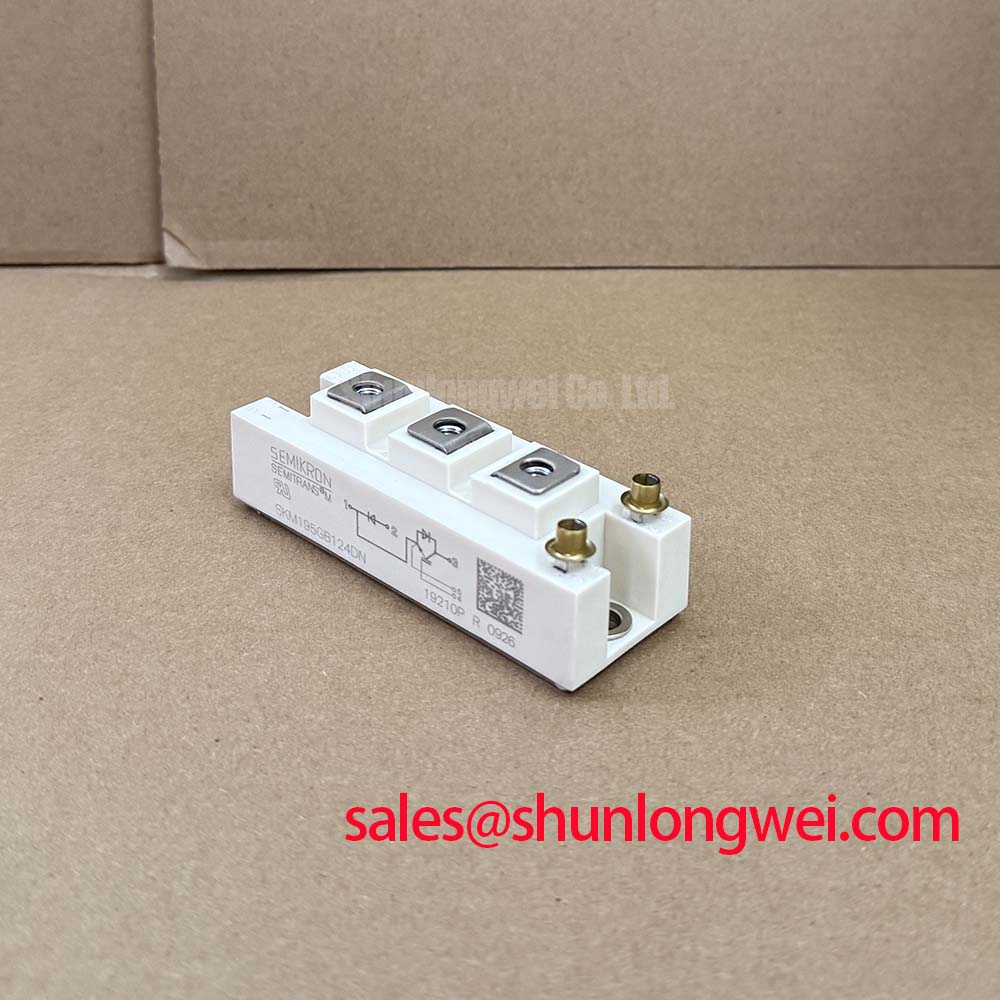
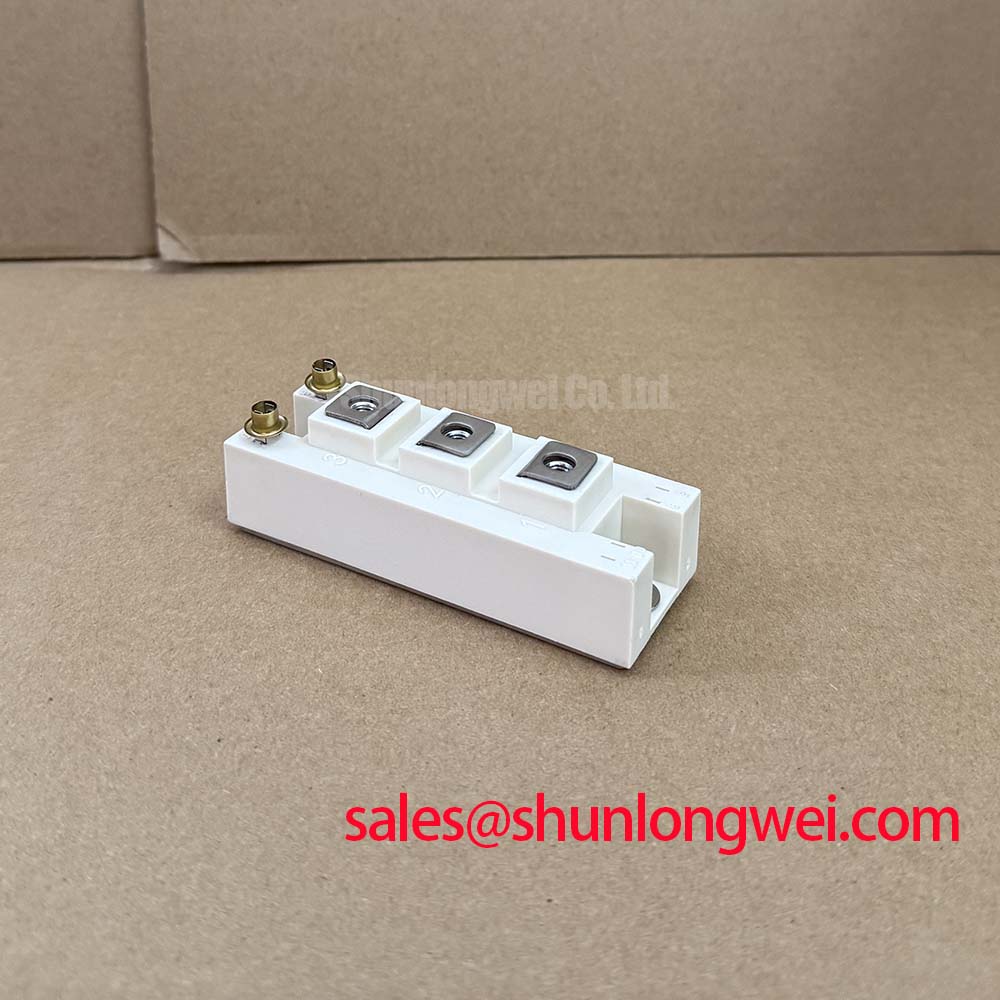
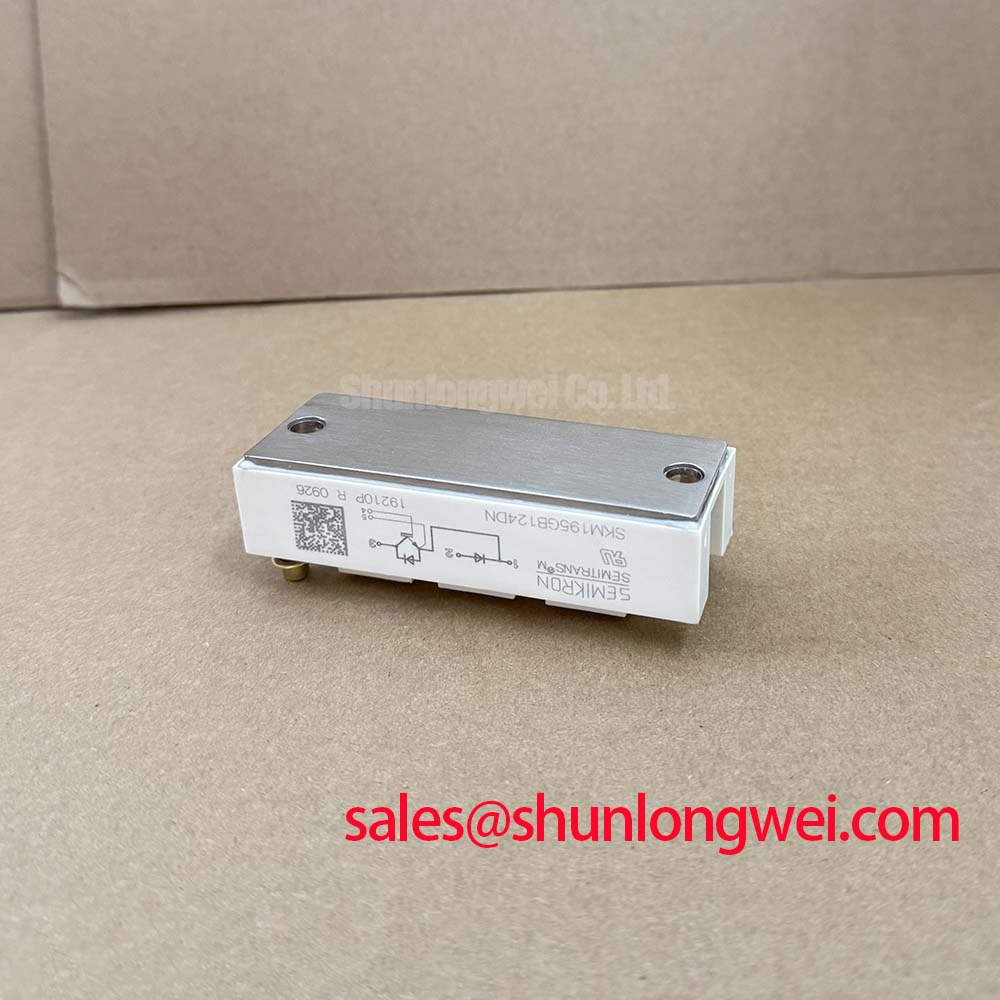
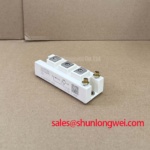
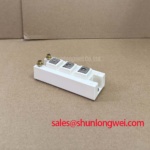
The SKM195GB124DN from SEMIKRON is a high-performance NPT IGBT module engineered for superior efficiency and thermal reliability in demanding power conversion systems. This module integrates a 1200V | 180A (at Tc=80°C) IGBT with a fast and soft inverse CAL freewheeling diode within the robust SEMITRANS 2 package. Its key benefits include significantly reduced switching and conduction losses, leading to enhanced thermal performance and system-level reliability. The integrated CAL diode technology is pivotal, ensuring fast, soft switching that minimizes EMI and power dissipation. For engineers designing industrial motor drives or uninterruptible power supplies up to the 100kW range, the SKM195GB124DN's meticulously balanced profile of low power loss and proven thermal robustness makes it a strategically sound choice.
Key Parameter Overview
Decoding the Specs for Efficient Power Switching
The technical specifications of the SKM195GB124DN are optimized for robust performance in high-frequency switching applications. The parameters below highlight its capabilities in managing electrical loads and thermal dissipation effectively.
| Parameter | Symbol | Condition | Value |
|---|---|---|---|
| IGBT Characteristics (per switch) | |||
| Collector-Emitter Voltage | VCES | Tj = 25 °C | 1200 V |
| Continuous DC Collector Current | IC | Tc = 80 °C | 180 A |
| Collector-Emitter Saturation Voltage | VCE(sat) | IC = 150 A, Tj = 125 °C | 2.4 V (typ.) |
| Gate-Emitter Threshold Voltage | VGE(th) | IC = 6 mA | 4.5 V - 6.5 V |
| Inverse Diode Characteristics (per switch) | |||
| Continuous DC Forward Current | IF | Tc = 80 °C | 160 A |
| Forward Voltage | VF | IF = 150 A, Tj = 125 °C | 1.8 V (typ.) |
| Thermal and Mechanical Characteristics | |||
| Thermal Resistance, Junction-to-Case | Rth(j-c) | IGBT | 0.13 K/W |
| Thermal Resistance, Junction-to-Case | Rth(j-c) | Inverse Diode | 0.23 K/W |
| Operating Junction Temperature | Tvj op | - | -40 to +150 °C |
| Isolation Voltage | Visol | AC, 1 minute | 2500 V |
Download the SKM195GB124DN datasheet for detailed specifications and performance curves.
Application Scenarios & Value
Achieving System-Level Benefits in Industrial Drives
The SKM195GB124DN is purpose-built for applications where power density, efficiency, and long-term reliability are non-negotiable. Its design directly addresses the challenges faced by engineers in modern power electronics.
A primary application is in Variable Frequency Drives (VFDs) for industrial AC motors. In this context, a key engineering challenge is managing the heat generated within a compact drive enclosure. The module's low typical VCE(sat) of 2.4V at nominal operating conditions directly reduces conduction losses, which constitute a significant portion of the total waste heat. This efficiency gain, combined with the low thermal resistance (Rth(j-c)) enabled by its Direct Copper Bonding (DCB) baseplate, facilitates more effective heat transfer to the heatsink. The tangible result is a lower operating junction temperature, which not only allows for a smaller, more cost-effective thermal solution but also enhances the drive's operational lifetime. This module is a cornerstone for creating more compact, efficient, and reliable motor control systems. For systems requiring a higher current rating within the same SEMITRANS 2 package, the SKM300GB128D offers a direct path for scaling power output.
Technical Deep Dive
A Closer Look at CAL Diode Technology for Reduced EMI
A standout feature of the SKM195GB124DN is its integrated fast and soft inverse CAL (Controlled Axial Lifetime) diode. This is not simply a standard freewheeling diode; it is specifically engineered to optimize the switching behavior of the IGBT. During the diode's turn-off (reverse recovery), its "soft" characteristic ensures a smooth, controlled decay of current. This is critical for mitigating the voltage overshoots and high-frequency oscillations that often occur in hard-switching topologies.
To understand its value, consider the analogy of a high-performance vehicle's braking system. A standard, abrupt diode behaves like slamming on the brakes, causing a jarring stop that stresses the entire system—this is analogous to the voltage spikes and EMI that disrupt sensitive control circuits. The CAL diode, in contrast, functions like an advanced anti-lock braking system. It provides a firm but exceptionally smooth deceleration, bringing the current to zero without the associated shock and instability. For a design engineer, this translates into a cleaner voltage waveform, significantly reduced electromagnetic interference (EMI), and a reduced need for external snubber circuits, ultimately simplifying PCB layout and helping achieve EMC compliance, such as that specified by the IEC 61800-3 standard for drive systems.
Frequently Asked Questions (FAQ)
How do the fast and soft characteristics of the integrated CAL diode benefit my design?
The CAL diode's soft recovery minimizes voltage overshoot and ringing during turn-off. This reduces electromagnetic interference (EMI), decreases stress on the IGBT, and can eliminate the need for external snubber circuits, simplifying design and improving overall system reliability.
What is the significance of the 0.13 K/W Rth(j-c) value for the IGBT?
This low thermal resistance value indicates highly efficient heat transfer from the IGBT silicon chip to the module's baseplate. It allows the device to run cooler under load, which directly increases its power handling capability, improves long-term reliability, and enables the use of smaller, more cost-effective heatsinking solutions.
The datasheet specifies a short circuit capability of 6 x Icnom. How does this translate to system-level reliability?
This specification provides a critical safety margin. It means the module can withstand a direct short-circuit event for a specified duration (typically 10µs) without failing. This robustness is essential in applications like motor drives, where events like stalled motors can cause massive overcurrents, preventing catastrophic failure and protecting the entire system.
For engineering and procurement inquiries regarding the SKM195GB124DN, please contact our technical sales team for support and current availability information.