

Content last revised on September 10, 2026
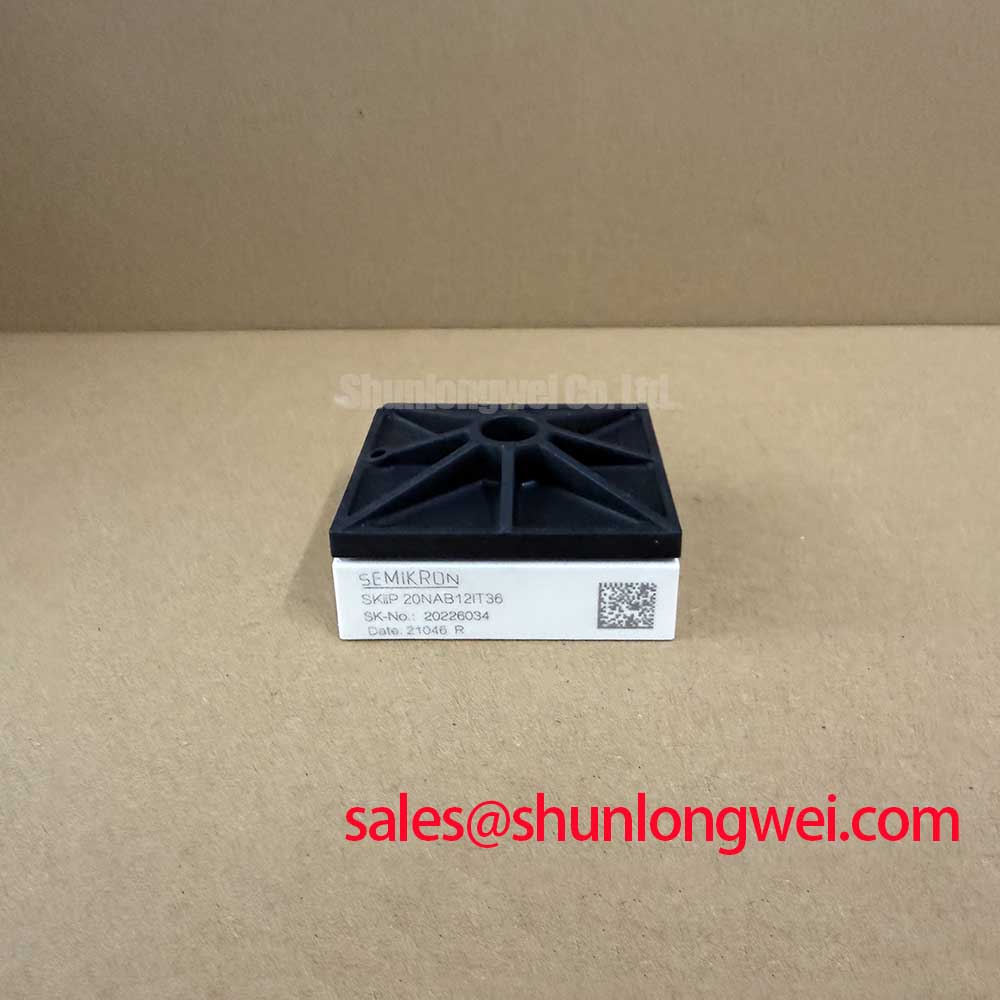
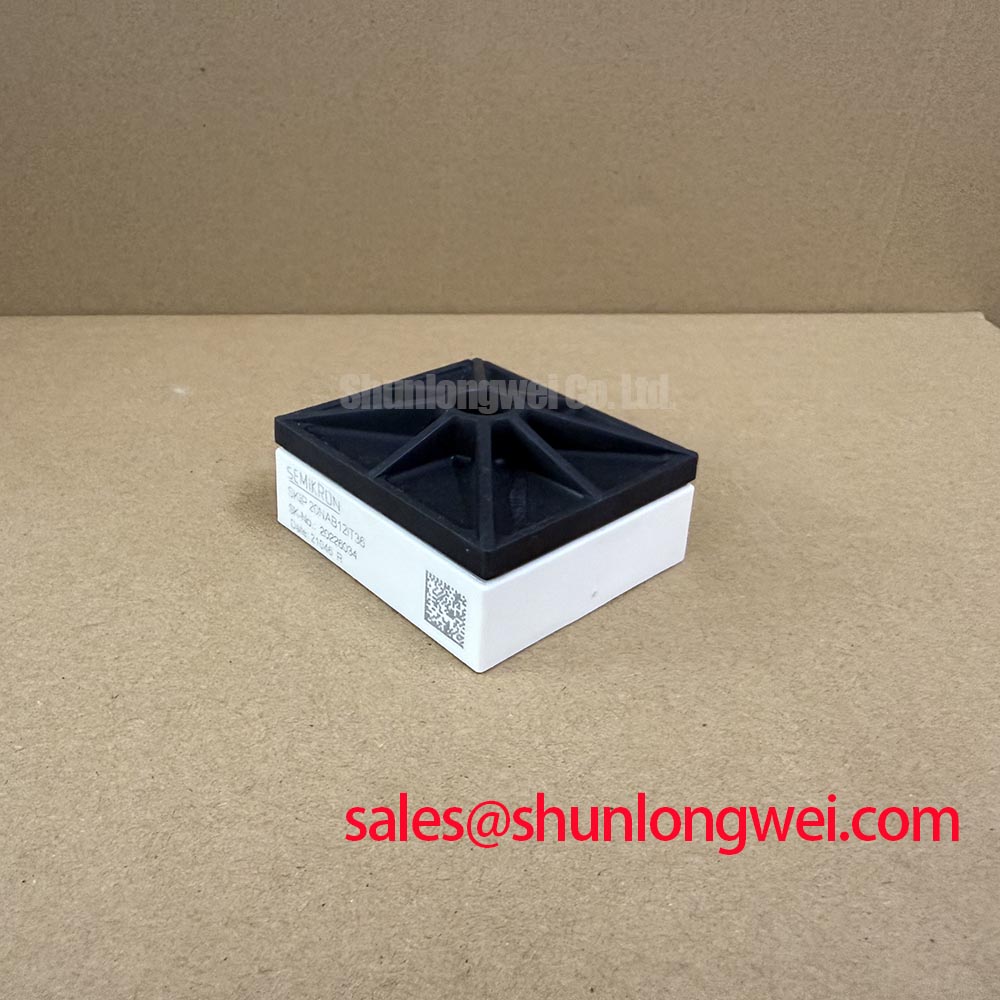
SKiiP 20NAB12IT36: 1200V MiniSKiiP 2 Integrated Inverter Module
By leveraging spring-contact technology, the SKiiP 20NAB12IT36 solves the perennial issue of thermal-mechanical stress in compact motor drives. Core specs: 1200V | 20A | MiniSKiiP 2. Key benefits: Eliminates solder fatigue. Simplifies PCB assembly. Why choose spring contacts for drive applications? It drastically reduces thermal-mechanical stress during frequent motor start-stops, fundamentally increasing operational lifespan. For 1200V industrial drives prioritizing long-term thermal cycling robustness, the SKiiP 20NAB12IT36 is the optimal choice.
Application Scenarios & Value
Conquering Thermal Stress in Frequent Start-Stop Motor Drives
Engineers often face catastrophic module failures in industrial hoists or CNC machines due to solder joint degradation under extreme thermal cycling. The SKiiP 20NAB12IT36 addresses this directly. As a highly integrated package featuring a 3-phase bridge rectifier, braking chopper, and a 3-phase bridge inverter, it forms the backbone of a compact Variable Frequency Drive (VFD).
When dealing with heavy inductive loads, the integrated braking chopper safely dissipates regenerative energy, preventing overvoltage faults on the DC bus. For systems complying with strict IEC 61800-3 EMC standards, the compact layout minimizes parasitic inductance. Navigating the thermal considerations of such a dense module requires a solid grasp of voltage, current, and thermal management.
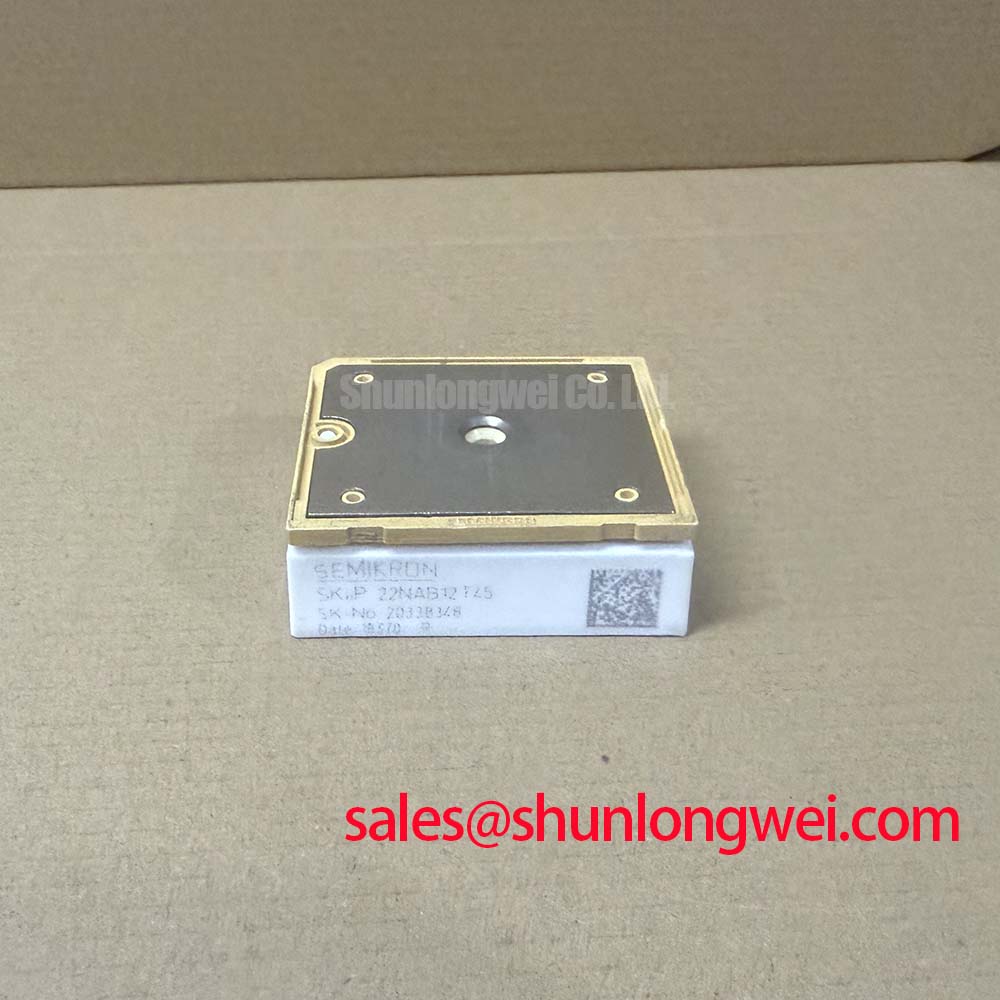
While this 1200V and 20A model is exceptional for mid-range automation applications, systems requiring higher current handling can utilize the SKIIP 22NAB126V10, or for different scale deployments, the SKiip 32NAB125T12 provides an alternative power rating footprint.
Technical Deep Dive
The Engineering Behind Spring-Contact Reliability
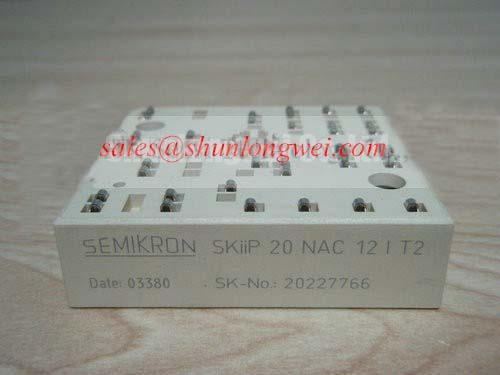
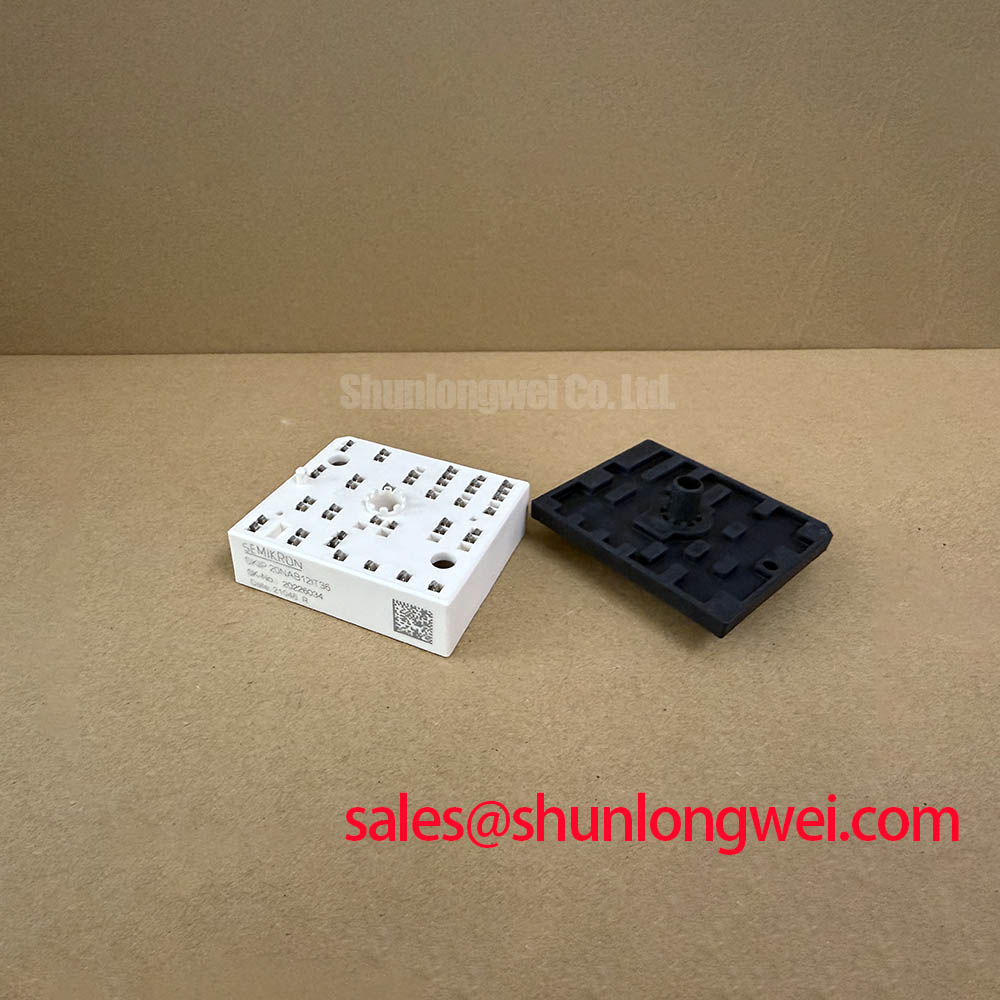
The SKiiP 20NAB12IT36 abandons traditional soldered pins in favor of proprietary Semikron SKiiP® Technology. Think of standard soldered joints like rigid concrete bridges during an earthquake; under rapid thermal expansion, they inevitably crack. The spring contacts, conversely, act like mechanical shock absorbers, dynamically flexing to accommodate micro-movements caused by thermal cycling fatigue.
This design provides a continuous, uniform pressure connection directly from the direct copper bonded (DCB) ceramic substrate to the PCB. What is the primary benefit of its pressure-contact design? Enhanced long-term reliability by eliminating solder fatigue. By maintaining consistent contact resistance even after thousands of power cycles, this module ensures uncompromised current delivery. For a broader understanding of how these parameters interact with heatsinks, exploring why Rth matters for thermal performance is highly recommended.
Additionally, the integrated braking chopper functions much like a pressure relief valve on a steam engine; when a motor decelerates rapidly, it pumps regenerative energy back into the system, and the chopper safely vents this electrical pressure into an external resistor, preventing destructive overvoltage across the DC link.
Key Parameter Overview
Decoupling the Critical Electrical and Mechanical Metrics
Below is the functional breakdown of the SKiiP 20NAB12IT36 specifications.
| Functional Group | Parameter | Value |
|---|---|---|
| Inverter Stage | Collector-Emitter Voltage (Vces) | 1200V |
| Nominal Collector Current (IC) | 20A (Typical) | |
| Rectifier Stage | Repetitive Peak Reverse Voltage (Vrrm) | 1500V |
| Forward Current (Id) | 25A | |
| Topology & Mechanical | Integration | 3-Phase Rectifier + Chopper + Inverter |
Download the SKiiP 20NAB12IT36 datasheet for detailed specifications and performance curves.
Frequently Asked Questions
Field Insights on the SKiiP 20NAB12IT36
- How does the spring-contact technology in the SKiiP 20NAB12IT36 improve inverter reliability?
By removing rigid solder connections, the module relies on flexible springs that absorb the differing coefficients of thermal expansion between the PCB and the ceramic substrate, vastly extending the module's power cycling lifetime. - Why is an integrated braking chopper critical for this 1200V module?
The built-in chopper circuit provides an immediate discharge path for reverse regenerative energy from decelerating motors, protecting the DC-link capacitors and the switching devices from destructive overvoltage spikes. - What is the primary application for a module with a 3-phase rectifier, chopper, and inverter?
This specific topology is purpose-built for compact Variable Frequency Drives (VFDs) and servo motor controllers, providing all necessary power conversion stages in a single, space-saving footprint. - Does the SKiiP 20NAB12IT36 require special mounting procedures?
Yes, it utilizes a single-screw pressure assembly mechanism that compresses the springs against the PCB pads. This requires precise torque adherence but entirely eliminates the wave-soldering process. - Can this module handle 690V AC line applications?
With a blocking voltage of 1200V, it provides adequate safety margins for standard 400V/480V AC industrial networks, but is generally insufficient for 690V lines which typically necessitate 1700V rated devices.
To ensure your motor drive systems achieve peak reliability with the SKiiP 20NAB12IT36, accurate thermal matching and PCB layout are paramount. Connect with our engineering sales team to request pricing, verify stock, and discuss how this spring-contact technology can optimize your next VFD design.