


Content last revised on April 4, 2026
SEMIX30STMLI12E4B | 1200V 3-Level NPC Press-Fit IGBT Module
Product Overview
Defining Next-Generation Reliability in Multi-Level Power Conversion
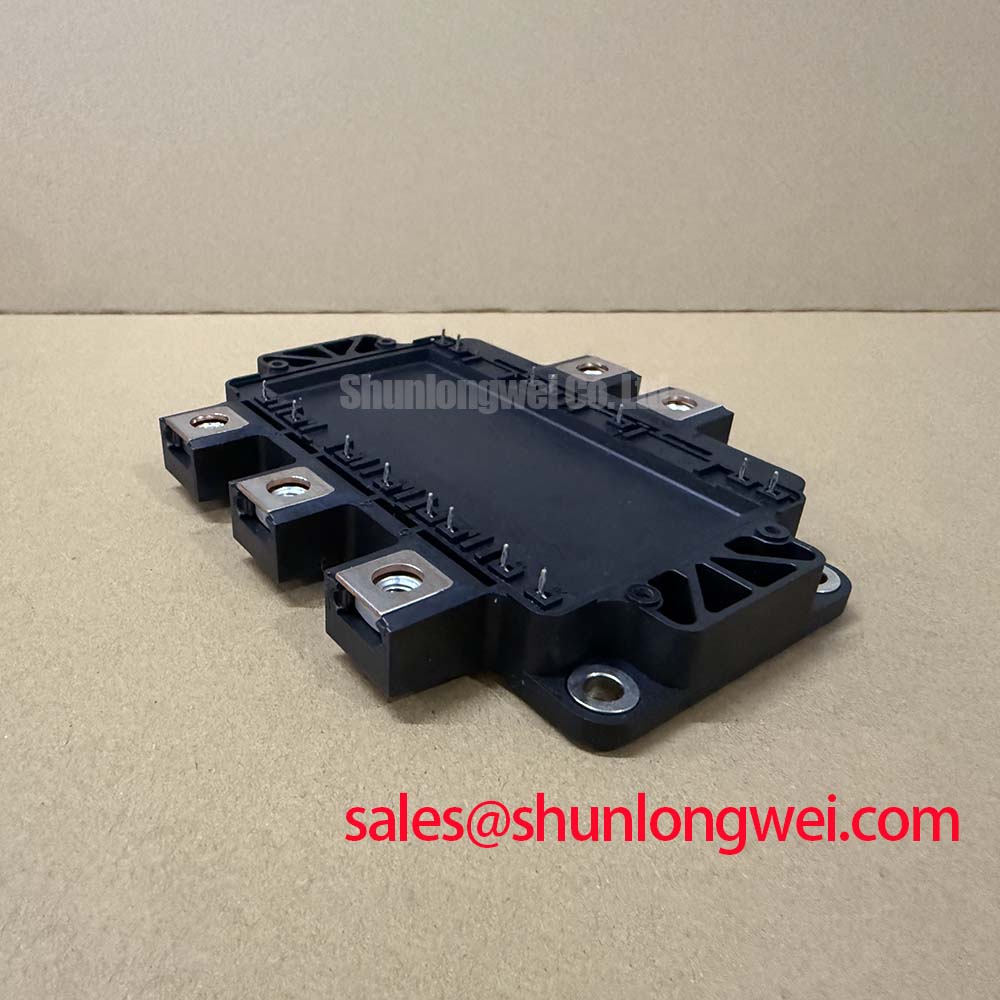
The **SEMIX30STMLI12E4B** delivers exceptional long-term reliability and simplified assembly for three-level inverter designs through its advanced solder-free press-fit technology. This module integrates a complete three-level NPC (Neutral Point Clamped) topology with key specifications of **1200V** and a nominal current of **30A**. Its primary engineering benefits include solder-free assembly for enhanced reliability and an integrated NTC for precise thermal control. The module's press-fit pins create a robust, gas-tight cold-welded connection to the PCB, eliminating the solder-related failure points common in high-vibration or thermally cycled applications. For systems demanding high output quality and long-term operational integrity, this **1200V** 3-level NPC module offers a decisive engineering advantage.
Key Parameter Overview
Decoding the Specs for Enhanced Assembly Reliability and Thermal Performance
The technical specifications of the **SEMIX30STMLI12E4B** are engineered to provide a robust foundation for high-efficiency power converters. The parameters below highlight the module's electrical characteristics and thermal performance, which are critical for system design and reliability analysis. The use of press-fit pins is a standout feature, directly impacting manufacturing and long-term durability.
| Parameter | Value | Conditions |
|---|---|---|
| Collector-Emitter Voltage (V_CES) | 1200 V | T_j = 25 °C |
| Nominal Collector Current (I_Cnom) | 30 A | T_c = 80 °C |
| Collector-Emitter Saturation Voltage (V_CE(sat)) | 1.9 V (Typ.) | I_C = 25 A, T_j = 125 °C |
| Thermal Resistance, Junction to Case (R_th(j-c)) | ≤ 2.0 K/W | Per IGBT |
| Topology | Three-Level Neutral Point Clamped (NPC) | - |
| Internal Temperature Sensor | NTC Thermistor | R25 = 5 kΩ ± 5% |
| Mounting Technology | Solder-Free Press-Fit Pins | - |
Download the SEMIX30STMLI12E4B datasheet for detailed specifications and performance curves.
The engineering significance of the three-level NPC topology cannot be overstated. By clamping the output voltage to a neutral midpoint, the module effectively halves the voltage stress across the main switching IGBTs. This allows the use of lower-voltage-rated devices with superior switching characteristics, directly leading to reduced switching losses and enabling higher operational frequencies for more compact magnetic components. What is the core benefit of its press-fit design? It eliminates solder fatigue for superior long-term reliability.
Application Scenarios & Value
System-Level Advantages of 3-Level Topology in Renewable Energy and Motor Drives
The **SEMIX30STMLI12E4B** is specifically designed for power conversion systems where efficiency, power quality, and operational lifespan are critical design criteria. Its architecture provides tangible benefits in demanding industrial and renewable energy applications.
- Solar Inverters: In grid-tied solar applications, especially those connected to 1500V DC strings, the three-level NPC topology is essential. It minimizes output harmonic distortion (THD), simplifying the grid interface and reducing the size and cost of output filters. The module's high efficiency ensures maximum energy harvest.
- Uninterruptible Power Supplies (UPS): For data centers and industrial automation, the module's high reliability, underpinned by its press-fit pins, ensures maximum uptime. The clean, high-quality AC output protects sensitive downstream equipment.
- Variable Frequency Drives (VFDs): In advanced motor control, the module's ability to generate a smoother AC waveform reduces motor torque ripple, acoustic noise, and bearing currents, extending motor life and improving process control.
This module's capabilities create a clear pathway to designing more compact and reliable systems. The combination of electrical efficiency from the topology and mechanical robustness from the solder-free assembly process offers a compelling value proposition over conventional solutions. For applications demanding significantly higher power output, the related SEMIX453GB12VS provides a substantial increase in current handling capacity within a similar topological framework.
Technical Deep Dive
A Closer Look at Solder-Free Press-Fit Technology for Superior Long-Term Reliability
The transition from soldered connections to press-fit technology represents a fundamental advance in power module reliability. Solder joints have long been a known point of failure, particularly in applications with significant thermal cycling or mechanical vibration. The repeated expansion and contraction during operation can lead to solder fatigue, micro-cracks, and eventual connection failure. The **SEMIX30STMLI12E4B** entirely circumvents this issue.
Its press-fit pins are designed with a specific compliant zone that deforms elastically when pressed into a plated-through hole on a PCB. This action creates multiple points of high-pressure contact, forming a gas-tight, cold-welded connection. The reliability of this connection is akin to a forged mechanical joint versus a welded one; the inherent material integrity provides superior resistance to fatigue. This approach not only enhances IGBT packaging reliability but also streamlines the manufacturing process by eliminating the need for a wave or selective soldering step, reducing thermal stress on the PCB and other components.
Frequently Asked Questions
Engineering Inquiries on Press-Fit Technology and Application Design
What is the primary advantage of the solder-free press-fit pins on the SEMIX30STMLI12E4B compared to traditional solder pins?
The primary advantage is a significant increase in long-term reliability. By eliminating solder, the module is immune to solder fatigue failures caused by thermal cycling. This results in a longer operational life, especially in demanding applications like renewable energy and industrial drives. It also simplifies and accelerates the assembly process.
How does the three-level NPC topology contribute to higher efficiency in a solar inverter or UPS application?
The three-level topology reduces switching losses because the IGBTs only switch half of the DC-link voltage. This lower voltage stress allows for faster switching with less energy dissipation during each cycle. Why use a three-level NPC topology? It reduces switching losses and improves output voltage quality, leading to higher overall system efficiency and smaller cooling requirements.
What is the function of the integrated NTC thermistor and how should it be used in a system design?
The integrated NTC thermistor serves as a real-time temperature sensor located close to the IGBT chips. It provides crucial thermal feedback to the system's control unit. This data should be used to implement over-temperature protection, which prevents the module from exceeding its maximum junction temperature. It also enables dynamic performance optimization, such as adjusting switching frequency based on load and temperature for optimal Thermal Management.
Choosing the **SEMIX30STMLI12E4B** is a strategic decision for future-proofing power system designs. Its inherent reliability, driven by the solder-free press-fit interconnects from manufacturer Semikron, aligns with long-term industry trends toward more robust and maintenance-free power electronics. This module is not just a component but an enabling technology for building next-generation converters that meet higher standards of performance and dependability.