Content last revised on September 10, 2026
SKM40GD101D: An Engineering Review of a Robust 1000V NPT IGBT Module
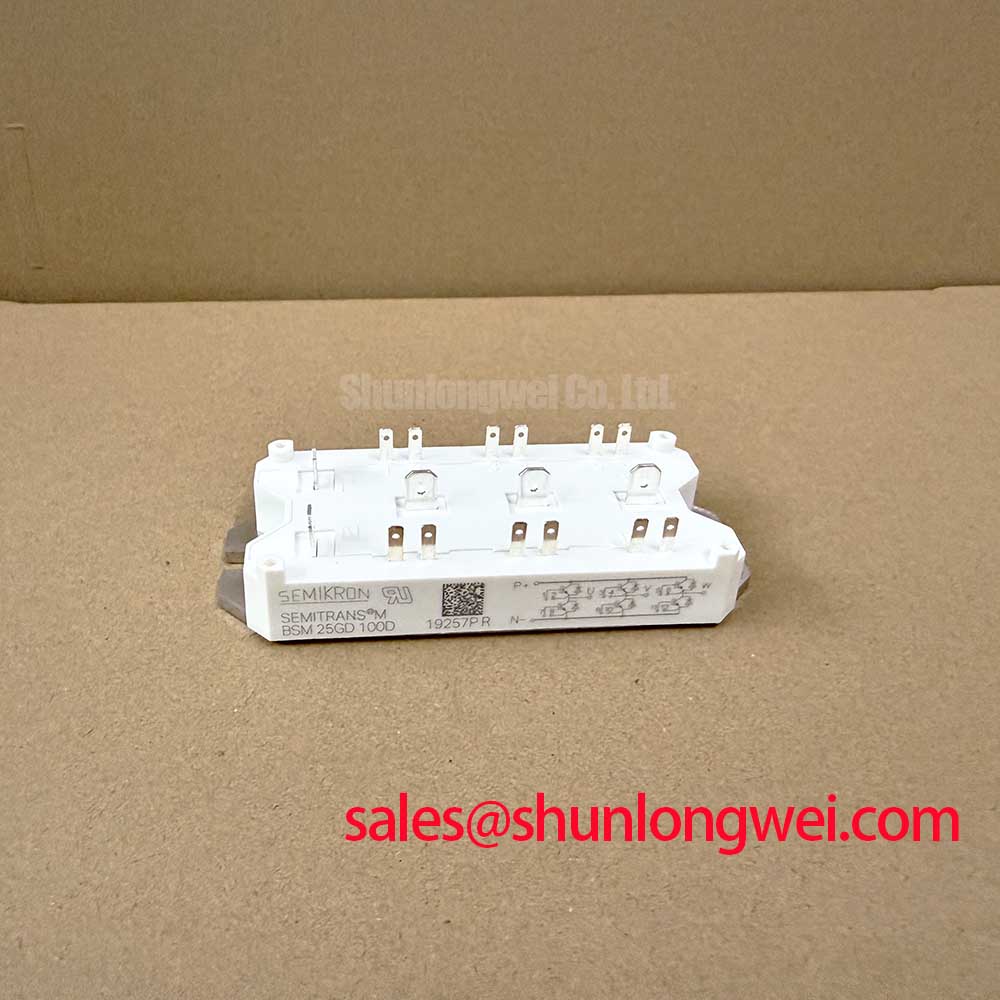
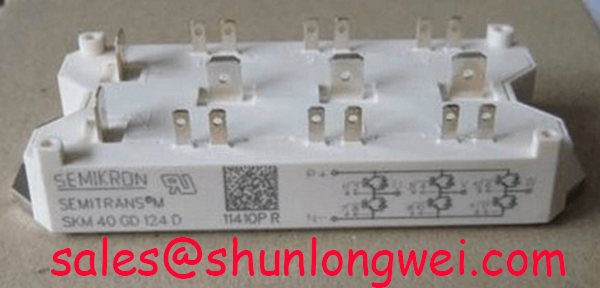
The SEMITRANS 2 IGBT Module SKM40GD101D from Semikron is a half-bridge power module engineered for reliability in demanding power conversion systems. It delivers core specifications of 1000V | 40A | NPT IGBT Technology, establishing its place in the field. Key engineering benefits include the inherent ruggedness of its Non-Punch-Through (NPT) design and the optimized soft-recovery characteristics of its integrated CAL freewheeling diode. This module is particularly suited for applications where proven field reliability and short-circuit withstand capability are paramount design considerations. For systems where managing conduction and switching losses is a primary focus, the SKM40GD101D's performance characteristics present a distinct engineering trade-off.
Key Parameter Overview
Decoding the Specs for Loss Calculation and Thermal Design
The performance of the SKM40GD101D is defined by a set of critical parameters rooted in its NPT IGBT technology. Understanding these values is essential for accurate loss modeling and effective thermal management. The collector-emitter saturation voltage (VCE(sat)) is a direct indicator of conduction losses, while switching energies (Eon, Eoff) determine performance at higher PWM frequencies. The thermal resistance (Rth(j-c)) dictates the efficiency of heat transfer from the semiconductor junction to the case, a pivotal factor in heatsink selection and long-term operational reliability.
| Parameter | Symbol | Value | Conditions |
|---|---|---|---|
| Collector-Emitter Voltage | V_CES | 1000V | T_j = 25 °C |
| Nominal Collector Current | I_C,nom | 40A | - |
| Collector-Emitter Saturation Voltage (IGBT) | V_CE(sat) | 2.1V (typ.), 2.5V (max.) | I_C = 40A, T_j = 125 °C |
| Forward Voltage (Diode) | V_F = V_EC | 1.8V (typ.), 2.2V (max.) | I_F = 40A, T_j = 125 °C |
| Thermal Resistance, Junction to Case (per IGBT) | R_th(j-c) | 0.6 K/W | - |
| Thermal Resistance, Junction to Case (per Diode) | R_th(j-c) | 1.0 K/W | - |
| Maximum Junction Temperature | T_j,max | 150 °C | - |
Application Scenarios & Value
Achieving System-Level Benefits in Industrial Power Conversion
For system designers developing robust industrial equipment, the SKM40GD101D is a viable component for applications where proven technology and durability are key decision drivers. Its best fit is in systems like standard Variable Frequency Drives (VFDs), industrial power supplies, and welding machines operating in the 15-20 kW power range. In a VFD connected to a 400V or 480V AC line, the 1000V rating provides a substantial safety margin against DC link voltage fluctuations and transient overvoltages. The module's NPT IGBT structure provides inherent ruggedness, a valuable trait for handling inductive load switching and potential short-circuit events common in motor control. Furthermore, the integrated CAL (Controlled Axial Lifetime) freewheeling diode is engineered for soft recovery, which mitigates voltage overshoot and reduces high-frequency electromagnetic interference (EMI). This can lead to a more stable Gate Drive operation and may simplify the requirements for external snubber circuits and EMI filtering. For systems requiring higher power output or operation on higher voltage lines, the related SKM75GD123D offers increased voltage and current handling capabilities.
Technical Deep Dive
Engineering Implications of NPT Technology and Soft-Recovery Diodes
The SKM40GD101D is built upon Semikron's Non-Punch-Through (NPT) IGBT technology, a design choice with distinct engineering trade-offs. Unlike modern Trench-Stop (Trench-FS) IGBTs that prioritize minimal on-state voltage, NPT technology is known for its wide Safe Operating Area (SOA) and superior short-circuit ruggedness. This can be compared to the difference between a high-performance racing tire and a heavy-duty truck tire. The racing tire (Trench-FS) offers extremely low rolling resistance for maximum efficiency on a perfect track, while the truck tire (NPT) provides exceptional durability and reliability across varied and harsh terrains, albeit with higher 'friction' or conduction losses, as reflected in the SKM40GD101D's VCE(sat) of 2.1V.
Complementing the IGBT is the CAL (Controlled Axial Lifetime) freewheeling diode. Its "soft" recovery characteristic is a critical feature for reducing system-level electrical stress. A diode with an abrupt "snappy" recovery acts like a switch being turned off instantaneously, causing a rapid change in current (di/dt) that induces large voltage spikes and significant EMI. To explain with an analogy, this is like slamming a door shut, creating a loud bang. In contrast, the soft recovery of a CAL diode is like closing that same door with a hydraulic damper—it shuts smoothly and quietly. This controlled behavior minimizes voltage overshoot, protecting the IGBTs and reducing the need for complex and costly Snubber Circuit designs, ultimately contributing to a more reliable and cost-effective system.
Frequently Asked Questions (FAQ)
Practical Design and Performance Inquiries
How does the VCE(sat) of 2.1V (typ.) influence the thermal design for the SKM40GD101D?
A higher VCE(sat) directly results in higher conduction losses (P_cond = VCE(sat) * I_C). This requires a more effective Thermal Management solution, such as a larger heatsink or increased airflow, to maintain the junction temperature below the 150 °C maximum limit and ensure system reliability.
What is the primary benefit of the NPT IGBT technology in an application like an industrial motor drive?
The primary benefit is its robustness. NPT IGBTs inherently offer a superior short-circuit withstand time and a wider Safe Operating Area (SOA), making the module more tolerant of the fault conditions and voltage stresses often encountered in industrial motor drive applications.
For engineering teams evaluating power components for upcoming projects, the SKM40GD101D presents a legacy of field-proven reliability. To explore if its performance profile aligns with your system requirements, our technical specialists are available to provide further data and support.