Content last revised on September 10, 2026
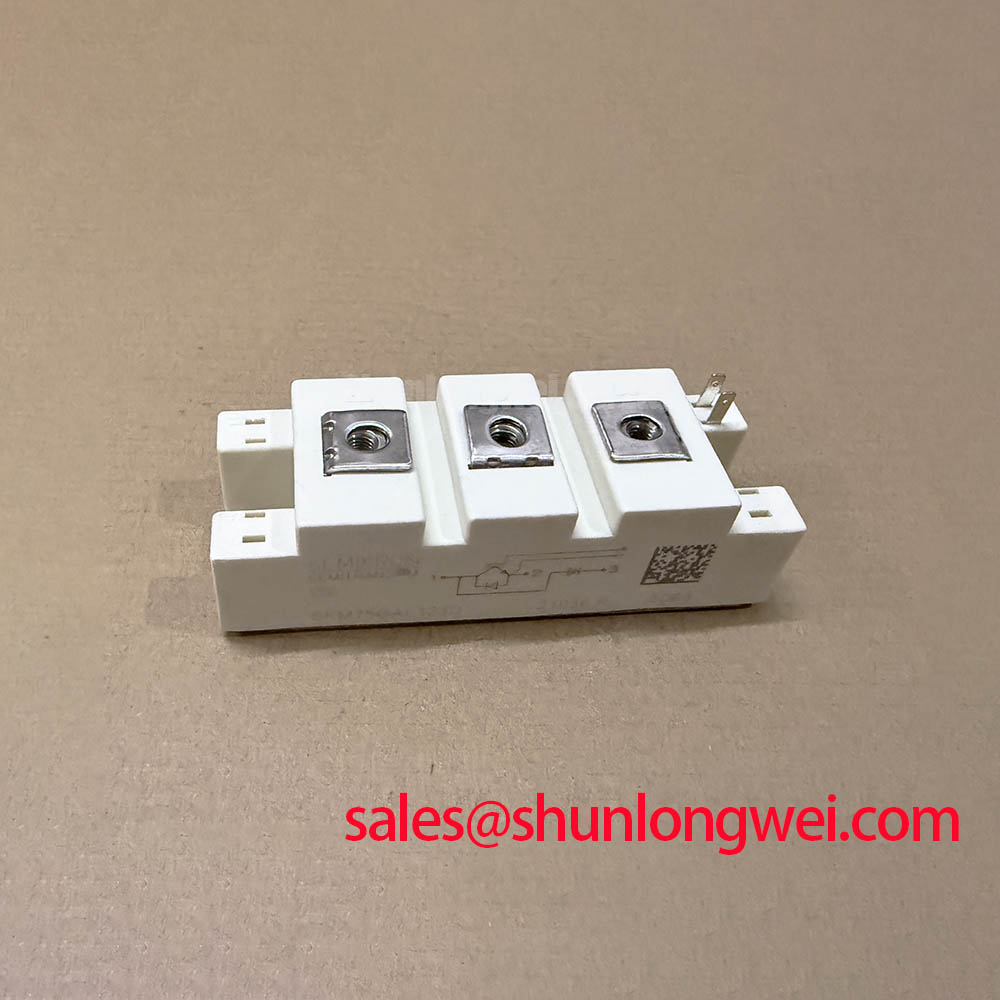
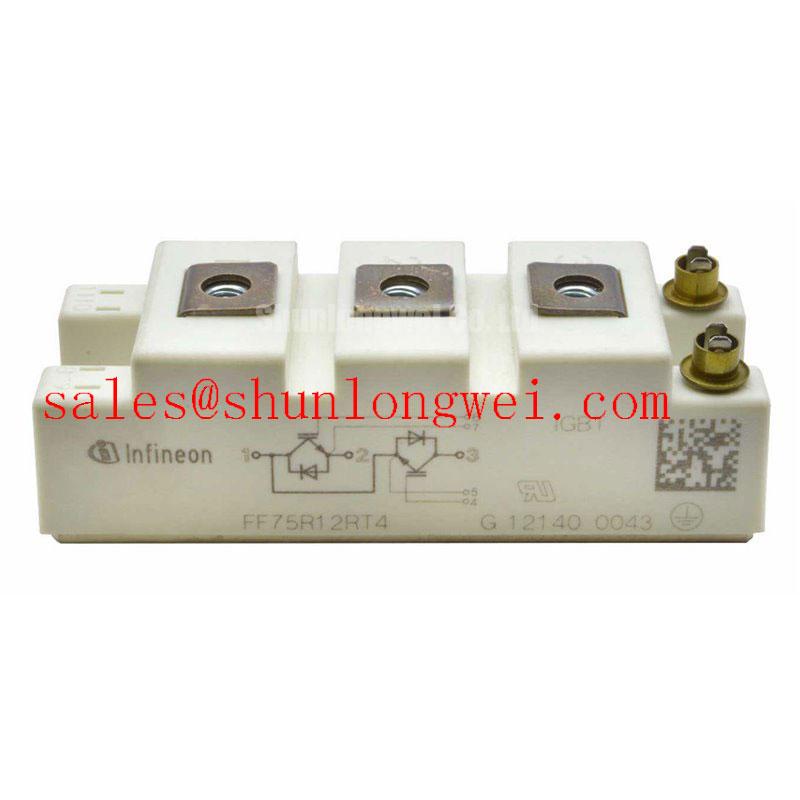
SKM75GB124D Semikron IGBT Module | 1200V 75A Power Management
The SKM75GB124D, part of the SEMITRANS 2 family by Semikron, is a high-performance half-bridge IGBT Module engineered for superior thermal stability and switching robustness in demanding industrial power conversion systems. Featuring a Vces of 1200V and a Collector Current (Ic) of 75A, this module utilizes Non-Punch Through (NPT) technology to ensure a positive temperature coefficient of the saturation voltage, making it exceptionally reliable for high-load environments. The integration of CAL (Controlled Axial Lifetime) free-wheeling diodes minimizes switching losses and enhances the overall efficiency of the inverter stage. For industrial motor drives requiring high thermal cycling reliability, this 1200V module is the optimal choice.
The SKM75GB124D utilizes NPT technology to provide a stable, positive temperature coefficient for enhanced parallel operation reliability. What is the primary benefit of its CAL diode integration? It ensures soft recovery and low peak reverse recovery current during high-frequency switching, significantly reducing electromagnetic interference.
Application Scenarios & Value
Achieving System-Level Benefits in High-Frequency Power Conversion
In the field of high-power industrial automation, the SKM75GB124D serves as a critical building block for Variable Frequency Drives (VFD) and Servo Drive systems. Its robust SEMITRANS 2 packaging is specifically designed to handle the mechanical and thermal stresses associated with AC motor drives. During the startup of large industrial motors, the module must withstand significant current surges; the SKM75GB124D offers a Short Circuit Withstand Time (tpsc) of 10µs, providing a necessary safety margin for gate driver protection circuits to respond effectively.
Beyond motor control, this module is frequently integrated into Uninterruptible Power Supply (UPS) systems and Solar Inverter topologies. In these applications, the low VCE(sat) value, typically 2.5V at 50A ($Tj=125^circ C$), directly translates to reduced conduction losses, which is vital for maintaining system efficiency under continuous load. Engineers can leverage its high di/dt and dv/dt immunity to simplify electromagnetic compatibility (EMC) design. For systems requiring higher current handling within the same series, the related SKM150GB12V or the higher-rated SKM200GB124D offer alternative specifications for scaling power stages.
For more information on selecting the right power semiconductor for your design, consult our ultimate guide to IGBT modules or explore our failure analysis handbook for reliability insights.
Key Parameter Overview
Decoding the Specs for Enhanced Thermal Reliability
The following technical data is derived from the official Semikron documentation. These parameters are essential for thermal calculation and Safe Operating Area (SOA) verification during the design phase.
| Parameter | Symbol | Typical Value | Maximum Rating |
|---|---|---|---|
| Collector-Emitter Voltage | Vces | - | 1200 V |
| Continuous Collector Current (Tc=25°C) | Ic | - | 75 A |
| Continuous Collector Current (Tc=80°C) | Ic | - | 50 A |
| Collector-Emitter Saturation Voltage (Tj=125°C) | VCE(sat) | 2.5 V | 3.0 V |
| Total Switching Energy (Eon + Eoff) | Esw | 12.3 mJ | - |
| Short Circuit Withstand Time | tpsc | - | 10 µs |
| Thermal Resistance (Junction to Case) | Rth(j-c) | - | 0.35 K/W |
| Isolation Voltage (AC, 1 min) | Visol | - | 2500 V |
Download the SKM75GB124D datasheet for detailed specifications and performance curves at the official Semikron website.
Technical & Design Depth Profiling
Advanced NPT Technology and Heat Dissipation Mechanics
The SKM75GB124D relies on Non-Punch Through (NPT) silicon technology. Unlike older designs, NPT structures provide a positive temperature coefficient, meaning the VCE(sat) increases as temperature rises. Think of this like a self-regulating valve in a water system; if one module starts to get too hot, its resistance increases, naturally pushing current toward cooler modules in a parallel setup. This characteristic prevents thermal runaway and simplifies the task of IGBT Paralleling.
Thermal management is further enhanced by the isolated copper baseplate of the SEMITRANS 2 package. With a Thermal Resistance (Rth(j-c)) of 0.35 K/W, the module ensures that heat generated at the junction is rapidly conducted to the heatsink. This can be compared to a high-capacity drainage pipe: a lower resistance value allows for a greater volume of thermal energy to flow out of the semiconductor die, maintaining lower junction temperatures and extending the Power Cycling Capability of the device. This is particularly critical in applications like Welding Power Supply units, where frequent load changes are common.
FAQ
How does the Rth(j-c) of 0.35 K/W directly impact heatsink selection for the SKM75GB124D?
The 0.35 K/W value represents the internal barrier to heat flow. Lower values mean the module can dissipate more power for a given heatsink temperature. This allows engineers to either use smaller heatsinks to increase power density or maintain a lower junction temperature ($Tj$) to improve long-term reliability and 10-year service life.
What protection measures are required for the 10µs short-circuit withstand time?
To protect the SKM75GB124D, the Gate Drive must include a desaturation (DESAT) detection circuit. This circuit must detect the fault and shut down the IGBT within 10µs to prevent catastrophic failure of the silicon die due to excessive energy dissipation.
Why is the positive temperature coefficient of VCE(sat) advantageous?
A positive coefficient ensures that when the module heats up, its on-state resistance increases. This creates a natural current-sharing effect when multiple modules are used in parallel, eliminating the need for complex external balancing components and reducing the risk of a single module failing due to overcurrent.
Can the SKM75GB124D handle high-frequency switching applications?
Yes, the SKM75GB124D is designed for efficient switching. However, total power losses are a combination of conduction and switching losses. For designs exceeding 15-20 kHz, engineers should carefully evaluate the 12.3mJ switching energy ($Esw$) to ensure total thermal dissipation remains within the limits of the SEMITRANS 2 package.
As industrial systems evolve toward higher efficiency and decentralized control, the SKM75GB124D remains a strategic component due to its balance of voltage overhead and thermal performance. Navigating the complexities of modern power electronics requires deep integration of Thermal Management and robust circuit protection. Staying informed on emerging Variable Frequency Drive trends and semiconductor advancements is essential for maintaining a competitive edge in industrial design.