




Content last revised on March 7, 2026
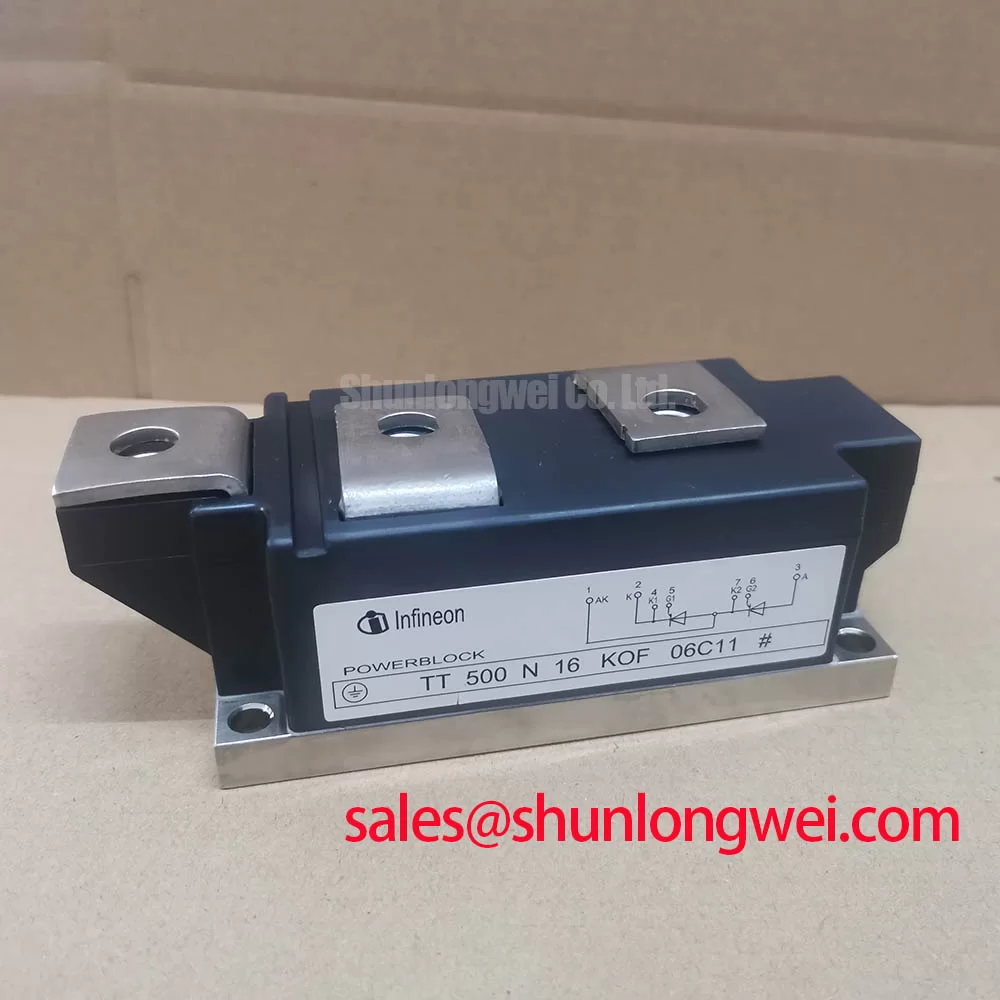
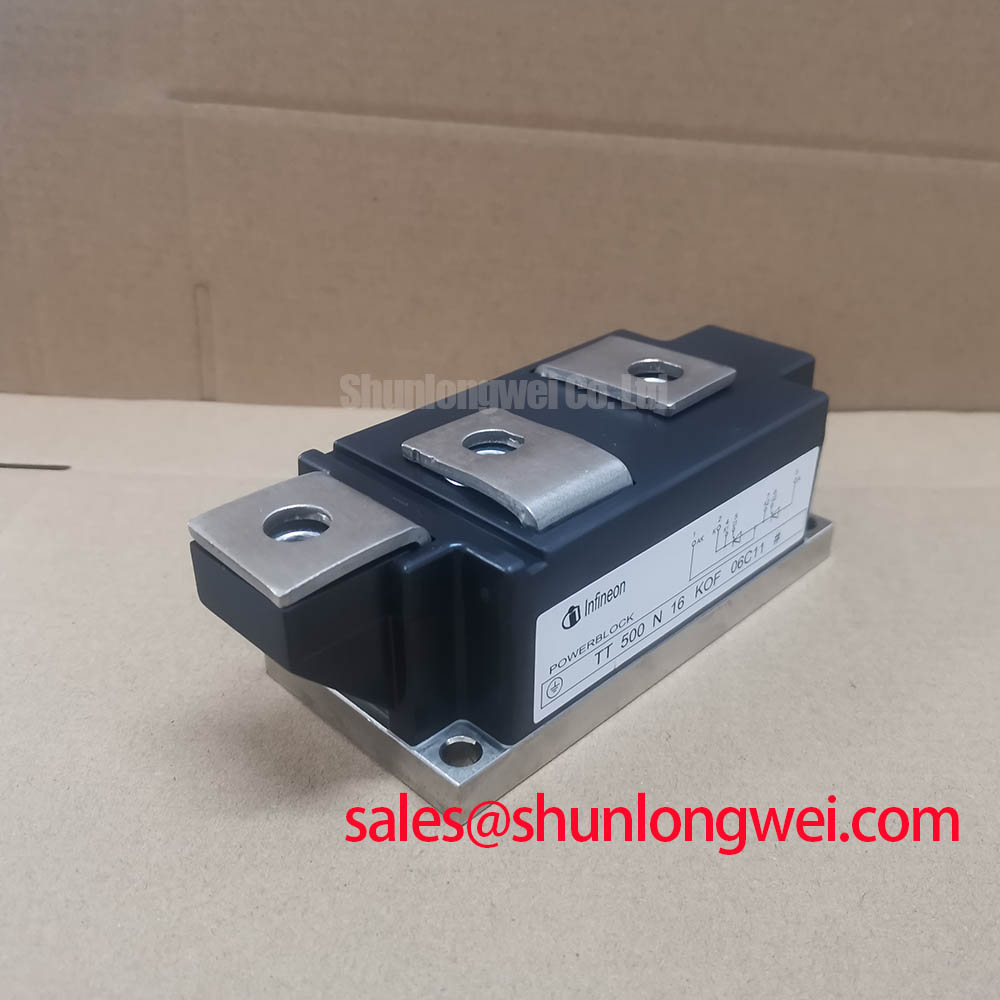
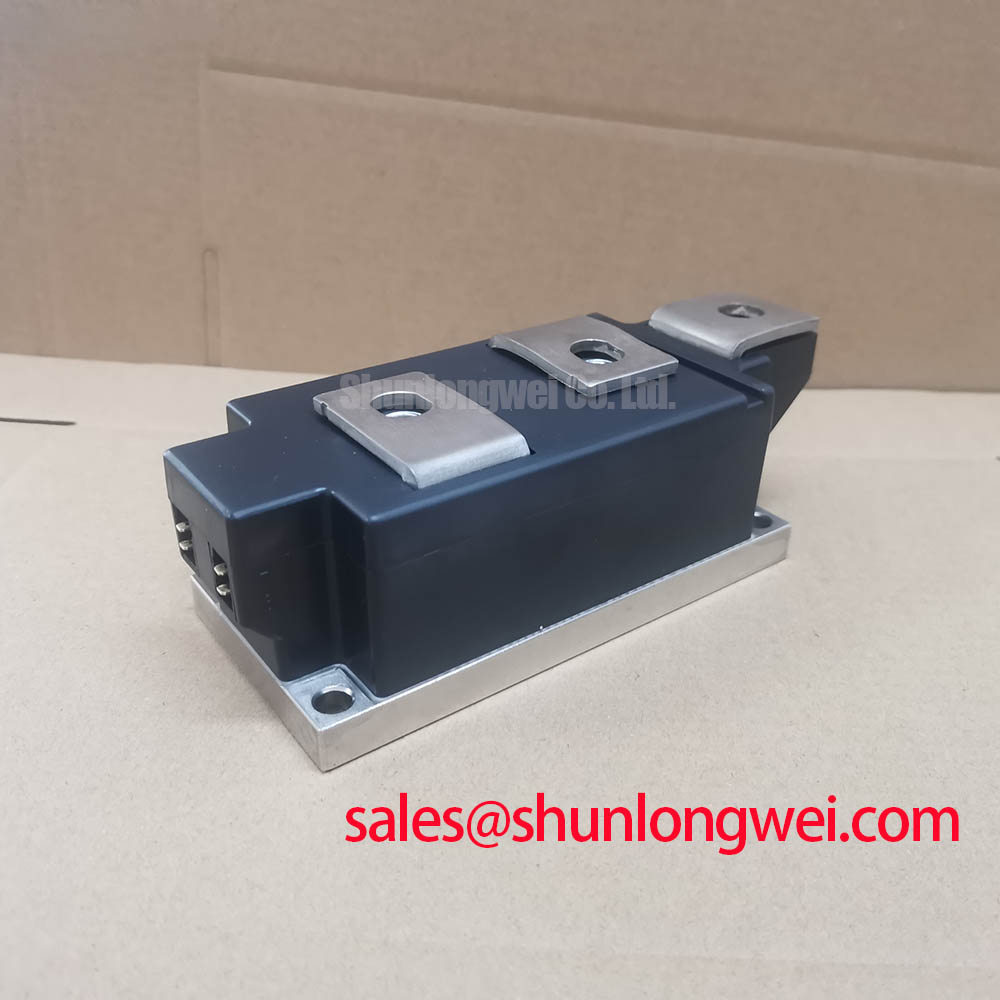
TT500N16KOF06C11: Engineering High-Reliability Power Control with Pressure Contact Technology
A Definitive Component for Demanding Industrial Power Conversion
The TT500N16KOF06C11 is a high-power Thyristor/Diode module engineered for exceptional operational lifespan and thermal stability in demanding industrial power control applications. Featuring a robust specification of 1600V blocking voltage and a 500A average forward current, this module's core advantage lies in its pressure contact design. This technology delivers superior power cycling capability and enhanced thermal efficiency. By eliminating solder fatigue, a common failure point in conventional modules, it provides a direct solution for engineers designing systems where long-term reliability is non-negotiable. For industrial drives and rectifiers where thermal management dictates power density, this 1600V module offers a decisive engineering advantage.
Application Scenarios & Value
System-Level Benefits in High-Current Motor Control and Rectifiers
The TT500N16KOF06C11 is purpose-built for high-stress power conversion topologies where both performance and durability are critical. Its high voltage and current ratings make it a cornerstone component for applications operating on 480V to 690V AC lines.
A prime engineering scenario is in the design of large-scale industrial Soft Starters for AC motors. During motor startup, these systems face immense inrush currents that can thermally and mechanically stress power components. The TT500N16KOF06C11's substantial surge current rating (I_TSM) provides the necessary headroom to manage these events without degradation. Furthermore, its pressure contact design ensures mechanical integrity and consistent thermal performance over thousands of start-stop cycles, directly contributing to the longevity of the entire motor control system. This approach prevents premature failures often seen in modules reliant on soldered connections, which can fatigue over time. What is the primary benefit of its pressure contact design? Enhanced long-term reliability by eliminating solder fatigue.
This module also excels in other demanding roles, including:
- Controlled and uncontrolled rectifiers for industrial power supplies and DC bus architectures.
- AC power controllers for large heating elements and industrial furnaces.
- Freewheeling diode applications in high-power converters.
While the TT500N16KOF06C11 is optimized for high-power applications, for systems with lower current requirements but similar voltage demands, the related TT162N16KOF provides a scaled solution within the same technology family.
Key Parameter Overview
Functionally Grouped Specifications for System Design
The technical specifications of the TT500N16KOF06C11 are tailored for robust performance in high-power industrial environments. The following is a summary of its key operational parameters, grouped for clarity in engineering evaluation.
| Parameter | Value | Conditions |
|---|---|---|
| Repetitive Peak Reverse Voltage (V_RRM) | 1600 V | - |
| Average On-state Current (I_TAVM) | 500 A | T_C = 100°C |
| Surge forward current (I_TSM) | 10500 A | t_p = 10 ms, T_vj = 25°C |
| Threshold Voltage (V_T0) | 0.85 V | T_vj = 125°C |
| Slope Resistance (r_T) | 0.5 mΩ | T_vj = 125°C |
| Thermal Resistance, Junction to Case (R_thJC) | 0.075 K/W | Per Thyristor, DC |
| Operating Junction Temperature (T_vj op) | -40 to +125 °C | - |
| Mounting force (F_M) | 18 ± 2 kN | - |
Download the TT500N16KOF06C11 datasheet for detailed specifications and performance curves.
Technical Deep Dive
Inside Pressure Contact Technology: A Foundation for Reliability
The defining feature of the TT500N16KOF06C11 module is its use of pressure contact technology. Unlike conventional power modules that rely on soldered connections to join the semiconductor die to the baseplate, this design uses a precise mounting force to create a direct, solder-free connection. This fundamentally alters the module's long-term failure characteristics for the better.
Think of it like the difference between a soldered plumbing joint and a high-quality compression fitting. While solder is effective, repeated expansion and contraction from temperature changes (power cycles) can cause the solder layer to fatigue, crack, and eventually fail. A compression fitting, much like pressure contact, maintains a robust, direct connection that is inherently more resilient to these thermal-mechanical stresses. For a power module in a variable frequency drive or soft starter that cycles frequently, this translates directly to a longer operational life and a more predictable maintenance schedule, reinforcing the principles of robust thermal management.
Frequently Asked Questions (FAQ)
How does the pressure contact design of the TT500N16KOF06C11 directly benefit system reliability compared to a standard solder-based module?
The pressure contact design eliminates the solder layers between the semiconductor chip and the baseplate, which are a primary failure point in high-power modules due to thermal cycling fatigue. This results in significantly higher power cycling capability and a longer operational lifespan, especially in applications with frequent start/stop or load changes like motor drives and industrial process controls.
What is the engineering significance of the specified mounting force (18 ± 2 kN) for this module?
The specified mounting force is not merely a mechanical requirement; it is critical for ensuring the module's rated electrical and thermal performance. This precise force guarantees a low and consistent thermal resistance (R_thJC) and reliable electrical contact across the internal interfaces. Using the correct, calibrated mounting clamp is essential to achieving the reliability and longevity inherent in the pressure contact design.
For systems requiring this level of power control and reliability, careful evaluation of the TT500N16KOF06C11's datasheet is the next step. Please contact our technical team to discuss your specific application requirements or to request further information.