Content last revised on September 10, 2026
TV101WUM-AN0 BOE 10.1-inch WUXGA MIPI Industrial LCD Display
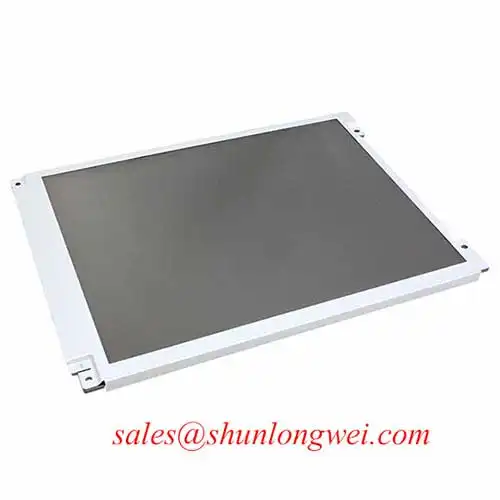
The TV101WUM-AN0, manufactured by BOE, represents a sophisticated shift in industrial HMI design, bridging the gap between consumer-grade visual fidelity and industrial-grade reliability. This 10.1-inch TFT-LCD module is engineered with a 1200(RGB)×1920 WUXGA resolution, providing an exceptional pixel density that is critical for modern applications requiring precise data visualization and crisp graphical user interfaces. By utilizing an IPS (In-Plane Switching) panel and a high-bandwidth MIPI interface, the TV101WUM-AN0 enables engineers to implement high-resolution displays without the electromagnetic interference (EMI) overhead typically associated with traditional wide-bus interfaces. For medical diagnostics or high-end industrial controllers requiring WUXGA clarity in a 10.1-inch form factor, the TV101WUM-AN0 is the optimal integration choice.
Top Specifications: 10.1-inch | 1200×1920 WUXGA | 400 cd/m² Brightness.
Key Benefits: Superior color accuracy via IPS technology; Reduced PCB complexity with MIPI connectivity.
What is the primary benefit of the MIPI interface in the TV101WUM-AN0? It significantly reduces pin count and EMI while providing the necessary bandwidth for high-definition WUXGA video streaming and complex UI rendering.
Key Parameter Overview
Decoding the Specs for Enhanced System Integration
The technical profile of the TV101WUM-AN0 is defined by its ability to maintain optical performance in space-constrained environments. Below are the critical engineering specifications derived from the manufacturer data.
| Parameter | Specification Value | Engineering Significance |
|---|---|---|
| Screen Size | 10.1-inch | Optimized for handheld and wall-mounted industrial terminals. |
| Resolution | 1200(RGB)×1920 (WUXGA) | High-density portrait/landscape orientation flexibility for complex data. |
| Interface Type | MIPI (4 data lanes) | Low-power, high-speed differential signaling reduces EMI concerns. |
| Display Mode | IPS, Normally Black | Ensures consistent color and contrast at extreme 80/80/80/80 angles. |
| Luminance | 400 cd/m² (Typical) | Provides sufficient visibility for indoor and semi-outdoor industrial environments. |
| Contrast Ratio | 1000:1 (Typical) | Deep blacks and vivid highlights enhance readability in varying light. |
| Backlight | WLED | Efficient, long-life solid-state lighting for 24/7 industrial uptime. |
Application Scenarios & Value
Achieving System-Level Benefits in High-Fidelity Power Conversion and Control
Engineers often face the challenge of integrating high-resolution displays into portable or high-density equipment where board space is at a premium and EMI shielding is difficult to manage. The TV101WUM-AN0 addresses this through its MIPI architecture. Consider a portable medical ultrasound device: the 1200x1920 resolution allows for the clear rendering of minute anatomical details, while the IPS panel ensures that multiple medical professionals can view the screen simultaneously without color shifts. The low pin-count MIPI interface is like a high-speed expressway for data; it moves vast amounts of information through a narrow physical path, allowing for thinner cables and more compact internal layouts compared to LVDS solutions.
In industrial automation, this display is frequently utilized in high-end PLC touch panels. The WUXGA resolution allows for dense information layouts—such as showing multiple live sensor graphs alongside control buttons—without sacrificing legibility. While this model is ideal for compact high-definition needs, for systems requiring standard 16:10 aspect ratios with different interface requirements, the related EV101WXM-N10 or the high-brightness G101UAN02.0 offer alternative specification balances. Engineers can further explore display technology through our ultimate guide to TFT LCD applications.
Industry Insights & Strategic Advantage
The Migration Toward High-Resolution MIPI Interfaces in Industrial HMI
The industrial display market is currently undergoing a significant transition from LVDS and RGB interfaces toward MIPI CSI/DSI protocols, driven by the proliferation of powerful ARM-based SoCs (System on Chips). The TV101WUM-AN0 is positioned at the center of this trend. By adopting a smartphone-standard interface, industrial designers can leverage the same high-performance processors used in consumer mobile tech, which often lack native LVDS support. This shift reduces the need for expensive bridge chips, thereby lowering the total cost of ownership (TCO) and improving system reliability by reducing component count.
Furthermore, as the industry moves toward Industrial 4.0, the demand for "Information Dense" displays is increasing. High-resolution modules like the TV101WUM-AN0 support the display of high-fidelity digital twins and real-time 3D models of machinery. This aligns with broader trends in HMI solutions for harsh environments, where visual clarity translates directly to operator safety and efficiency. Integrating such a display is not just about aesthetics; it is about providing the bandwidth and resolution necessary for the next generation of predictive maintenance and augmented reality (AR) industrial tools.
Frequently Asked Questions
Engineering Support & Technical Implementation
- How does the IPS technology in the TV101WUM-AN0 improve user safety in industrial settings?
IPS technology prevents the "grayscale inversion" effect common in TN panels. This ensures that an operator viewing the screen from an acute angle—such as while working on a nearby machine—can still accurately read safety warnings and critical data without color distortion or loss of contrast. - What are the thermal considerations for integrating the TV101WUM-AN0 into a sealed enclosure?
The WLED backlight is the primary heat source. Designers should ensure proper thermal dissipation through the chassis or via air gaps, as maintaining a stable junction temperature is vital for backlight longevity. Detailed thermal profiles can be found in our guide on LED backlight energy efficiency. - Can the MIPI 4-lane interface be operated with fewer lanes if the resolution requirement is lower?
While the TV101WUM-AN0 is designed for 4-lane MIPI to support the full 1200x1920 resolution at 60Hz, the controller must be configured to match the panel's timing requirements. Reducing lanes typically requires a proportional reduction in refresh rate or resolution, which is generally not recommended for this specific module's native operation. - Is the TV101WUM-AN0 compatible with standard resistive or capacitive touch overlays?
Yes. The module's slim profile and IPS construction make it an ideal candidate for PCAP (Projected Capacitive) touch integration. However, care must be taken regarding air-bonding vs. optical bonding to manage reflections in high-ambient light environments. - How does the 1000:1 contrast ratio impact the display's performance in low-light environments?
A high contrast ratio ensures that the "black" areas of the screen emit very little light, preventing the "washed out" grey look. In low-light control rooms, this reduces eye strain for operators and makes graphical elements pop, improving the speed of data recognition.
From an engineering perspective, selecting a display like the TV101WUM-AN0 involves balancing the high-bandwidth requirements of WUXGA with the physical and electrical constraints of the industrial environment. The choice of MIPI as the primary interface signals a commitment to modern, efficient system design. For further technical comparison between panel technologies, engineers are encouraged to review the analysis on TN vs IPS panel selection to ensure the optical characteristics align with their specific field deployment needs.