Content last revised on August 28, 2026
BOE TV101WUM-LK0: 10.1-Inch WUXGA In-Cell Touch Display Module
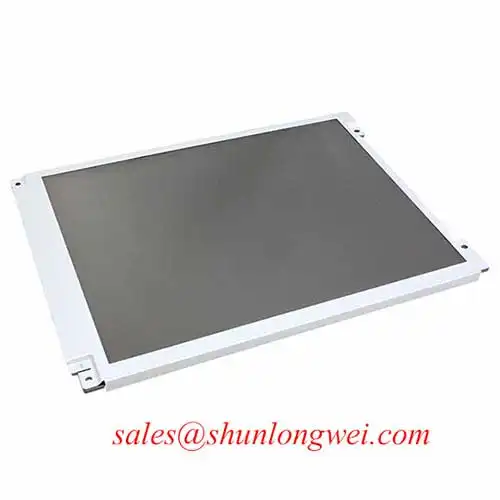
The BOE TV101WUM-LK0 integrates high-resolution portrait imaging and multi-touch capability in a single thin-profile module, streamlining mechanical design for compact HMI systems. It features a 10.1-inch diagonal active area with a native 1200×1920 resolution, a luminance of 360 cd/m², and a robust 1000:1 contrast ratio. This module simplifies integration by eliminating the external touch glass, lowering optical reflections and boosting clarity. For medical HMI terminals requiring high pixel density and integrated touch, the BOE TV101WUM-LK0 is the optimal choice.
Key Parameter Overview
Decoding the Specs for Enhanced Optical Performance
| Functional Grouping: Optical & Physical Parameters | |
|---|---|
| Active Screen Size | 10.1-inch diagonal (135.36 x 216.576 mm) |
| Resolution & Pixel Density | 1200×1920 WUXGA | 225 PPI |
| Display Mode | ADS (Advanced Super Dimension Switch), Normally Black |
| Touch Integration | In-cell capacitive multi-touch |
| Functional Grouping: Electrical & Interface Characteristics | |
| Signal Interface | MIPI (4 data lanes) | 45-pin connector |
| Logic Supply Voltage | Typical 3.3V VDD |
| Color Support | 16.7M colors (8-bit) | Wide color gamut |
| Functional Grouping: Performance & Environment | |
| Luminance (Brightness) | 360 cd/m² (nits) typical |
| Contrast Ratio | 1000:1 typical |
| Operating Temperature | -20°C to 60°C |
Application Scenarios & Value
Achieving System-Level Benefits in High-Density Interfaces
OEM design engineers developing medical diagnostics equipment or smart home automation terminals often struggle to achieve a modern bezel-free look while keeping power consumption low and mechanical housing thin. Using a traditional display with an external overlay touch panel adds unwanted bulk and degrades visual quality. In high-contrast environments, reflections off multiple glass layers can make critical readouts unreadable.
By incorporating the TV101WUM-LK0, engineers can bypass these limitations. The module's built-in In-Cell touch layer eliminates the physical gap between the sensor and the active pixels, which reduces internal reflections.
This direct bonding also allows the system to fit into tighter mechanical housings, making it ideal for handheld medical diagnostic monitors where thickness is restricted. Furthermore, the 1000:1 contrast ratio and 1200×1920 resolution ensure that fine lines, high-density graphs, and numeric data remain perfectly legible under bright indoor illumination.
While this 360-nit display is perfect for indoor handheld devices, systems designed for heavy industrial use may benefit from high-brightness alternatives such as the EV101WXM-N10 or the GV101WXM-N30.
Technical Deep Dive
In-Cell Touch and ADS Mode Mechanics
The primary benefit of the TV101WUM-LK0 lies in its advanced cell architecture. Think of the WUXGA resolution (1200×1920) on a 10.1-inch screen like printing high-resolution photos: at 225 PPI, the pixels are so close together that the human eye cannot distinguish them from a typical reading distance, enabling smooth vector graphics and crisp medical fonts.
The display leverages ADS technology, a type of IPS (In-Plane Switching) panel, which provides wide viewing angles of 85 degrees from all sides without color shifting. This is vital when multiple operators need to read the screen simultaneously from off-axis angles, showcasing the value of IPS vs TN panel technology for wide viewing angles.
Secondly, the In-Cell touch architecture is like integrating sensory nerves directly into the skin rather than wearing a thick glove. In conventional displays, the capacitive touch panel sits on top of the LCD, adding interfaces that reflect light. By embedding the touch electrodes within the LCD's color filter and TFT layers, light passes through fewer layers, preserving the 1000:1 contrast ratio.
Electrically, the TV101WUM-LK0 communicates via a MIPI (4 data lanes) interface. This high-speed serial connection drastically reduces wire count and EMI emissions compared to older parallel interfaces. When implementing capacitive touch integration in thin-profile displays, maintaining a low EMI footprint is essential to satisfy strict medical EMC certifications.
Frequently Asked Questions
Engineering Support and Integration Inquiries
What is the main benefit of the In-Cell touch panel on the TV101WUM-LK0?
It integrates touch sensors directly into the LCD layer, reducing overall display thickness and surface reflections.
Which interface is utilized for this high-density panel?
A 4-lane MIPI interface, which reduces pin count and electromagnetic interference.
Can the display function in landscape orientation?
Yes, software frame buffer rotation allows the portrait panel to function as a landscape display.
Contact our technical sales team today to check availability, secure engineering samples, or discuss display integration requirements for your upcoming product launch.