


Content last revised on September 10, 2026
111MT160KB: High-Voltage Three-Phase Controlled Bridge for Demanding Industrial Applications
An Engineering-Focused Overview of the 111MT160KB Power Module
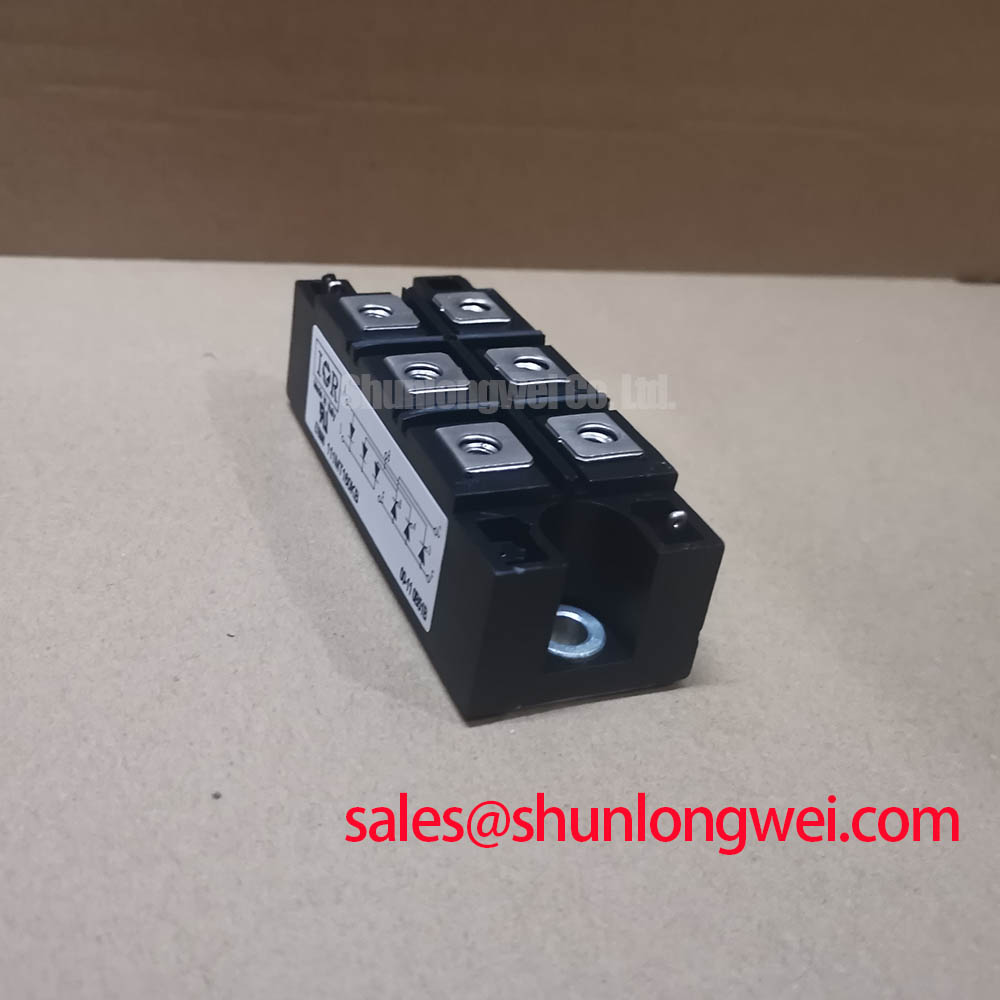
The 111MT160KB from Vishay, formerly International Rectifier, is a three-phase controlled bridge module engineered for robust performance in high-power rectification and control applications. It delivers a unique combination of high voltage capability and substantial current handling within a rugged, isolated package, addressing the core demands of industrial power conversion systems. With core specifications of 1600V | 110A | 2500Vrms Isolation, this module provides both high dielectric strength and significant power throughput. Key engineering benefits include simplified thermal management due to its integrated design and enhanced system reliability in harsh electrical environments. This module is specifically designed to answer the engineer's need for a durable, high-voltage rectification solution capable of withstanding the rigorous demands of industrial line voltage applications, such as 480V and 690V systems. For three-phase AC-DC conversion systems requiring a high blocking voltage margin for improved reliability, this 1600V module presents an optimal design choice.
Key Parameter Overview
Decoding the Specifications for Industrial Power System Design
The technical specifications of the 111MT160KB are tailored for high-power industrial environments. The parameters below highlight its capacity for robust and reliable operation. A thorough review of these values is essential for accurate system modeling and thermal design.
| Absolute Maximum Ratings | ||
|---|---|---|
| Parameter | Symbol | Value |
| Repetitive Peak Reverse Voltage | VRRM | 1600 V |
| Average On-State Current @ TC=85°C | ID | 110 A |
| Surge (Non-Repetitive) On-State Current (10ms, 50Hz) | ITSM | 1570 A |
| I²t for Fusing (10ms) | I²t | 12300 A²s |
| Operating Junction Temperature Range | TJ | -40 to 125 °C |
| RMS Isolation Voltage (Terminals to Baseplate) | VISOL | 2500 V |
| Electrical & Thermal Specifications | ||
| Maximum On-State Voltage Drop @ 300A, TJ=25°C | VTM | 1.45 V |
| Gate Trigger Current (Typical) | IGT | 150 mA |
| Thermal Resistance, Junction to Case (per Thyristor) | RthJC | 0.23 K/W |
| Thermal Resistance, Case to Heatsink (Module) | RthCS | 0.07 K/W |
Download the 111MT160KB datasheet for detailed specifications and performance curves.
Application Scenarios & Value
System-Level Benefits in Industrial Drives and Power Supplies
The 111MT160KB is engineered for applications where controlled AC-DC conversion is paramount. Its 1600V VRRM provides a substantial safety margin for systems connected to 400V, 480V, or even 690V industrial AC lines, protecting against transient overvoltages that are common in these environments. A primary application is in the front-end of Variable Frequency Drive (VFD) systems. In a motor drive, the module's high surge current rating (ITSM) of 1570A is critical for handling the inrush current during motor startup without component degradation, ensuring long-term operational reliability.
Another key area is within industrial power supplies and DC battery chargers. The controlled bridge topology, utilizing thyristors, allows for regulation of the output DC voltage, a feature not available in simple diode bridge rectifiers. This is crucial for applications like electroplating or large-scale battery charging systems where precise voltage control directly impacts process quality and efficiency. The module's robust thermal design, indicated by a low RthJC of 0.23 K/W per thyristor, simplifies heatsink selection. This is akin to having a wider pipe for heat to escape; it allows for more efficient thermal transfer, enabling higher power density or operation in more demanding ambient conditions. For systems requiring a non-controlled rectification stage with similar voltage and current ratings, the MDS200A1600V diode module could be considered for its simpler, passive rectification function.
Technical Deep Dive
A Closer Look at the Advantages of an Integrated, Isolated Module Design
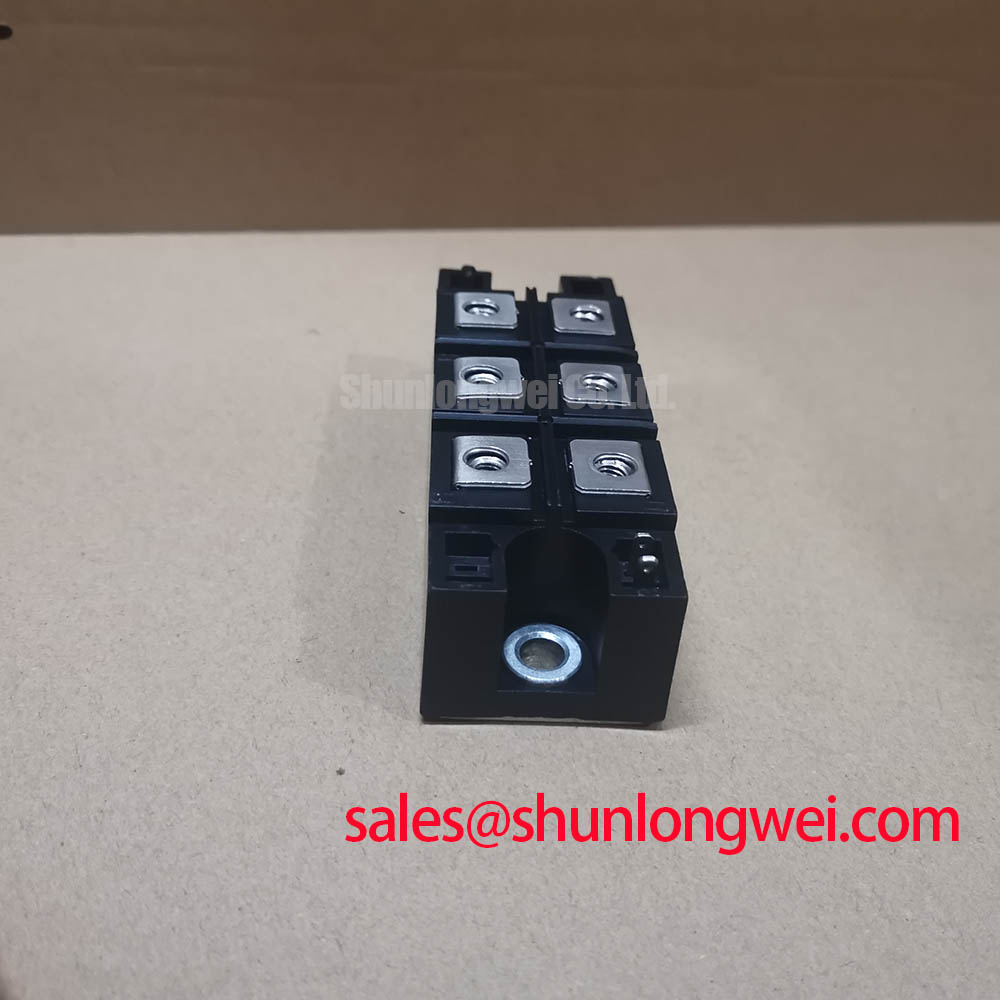
The design of the 111MT160KB as a single, isolated module offers significant engineering advantages over solutions built from discrete thyristors. The primary benefit is simplified and reliable Thermal Management . All six thyristors are mounted on a common, electrically isolated baseplate. This ensures a predictable thermal path and simplifies the mechanical assembly onto a heatsink, requiring only a single mounting operation and one thermal interface layer. This contrasts sharply with discrete solutions, which demand individual mounting, isolation, and wiring for six separate devices, increasing assembly time, cost, and potential points of failure.
Furthermore, the 2500VRMS isolation rating is a critical specification for system safety and compliance with industrial standards like IEC 61800-5-1. Achieving this level of isolation with discrete components would require careful selection of insulating materials and adherence to strict creepage and clearance distances, complicating the PCB layout and overall mechanical design. The integrated module effectively outsources this critical safety engineering, allowing designers to focus on other aspects of the system. Think of the module as a pre-certified sub-assembly; it guarantees thermal and electrical performance characteristics that are difficult and time-consuming to replicate and validate with individual components, thus accelerating the development cycle for high-reliability power systems.
Frequently Asked Questions (FAQ)
What is the primary benefit of the 1600V rating in an industrial application?
The 1600V repetitive peak reverse voltage (VRRM) provides a significant safety margin against voltage spikes and line transients common on industrial grids, particularly in 480V and 690V systems. This enhances the long-term reliability and robustness of the power converter, reducing the risk of failure from electrical overstress.
How does the I²t rating of 12300 A²s influence system protection design?
The I²t rating is a measure of the thermal energy the device can withstand under a short, high-current fault condition. A rating of 12300 A²s allows engineers to precisely coordinate the module with upstream fuses or circuit breakers. It ensures that the protective device will interrupt the fault current before the thyristor junctions are permanently damaged, which is a critical aspect of designing a safe and reliable power system.
What does a "controlled bridge" mean and why is it important?
A controlled bridge uses thyristors (SCRs) instead of diodes. Unlike a diode which conducts whenever forward biased, a thyristor requires a gate signal to turn on. This allows for phase-angle control, enabling the regulation of the output DC voltage and current directly from the AC input. This feature is essential for applications like DC motor speed control, soft starters, and regulated power supplies.
Can the 111MT160KB be used for a simple, uncontrolled AC-to-DC rectification?
Yes, while it is a controlled bridge, it can function as a standard diode bridge by continuously applying a gate signal to the thyristors. However, for applications that strictly require uncontrolled rectification, a dedicated diode module may offer a more cost-effective solution without the need for gate drive circuitry.
Strategic Design Considerations
Integrating the 111MT160KB module offers a strategic path to simplifying the design and manufacturing of high-power industrial converters. By consolidating six power semiconductors into a single, pre-tested, and isolated package, it reduces mechanical assembly complexity, minimizes potential wiring errors, and streamlines the thermal design process. This approach not only enhances the reliability of the final product but can also lead to a reduction in the total cost of ownership by decreasing assembly labor and simplifying supply chain management. For engineering teams focused on accelerating time-to-market while building robust and serviceable equipment, leveraging the inherent integration of the 111MT160KB is a sound design philosophy.