






Content last revised on September 10, 2026
Fuji Electric 2MBI100SC-120 IGBT Module: Engineering High-Efficiency Power Switching
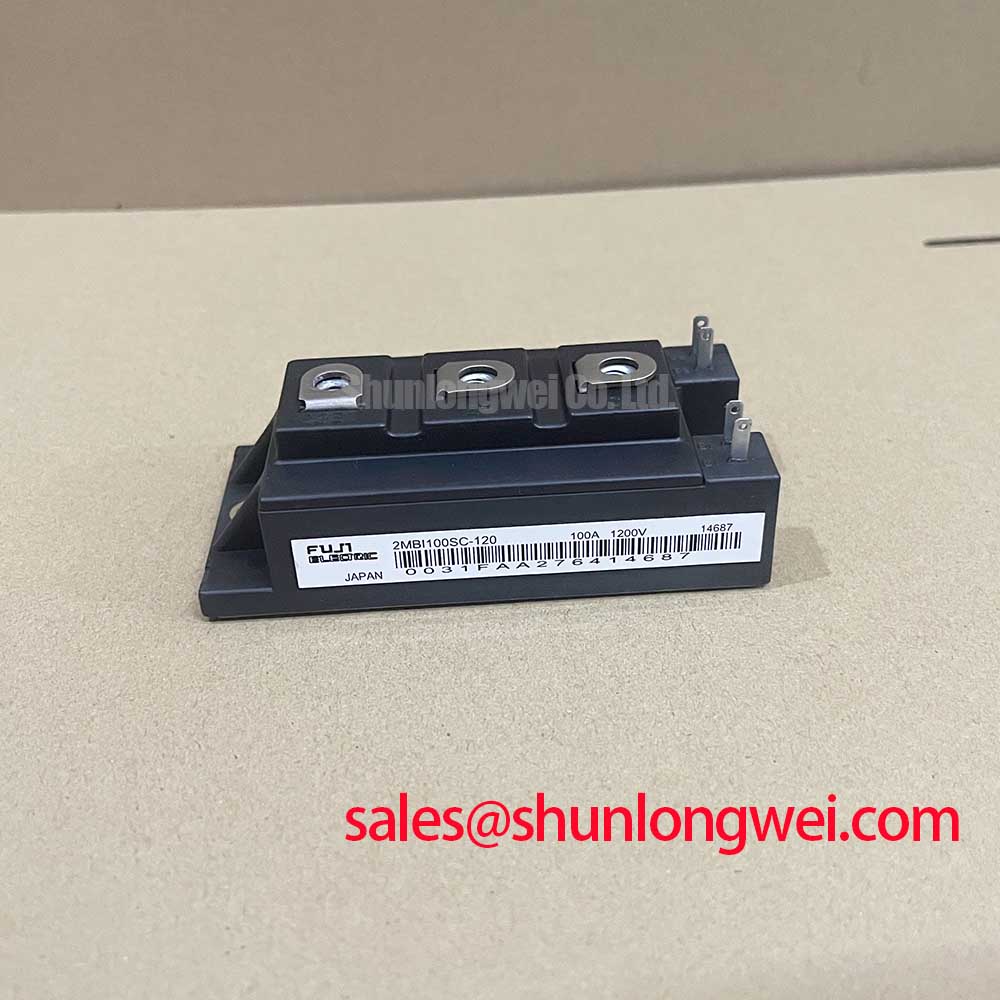
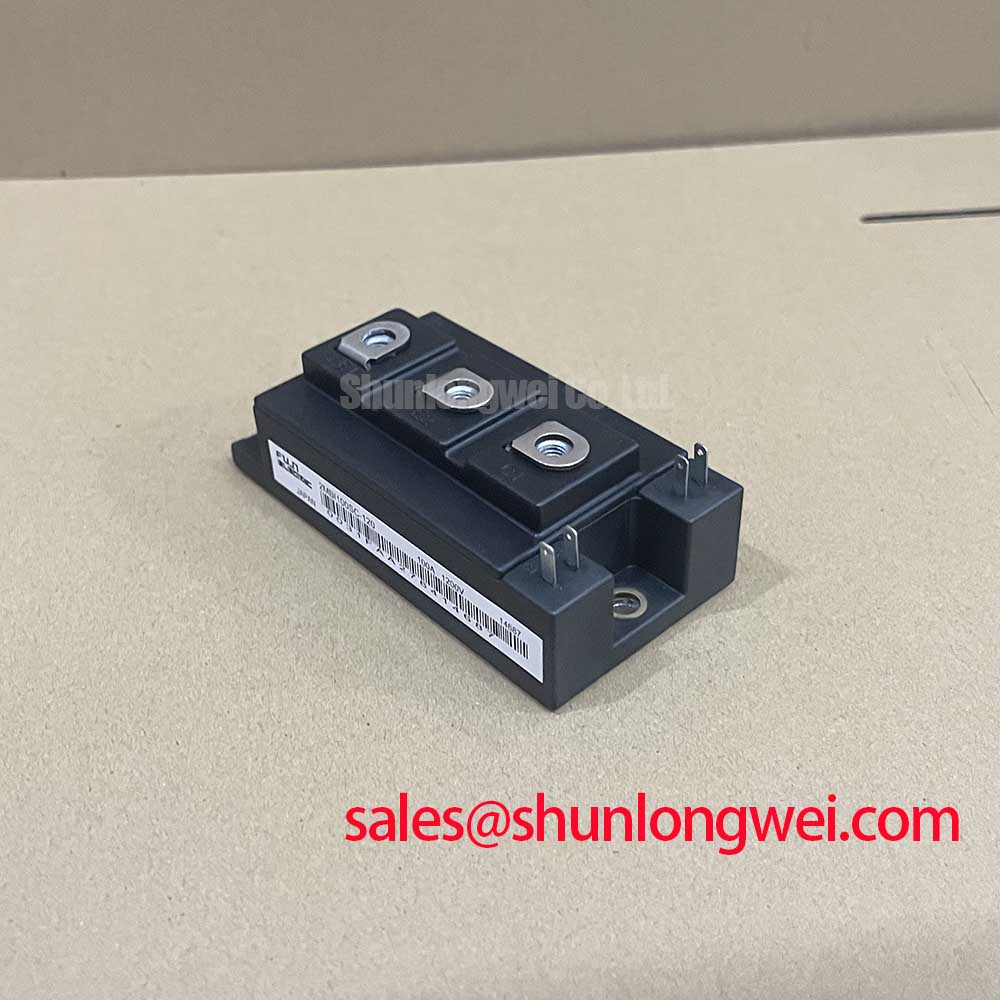
How do power system designers minimize thermal stress while preventing inductive switching spikes in high-power industrial drives? The 2MBI100SC-120 dual IGBT module from Fuji Electric delivers a robust solution for medium-to-high power conversion. Rated at 1200V collector-emitter voltage and 100A continuous collector current, this 2-in-1 module features a low thermal resistance Rth(j-c) of 0.16°C/W and a low-inductance package structure. By combining high-speed switching capabilities with optimized voltage drive requirements, it enhances power density and simplifies gate drive design. For 400V–690V industrial motor drives prioritizing thermal margin, this 1200V 100A dual module is the optimal choice.
Frequently Asked Questions
Addressing Common Engineering and Integration Inquiries
How does the 0.16°C/W Rth(j-c) rating impact heatsink sizing?
The low junction-to-case thermal resistance enables faster heat dissipation from the silicon die to the baseplate. This reduces heatsink volume requirements and maintains safe junction operating temperatures under continuous 100A loading.
What is the primary benefit of its low thermal resistance?
It lowers junction temperatures to sustain prolonged thermal cycling under heavy loads.
How does low module inductance affect switching dynamics?
It reduces voltage overshoots during high-speed turn-off transitions.
What isolation rating does the module support for high-voltage isolation?
The module provides an isolation voltage rating of AC 2500V for one minute, meeting standard safety requirements for high-voltage industrial enclosures.
Key Parameter Overview
Decoding Specs for Enhanced Thermal and Electrical Reliability
A thorough evaluation of key ratings demonstrates why the 2MBI100SC-120 excels in demanding industrial conversion stages. Consult our IGBT module evaluation guide for deeper insights into parameter selection.
| Parameter | Symbol | Rated Value | Engineering Value |
|---|---|---|---|
| Collector-Emitter Voltage | VCES | 1200V | Provides sufficient voltage headroom for 400V–480V AC line inputs. |
| Continuous Collector Current (TC=80°C) | IC | 100A | Supports heavy-duty industrial motor loads under elevated case temperatures. |
| Pulsed Collector Current (1ms) | IC pulse | 200A | Handles short-duration inrush currents during startup or load spikes. |
| Maximum Power Dissipation | PC | 780W | Ensures high thermal dissipation capacity per single IGBT switch. |
| Thermal Resistance (IGBT) | Rth(j-c) | 0.16°C/W | Minimizes internal junction temperature rise for long operating life. |
| Isolation Voltage (AC 1 min) | Vis | AC 2500V | Ensures electrical safety compliance between terminals and baseplate. |
Download the 2MBI100SC-120 datasheet for detailed specifications and performance curves.
Technical Deep Dive
Optimizing Thermal Efficiency and Switching Dynamics
The internal architecture of the 2MBI100SC-120 leverages a half-bridge (2-in-1) topology designed to handle rapid current commutation with minimal switching energy loss. In high-frequency power conversion, stray package inductance can generate severe voltage transients during turn-off phases. The low-inductance packaging acts like a smooth hydraulic relief valve, absorbing inductive energy spikes and shielding the internal IGBT chips from voltage overshoots. Understanding these dynamics is essential when designing 1200V IGBT industrial inverters.
From a thermal perspective, managing semiconductor heat dissipation under high power density is akin to managing coolant flow in a high-performance engine. The direct bonded copper (DBC) substrate reduces thermal resistance between the junction and baseplate to 0.16°C/W, ensuring fast heat flow to the heatsink. This low thermal resistance prevents thermal runaway and extends operating life during prolonged high-current operation.
Application Scenarios & Value
Achieving System-Level Reliability in High-Demand Power Conversion
The 2MBI100SC-120 is widely integrated into variable frequency motor drives (VFDs), uninterruptible power supply (UPS) units, AC/DC servo amplifiers, and industrial arc welding power supplies. In industrial conveyor belt drives, for example, motor startup produces significant inrush current surges. The module's peak current capability of 200A (pulse) and maximum power dissipation PC of 780W allow it to absorb transient startup surges without degrading long-term device health.
For applications operating at moderate current levels, this 100A device provides an optimal balance of switching efficiency and current capability. For systems demanding higher power handling, the related 2MBI150SC-120 offers a continuous current rating of 150A at 1200V, while the 2MBI200NB-120 provides up to 200A handling for heavy-duty industrial machinery.
Integrating the 2MBI100SC-120 into power conversion equipment addresses the dual engineering imperatives of thermal efficiency and electrical ruggedness. By leveraging high-speed switching and low-inductance packaging, design teams can optimize system footprint while maintaining strict reliability margins across industrial platforms.
[