Content last revised on August 28, 2026
AUO A101VW01 V2 10.1-inch Open-Cell TFT-LCD Panel Overview
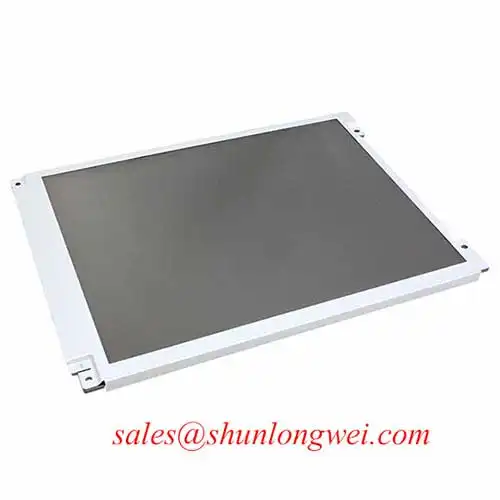
The AUO A101VW01 V2 is an open-cell TFT-LCD providing ultimate design freedom for low-profile industrial displays through its backlight-free configuration. Specs: 10.1-inch | 800x480 WVGA | No Backlight | Parallel RGB. Benefits: ultra-slim profile (1.43 mm thickness) and customizable backlight integration. By omitting the backlight, it answers the need for highly space-constrained enclosures. For engineers designing ultra-thin custom HMIs requiring custom backlight designs, the A101VW01 V2 open-cell display is the optimal choice.
Key Parameter Overview
Decoding the Specs for Custom System Integration and Slim Profiling
| Parameter | Specification | Value Interpretation |
|---|---|---|
| Screen Size | 10.1-inch diagonal | Provides a balanced viewing area for compact human-machine interfaces without adding bulk. |
| Active Area | 219.6(W) x 131.76(H) mm | Defines the physical boundaries of the active liquid crystal pixel matrix. |
| Resolution | 800(RGB) x 480 (WVGA) | Delivers sharp visual rendering suitable for legacy industrial monitoring and controls. |
| Thickness | 1.43 mm (Cell) | Extremely thin glass footprint allowing custom backlight arrays and ultra-slim bezels. |
| Weight | 99.0g (Typical) | Highly reduced weight due to the absence of heavy metal frames and backlight elements. |
| Contrast Ratio | 400:1 (Typical) | Maintains acceptable color distinction and readability under controlled lighting environments. |
| Vibration Level | 2.9G (28.4 m/s²) | High mechanical ruggedness, vital for operating in automotive and industrial setups. |
| Signal Interface | Parallel RGB (1 ch, 6-bit), 60-pin FPC | Standard native interface for direct connection to microcontrollers and processors. |
| Typical Input Voltages | VCC: 3.3V, AVDD: 8.8V, VGH: 16V, VGL: -7.0V | Standard TFT voltage rails required to drive the liquid crystal cells. |
To illustrate the scale of this design, think of the 1.43 mm glass cell thickness like a thin pane of window glass; on its own, it has no light source, but when paired with the right lighting structure, it comes to life without adding unwanted volume to the wall. This structural configuration offers an unmatched advantage when space is at a premium.
Application Scenarios & Value
Achieving Tailored Backlight Integration in Compact HMIs
Integrating displays into enclosures with strict depth limits is a constant challenge. In a high-fidelity scenario, developers designing a control console for machinery face 2.9G vibrations and an 8mm depth limit. Standard modules are too thick and fail to accommodate custom, high-efficiency backlights needed to manage heat. By utilizing the A101VW01 V2 panel, engineers can design a slim, heat-dissipating backlight array that interfaces with the 1.43 mm cell, maintaining structural integrity.
While this cell-only model is designed for custom optical paths, systems requiring an integrated backlight unit may opt for complete modules such as the EV101WXM-N10 or the G101EVN01.0. When comparing panel structures, reviewing industrial display selection principles provides deep clarity on choosing between TN cells and other technologies.
Industry Insights & Strategic Advantage
The Rise of Open-Cell Displays in Custom Industrial and Automotive Designs
In industrial automation and automotive retrofitting, open-cell TFT-LCD technology has gained significant traction. By omitting the backlight, manufacturers bypass standardized optical layouts. To see how these fit the display market, engineers can check this guide to TFT-LCD technology.
Operating an open-cell LCD is like building a custom house frame: the developer is provided with the foundation (the matrix and drivers), leaving the lighting entirely open to match the site's microclimate. This enables custom backlight integration to fit the exact enclosure. Designers can control local thermal spots, preventing degradation of display cell customization and insulating the glass for automotive instrument cluster layouts requiring high vibration tolerance. For thermal footprints, details on LED backlights energy efficiency outline best practices.
What is the primary benefit of the A101VW01 V2 open-cell design? It enables custom backlight integration for thin enclosures. How is the display interface connected? The panel utilizes a Parallel RGB interface with a 60-pin FPC connector layout.
Frequently Asked Questions
Engineering Insights for Deploying the Open-Cell Panel
Does the A101VW01 V2 include a built-in backlight?
No. The A101VW01 V2 is an open-cell TFT-LCD panel with 0 cd/m² brightness, requiring a custom backlight unit built by the system integrator.
How does the 1.43 mm thickness affect mechanical integration?
The ultra-thin 1.43 mm cell profile allows designers to construct ultra-slim enclosures, but requires protective framing and handling precautions to avoid physical stress on the glass.
What are the typical drive voltages required for this cell?
It requires multiple voltage rails: VCC of 3.3V, AVDD of 8.8V, VGH of 16V, and VGL of -7.0V to operate the liquid crystal drivers.
Is the Parallel RGB interface compatible with standard microcontrollers?
Yes, the Parallel RGB 60-pin FPC interface connects directly to standard graphics controllers supporting 6-bit color depth and 262K colors.
How does the 2.9G vibration tolerance benefit automotive applications?
The 2.9G vibration tolerance ensures that the glass cell remains stable and functional under mechanical stress in automotive environments, such as instrument clusters.
From an integration perspective, employing this cell is akin to working with a raw silicon substrate: it grants total architectural sovereignty. Engineers must account for precise mechanical support and the routing of the 60-pin FPC to prevent stress on the glass interface. Ultimately, separating the display logic from the backlight module offers a thermal barrier that prevents optical shifting, giving engineers the design control needed to meet custom certification standards.