Content last revised on August 28, 2026
CM25TF-12: 600V 25A Six-Pack IGBT Module by Mitsubishi
Product Overview & Core Highlights
Engineering a Reliable Foundation for Motor Control Systems
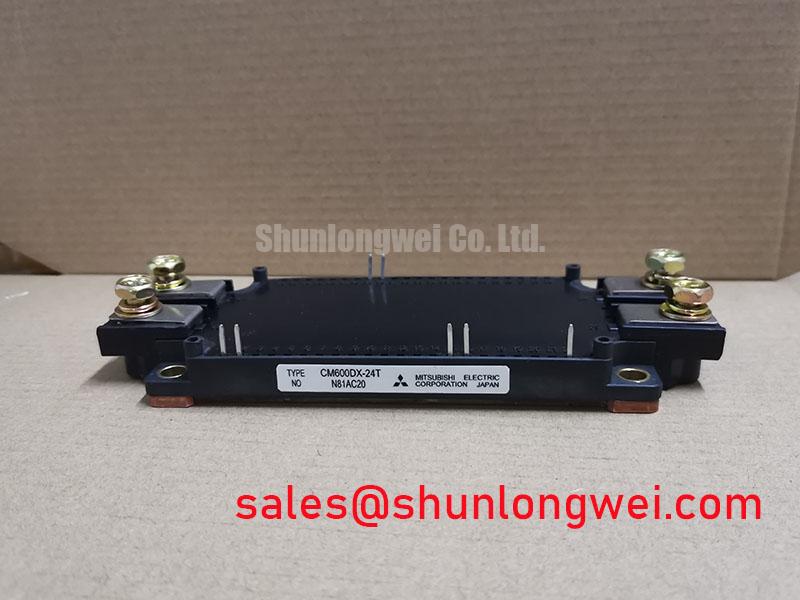
The Mitsubishi CM25TF-12 is a high-reliability six-pack IGBT module designed to simplify thermal management in compact three-phase bridge applications. Featuring an isolated baseplate and integrated free-wheel diodes, it provides a stable switching foundation for power electronics. What is the primary advantage of its isolated baseplate? It centralizes thermal dissipation and electrically decouples the heat sink. Core specifications include a 600V collector-emitter voltage, a 25A continuous collector current, and robust pulse handling capabilities. For 400V-class AC motor drives prioritizing space-efficient thermal design, this 600V 25A module is the optimal choice.
Key Parameter Overview
Decoding the Specs for Enhanced Thermal Reliability
| Maximum Ratings (Tc = 25°C) | |
|---|---|
| Collector-Emitter Voltage (Vces) | 600V |
| Continuous Collector Current (Ic) | 25A |
| Peak Collector Current (Icm) | 50A (Pulse) |
| Isolation Voltage (Viso) | 2500Vrms (AC 1 min) |
| Thermal & Mechanical Characteristics | |
| Configuration | Six-Pack (3-Phase Bridge) |
| Mounting Design | Isolated Baseplate |
Application Scenarios & Value
Achieving System-Level Benefits in Three-Phase Motor Drives
Engineers frequently face the challenge of balancing power density with thermal limits when designing compact variable frequency drives (VFDs) and servo controllers. The CM25TF-12 addresses this through its integrated six-pack configuration, containing a complete three-phase bridge within a single module. When managing the startup surge currents in industrial conveyor belts, the 50A peak collector current ensures the module sustains temporary overloads without degrading the semiconductor junctions.
Think of the isolated baseplate as a thermal superhighway with an electronic toll booth. It allows heat to pass freely into the heatsink while completely blocking dangerous electrical currents. This eliminates the need for individual insulating pads per transistor, accelerating assembly and reducing the risk of dielectric breakdown. If your project scales up to require higher voltage headrooms, the related CM100DY-24H offers a 1200V rating for 690V line applications. Whether deployed in uninterruptible power supplies (UPS) or motion control systems, the integrated super-fast recovery diodes minimize switching losses, ensuring compliant and cool operation.
Technical Deep Dive
A Closer Look at the Thermal Management and Package Resilience
The physical architecture of the CM25TF-12 is engineered around thermal longevity. In typical discrete setups, managing six separate transistors introduces multiple points of thermal failure. By consolidating the three-phase bridge into a unified package, Mitsubishi ensures a uniform thermal gradient across all switching nodes.
This uniform heating can be compared to a cast-iron skillet. Instead of having localized hot spots that stress the silicon, the thick baseplate distributes the thermal load evenly. The isolation mechanism is rated for 2500Vrms, meaning the copper baseplate can be bolted directly to an ungrounded heatsink without compromising the safety of the low-voltage control circuits. Furthermore, the low drive power requirement simplifies the Gate Drive circuitry. This allows engineers to utilize standard optocouplers without complex amplification stages. By maintaining strict control over the junction temperature limits, the module guarantees consistent performance across thousands of power cycles.
Frequently Asked Questions
Addressing Common Engineering Concerns
- How does the isolated baseplate of the CM25TF-12 influence heatsink design?
The built-in electrical isolation allows the mounting of the module directly onto a common metallic heatsink without external mica or silicone insulators. This lowers the overall thermal resistance from the case to the heatsink, improving heat dissipation efficiency in constrained spaces. - Why are the integrated super-fast recovery diodes critical for motor control?
In inductive loads like AC motors, reverse currents must be managed carefully. The integrated free-wheel diodes provide a highly efficient, low-loss path for these currents. This prevents voltage spikes across the IGBTs and minimizes electromagnetic interference (EMI) during rapid switching.
To explore how the CM25TF-12 can support your next motor drive design, contact our sales team to verify current availability, request technical support, and discuss your specific thermal management requirements.