
Content last revised on September 10, 2026
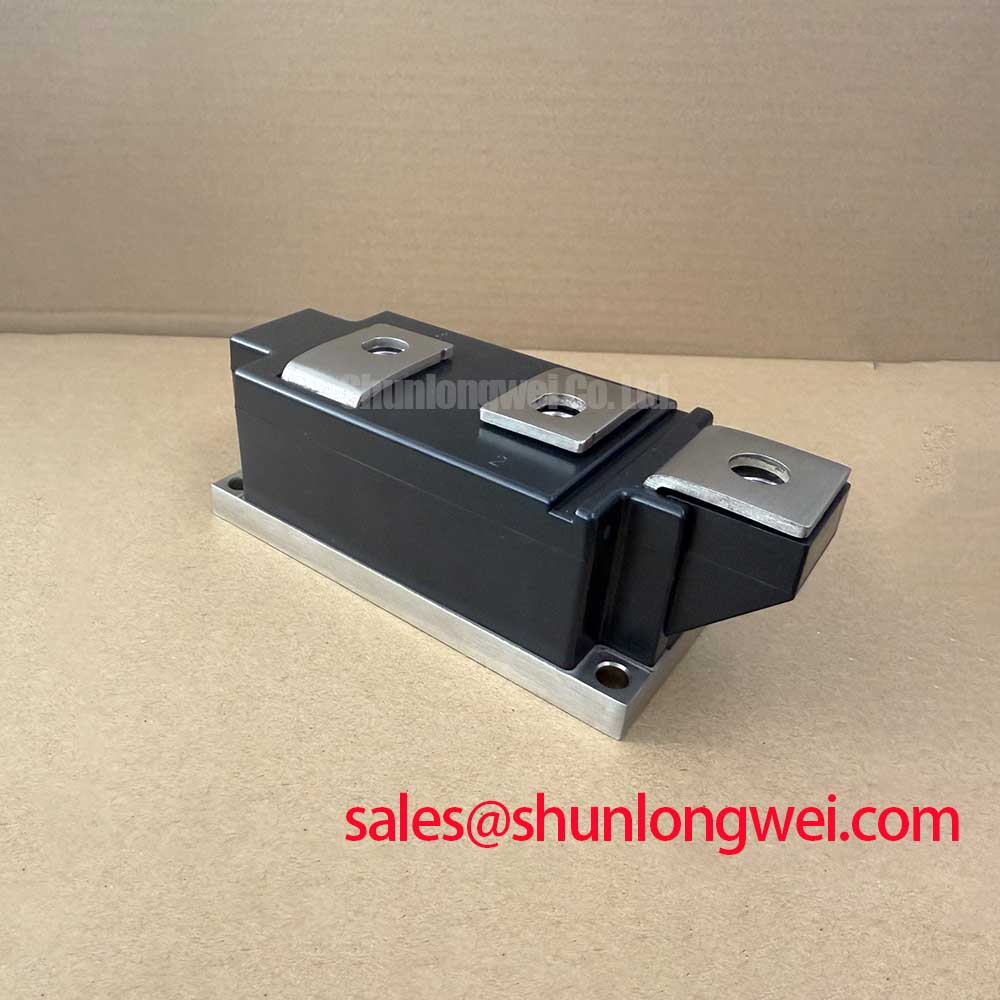
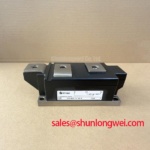
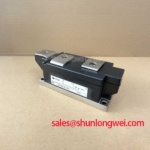
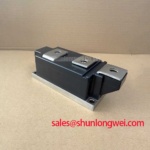
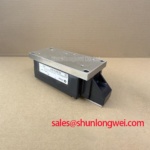
DD600N16K Infineon 1600V 600A Rectifier Diode Module
Optimizing high-current rectification through superior pressure-contact thermal stability and 1600V peak robustness defines the core value of this high-power module. Engineered for demanding industrial environments, it provides a stable 600A average forward current rating supported by a massive surge capacity of 20,000A. How does the pressure-contact design improve reliability? By eliminating solder fatigue in high-cycle thermal applications, it ensures a longer operational lifespan in variable load conditions. For industrial power supplies prioritizing long-term thermal cycling reliability, the DD600N16K 600A module is the definitive engineering choice.
Application Scenarios & Value
Achieving System-Level Reliability in High-Power Industrial Rectification
Engineers often face significant challenges when designing motor soft starters and high-power UPS systems, where the ability to withstand massive current surges during startup is critical. The DD600N16K addresses this through its high I²t value and a maximum surge forward current (I_FSM) of 20,000A. This allows the module to handle the initial inrush current of a heavy-duty industrial motor without degrading the silicon junction. In large-scale wind power converters or static var compensators (SVC), this robustness translates directly into reduced downtime and maintenance costs.
Beyond current handling, the 1600V repetitive peak reverse voltage (V_RRM) provides a safe operating margin for 400V and 690V industrial line voltages, protecting the system against transient spikes common in unstable electrical grids. While this model is ideal for 600A continuous applications, for systems with lower power requirements, the related DD390N16S provides a more compact alternative while maintaining the same voltage rating. Integrating the DD600N16K into a power stage ensures compliance with rigorous industrial drives standards, balancing high-density power delivery with the mechanical endurance of the 50mm standard package.
Technical Deep Dive
Pressure-Contact Engineering: The Foundation of Long-Term Thermal Stability
The internal architecture of the DD600N16K utilizes advanced pressure-contact technology rather than traditional wire-bonding or soldering. Like a high-performance engine head gasket, the pressure contact ensures uniform force and thermal distribution across the entire surface of the silicon diode. This physical configuration is crucial because it significantly lowers the thermal resistance junction-to-case (Rthjc) to 0.062 °C/W, allowing the module to dissipate heat rapidly into the cooling system. In high-cycle applications, such as welding power supplies, this prevents the "thermal fatigue" that typically causes solder-joint failure over time.
Furthermore, the 50mm housing provides an isolation voltage of 3000V AC, essential for safety and signal integrity in complex multi-module inverter stacks. The module's low forward voltage drop (V_F) of approximately 1.32V at rated current minimizes conduction losses, which directly influences the sizing of the heatsink and the overall energy efficiency of the PFC stage. This technical synergy between thermal dissipation and electrical efficiency allows designers to maximize power density without compromising the SOA (Safe Operating Area) of the system.
Key Parameter Overview
Decoding Specification Groupings for Optimized System Design
| Category | Parameter Description | Engineering Value |
|---|---|---|
| Voltage Ratings | Repetitive Peak Reverse Voltage (V_RRM) | 1600 V |
| Current Capacity | Maximum Average Forward Current (I_FAVM) | 600 A (at Tc=100°C) |
| Surge Handling | Maximum Surge Forward Current (I_FSM) | 20,000 A (10ms, 25°C) |
| Thermal Performance | Thermal Resistance Junction-to-Case (Rthjc) | 0.062 K/W |
| Isolation | Insulation Test Voltage (V_ISOL) | 3.0 kV (RMS, 50Hz, 1 min) |
| Mechanical | Package Type / Width | Standard 50mm |
Download the DD600N16K datasheet for detailed specifications and performance curves.
FAQ
How does the pressure-contact design of the DD600N16K specifically benefit high-power motor drive applications?
The pressure-contact technology eliminates the risk of solder layer delamination caused by repeated thermal expansion and contraction. In motor drives where load fluctuates frequently, this ensures the thermal resistance remains constant over the life of the product, preventing localized hot spots and catastrophic failure.
What is the primary factor to consider when selecting a fuse to protect the DD600N16K?
Designers must reference the I²t value (maximum rated surge energy) of the module. The chosen semiconductor fuse must have a "clearing I²t" lower than the module's 2,000,000 A²s rating to ensure the fuse blows before the silicon junction is damaged during a short-circuit event.
Why is the Rthjc value of 0.062 K/W considered a critical parameter for system-level cost reduction?
A lower Rthjc allows for more efficient heat transfer to the heatsink. This efficiency means engineers can either use a smaller, less expensive cooling solution or operate the module at higher ambient temperatures without exceeding the maximum junction temperature of 150 °C, thereby improving the total cost of ownership (TCO).
For technical procurement and volume logistics regarding the Infineon DD600N16K, please contact our engineering sales team to verify current specifications and lead times for your specific industrial project requirements.