

Content last revised on September 10, 2026
Uncompromising High-Voltage Rectification: Technical Insights into the DD1200S33K2C
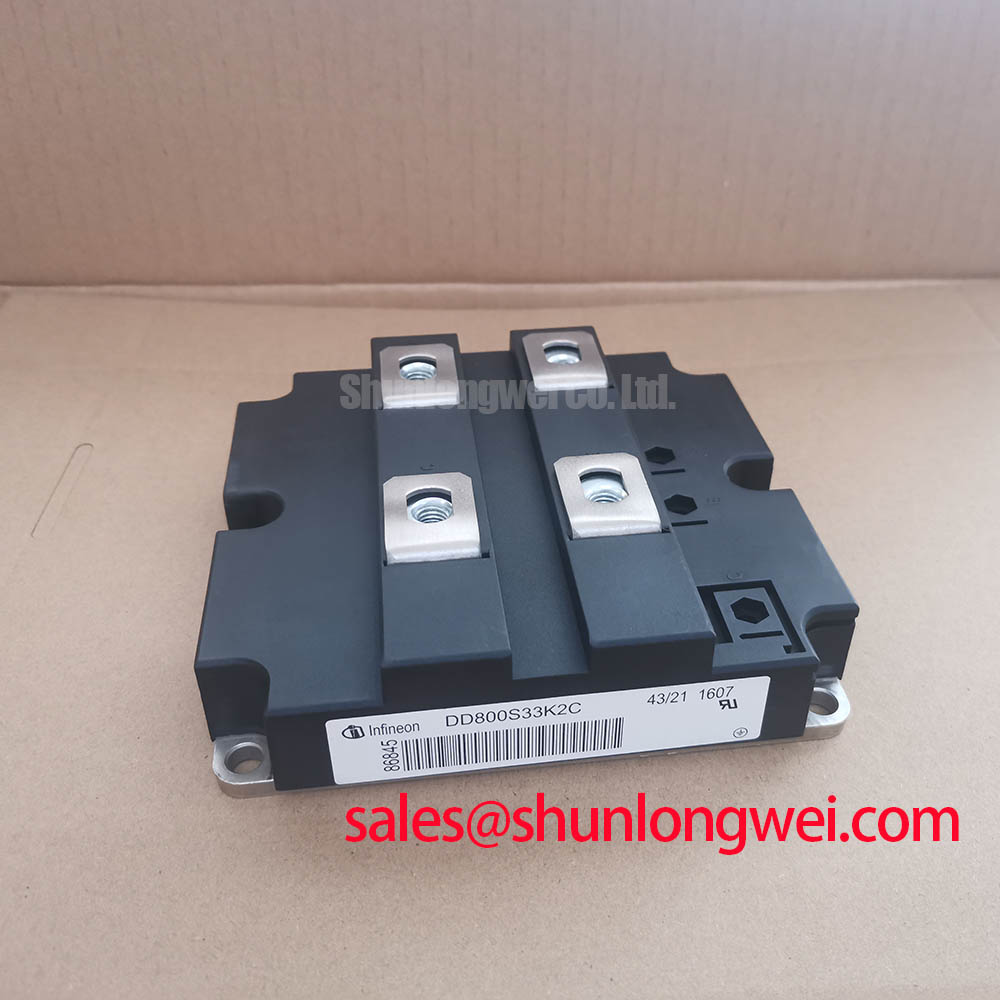
The DD1200S33K2C stands as a benchmark in high-power diode technology, specifically engineered for the rigors of heavy industrial and traction environments. With a peak repetitive reverse voltage of 3300V and a continuous forward current of 1200A, this module provides the critical voltage headroom required for multi-level converter topologies and high-voltage grid interfaces. By prioritizing thermal stability and surge robustness, it addresses the fundamental engineering challenge of maintaining long-term reliability under cyclical high-load conditions.
Key Benefits: Optimized thermal management and exceptional surge current handling (IFSM) for fault protection. Answer to engineering intent: The DD1200S33K2C is designed for 3.3kV systems where high power density and isolation reliability (10.2kV AC) are non-negotiable requirements. For systems requiring consistent power flow in traction converters, the DD1200S33K2C is the definitive choice for high-side rectification.
Key Parameter Overview
Decoding the Specs for Enhanced Thermal Reliability
The technical architecture of the DD1200S33K2C is defined by its ability to transition high currents with minimal thermal stress. The following data, extracted from the official manufacturer documentation, highlights the critical boundaries for engineering design.
| Parameter | Official Specification | Engineering Value |
| Repetitive Peak Reverse Voltage (VRRM) | 3300V | Ensures safety margin in 1500V–2000V DC bus applications. |
| Continuous Forward Current (IF) | 1200A | Supports high-density power throughput in heavy-duty drives. |
| Surge Forward Current (IFSM) | 14.5kA (at 10ms, 125°C) | Provides robust protection during downstream short-circuit events. |
| Isolation Test Voltage (VISOL) | 10.2kV (AC, 1 min) | Exceeds standard requirements for high-voltage traction safety. |
| Thermal Resistance (RthJC) | 16.0 K/kW | Enables efficient heat extraction to the cooling system. |
Download the DD1200S33K2C datasheet for detailed specifications and performance curves.
Application Scenarios & Value
Achieving System-Level Benefits in High-Voltage Infrastructure
Engineers often face the difficulty of managing heat dissipation in enclosed high-voltage cabinets, especially in transit systems. The DD1200S33K2C addresses this by utilizing a sophisticated IHV 130mm housing, which facilitates a streamlined thermal path. In traction converters for electric locomotives, the module’s 3300V rating allows it to operate reliably on 1.5kV overhead lines even during significant regenerative braking spikes.
In renewable energy applications, specifically high-power wind turbine converters, the DD1200S33K2C serves as the primary rectifier in the machine-side converter. Its high I2t value ensures that the system can withstand transient grid disturbances without catastrophic diode failure. For designs that require matching switching capabilities, the related FZ1200R33KF2C offers a complementary 3.3kV IGBT solution in a similar footprint, allowing for modular power stack design.
Furthermore, the integration of this module into wind-to-grid conversion systems illustrates its role in modernizing power infrastructure. The use of the DD1200S33K2C minimizes the need for complex series strings of lower-voltage diodes, reducing parasitic inductance and simplifying the overall Gate Drive and protection logic.
Technical Deep Dive
Thermal Pathway Optimization and Mechanical Robustness
The DD1200S33K2C utilizes an advanced pressure-contact internal structure, which is significantly more resilient to power cycling than standard solder-bond designs. To understand the Thermal Resistance (RthJC) of 16.0 K/kW, imagine a high-speed drainage system during a storm. Just as wider pipes prevent flooding by moving water quickly away from a building, the DD1200S33K2C’s internal ceramic substrate and copper baseplate act as "thermal pipes," moving waste heat away from the silicon junction at high velocity. This prevents localized hotspots that lead to premature aging.
Another critical design feature is the module's VF (Forward Voltage) characteristic, which is optimized for low conduction losses. Lower VF at 1200A directly translates to lower TCO (Total Cost of Ownership) by reducing the cooling requirements of the system. This technical precision is vital for achieving high efficiency in IGBT failure analysis prevention strategies, where maintaining a stable operating temperature is the first line of defense against voltage breakdown.
FAQ
How does the 10.2kV isolation rating impact system safety in traction applications?
The 10.2kV isolation rating provides an extraordinary safety margin for high-voltage systems. In traction environments, where electrical noise and transients are common, this high level of isolation prevents flashovers between the power circuit and the control electronics, ensuring compliance with international rail standards like IEC 61287.
What is the significance of the 14.5kA surge current rating (IFSM)?
The 14.5kA IFSM rating indicates the module's ability to survive a half-sine wave pulse of current without failure. In practical terms, if a fault occurs in the inverter, the DD1200S33K2C can withstand the massive inrush of current until the circuit breaker or fuse clears the fault, protecting the expensive power stack from total destruction.
Does the DD1200S33K2C require special mounting considerations due to its 3300V rating?
Yes, at 3300V, creepage and clearance distances become critical. The DD1200S33K2C housing is designed to meet these requirements, but engineers must ensure that the heatsink surface and terminal connections are free from contaminants and that the mounting torque is precisely maintained to ensure the Thermal Resistance remains within its 16.0 K/kW specification.
As power grids and transportation systems transition toward higher voltages and greater efficiency, the DD1200S33K2C provides a foundation of proven reliability. Its combination of 3300V blocking capability and optimized thermal performance allows for the development of more compact, efficient, and robust power electronics. By selecting this module, engineering teams are choosing a component that has been validated against the most demanding industry standards for high-power rectification.
For more technical insights into the components driving today's power revolution, visit the Infineon IGBT Module resource page or consult our guide on Thermal Management.