

Content last revised on October 25, 2026
High-Voltage Display Drive and Synchronization: Verifying Push-Pull and Charge-Recovery Circuitry
Disconnect the display cable with equipment power isolated, then inspect the connector seating and cable routing before investigating a dark Planar EL512.256-H2 FRB. Record whether the screen remains completely dark, loses individual rows or columns, or changes brightness when the equipment warms up. These observations help separate host communication, power delivery, and display drive problems without treating any single symptom as proof of a failed panel.
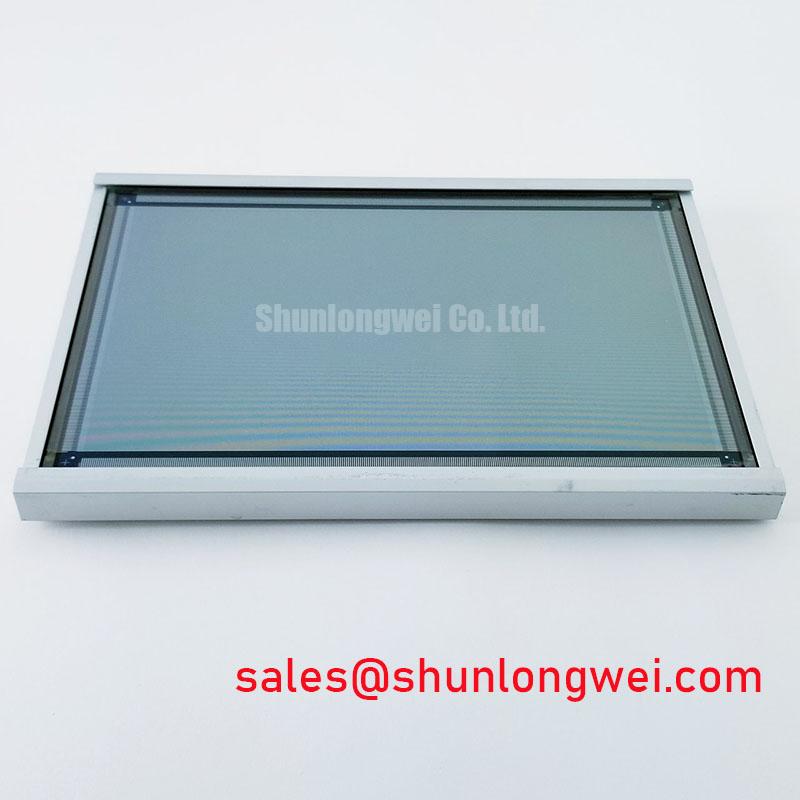
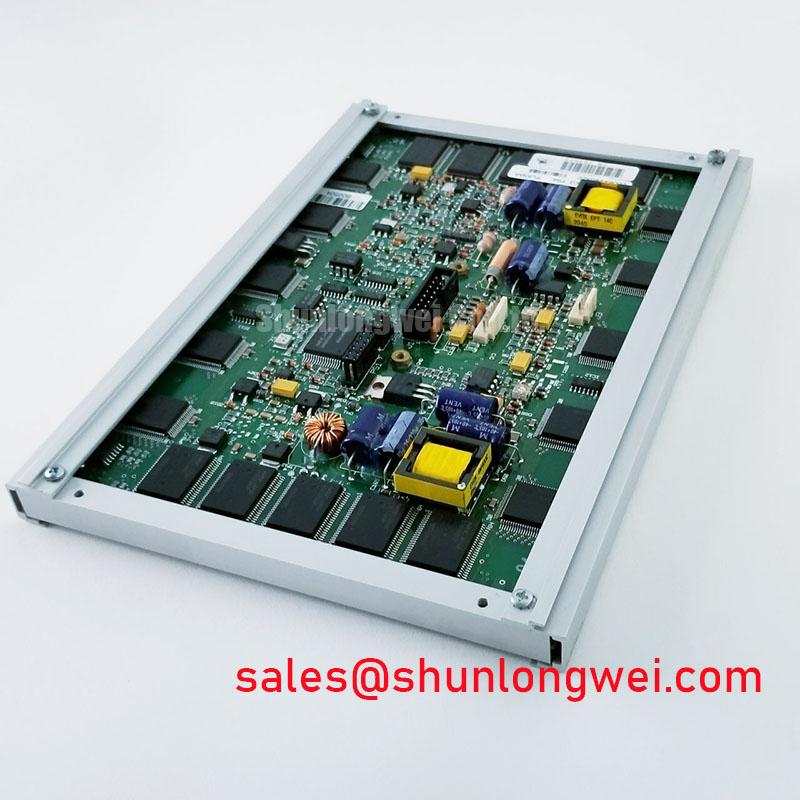
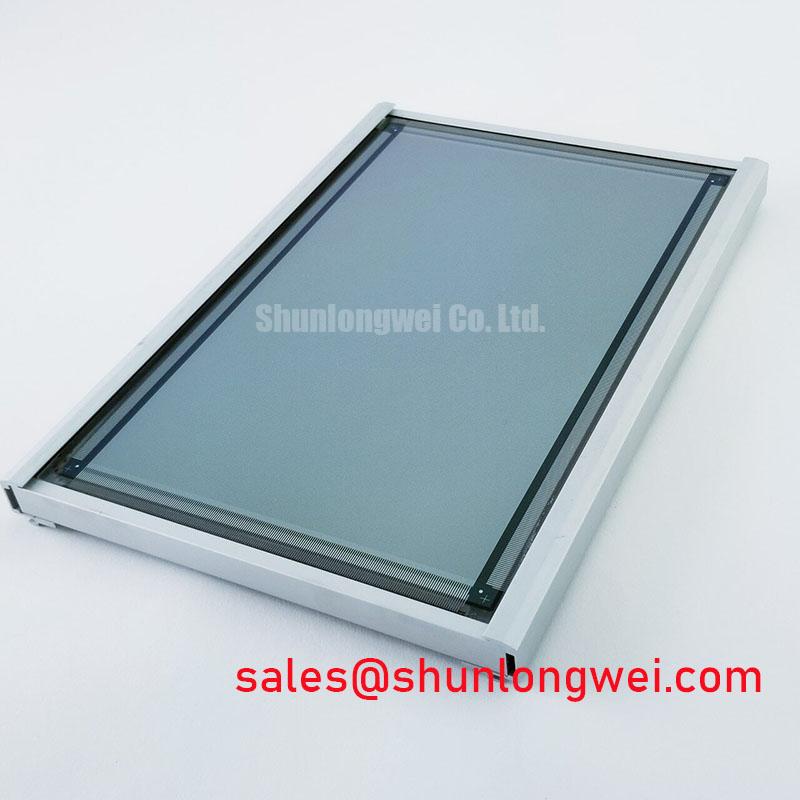
The EL512.256-H2 FRB is identified as an electroluminescent (EL) panel for industrial display integration. Its emissive display technology determines the troubleshooting approach: an LED backlight inspection is not the appropriate starting point. For replacement assessment, retain the complete model suffix and compare the installed assembly with its electrical and mechanical documentation. Supply ratings, connector assignments, dimensions, timing limits, and environmental ratings: consult the model-specific datasheet.
Field Alert: Isolate equipment power and follow the equipment manufacturer’s discharge procedure before disconnecting or reconnecting the display interface.
Compare the host’s display timing and the assembly’s supply behavior before probing the high-voltage drive section. As a Design Consideration, an interrupted timing signal, unstable supply, or damaged interconnect can produce overlapping symptoms. Capture the behavior at the display connector during startup and during a commanded image change, using the equipment schematic to identify the relevant signals and reference points.
Electroluminescent emission depends on electrical excitation of the emissive structure rather than illumination from a separate backlight. As a Design Consideration, row and column addressing must coordinate with the excitation waveform so that selected picture elements receive the intended drive. Missing lines, repeated patterns, or uneven brightness therefore justify checking timing relationships alongside power integrity. Compare captures with a functioning assembly of the same revision where one is available.
A high-voltage pulse amplitude must come from the applicable circuit documentation. The proposed 180–240 V peak range is not an established operating specification for this exact model and should not become a bench setting. The same boundary applies to a prescribed push-pull topology, an exact zero-offset requirement, or an assumed charge recovery network. Treat these as circuit features to identify from the schematic before choosing a measurement method.
As an Engineering Recommendation, measure drive waveforms with equipment suitable for the voltage, common-mode conditions, and measurement location. Examine positive and negative excursions, timing consistency, and changes under different displayed patterns against the circuit’s documented limits. An earth-referenced oscilloscope connection can alter the measurement circuit; the measurement arrangement should be selected by a qualified technician using the equipment’s grounding information.
If the assembly schematic identifies charge recovery circuitry, assess it within that documented implementation. As a Design Consideration, recovering energy from a capacitive display load can affect supply demand and switching behavior. Unexpected ringing or waveform distortion warrants checking the associated connections and components against the schematic. Changing resonant components to increase brightness can also change electrical stress, so component selection and tuning belong to the validated circuit design.
For a screen that dims after startup, record supply behavior, displayed content, and assembly temperature together. As an Engineering Recommendation, repeat the observation with a stable test pattern and compare the result with the equipment’s service information. This helps distinguish content-dependent loading from an intermittent connection or a temperature-related circuit change. It does not establish a unique failure cause without corroborating measurements.
Replacement planning should compare technology and interface requirements before screen size. The TX18D210VM0BAA can be included in a separate display evaluation, but dimensional similarity or a matching image format would not establish compatibility with the EL512.256-H2 FRB. Assess supply requirements, signal mapping, controller support, mounting geometry, and optical presentation before considering any substitution.
Viewing-Angle and Grayscale-Inversion Claims: Verification Requirements
Check text and line visibility from the equipment’s actual operator positions while holding the displayed pattern and ambient lighting constant. As a Design Consideration, the installed viewing result depends on the display together with the front window, surface reflections, recess depth, and surrounding illumination. Compare visibility from opposite directions and distinguish reduced contrast from obstruction by the enclosure.
The heading’s 179-degree viewing-angle claim and absolute grayscale-inversion claim require model-specific optical evidence before being presented as product ratings. Electroluminescent technology does not use liquid crystal modulation, but that distinction alone does not establish a numerical viewing cone, a contrast threshold, or identical readability at every angle. Record the test pattern, viewing direction, and lighting conditions when evaluating the installed panel.
For a cold-start complaint, observe the complete sequence from power application to a stable image. As an Engineering Recommendation, compare host startup, supply stabilization, and display response under the equipment’s approved environmental test conditions. A delayed image can involve the controller or power circuitry as well as the display assembly. Do not assign a sub-millisecond response at −40°C without a specification that defines both the temperature and the response measurement.
Inspect mounting points for uneven loading, loose hardware, and interference between the display assembly and enclosure. As a Design Consideration, support should follow the mechanical drawing so that installation does not impose unintended stress. A 100 g shock rating requires a defined test method, pulse duration, orientation, and acceptance criterion; it cannot be inferred from an EL construction description or used as a mounting design target.
Seal integrity also requires an assembly-specific procedure. As an Engineering Recommendation, inspect accessible edges and enclosure interfaces for damage or contamination, then use the equipment manufacturer’s service criteria to determine the next action. Pressure testing, solvent exposure, or attempts to open a sealed display assembly should not be introduced as routine checks without an approved procedure.
For technology comparisons, The Ultimate Guide to Industrial TFT LCD Technology provides a separate reference context for LCD integration. Manufacturer resources such as the Sharp Display Solutions Official Portal and Sharp Devices Europe Industrial Display Solutions are additional starting points for display technology evaluation, rather than evidence of Planar-specific ratings.
When evaluating an EL512.256-H2 FRB for a high-voltage substation protection or SCADA dispatch console, compare the existing controller interface, enclosure fit, operator viewing positions, and equipment qualification requirements. As an Engineering Recommendation, document image stability, startup behavior, and connector retention after installation under the equipment’s approved acceptance procedure. Resolve any mismatch at the interface or mounting level before returning the console to service.