Content last revised on September 10, 2026
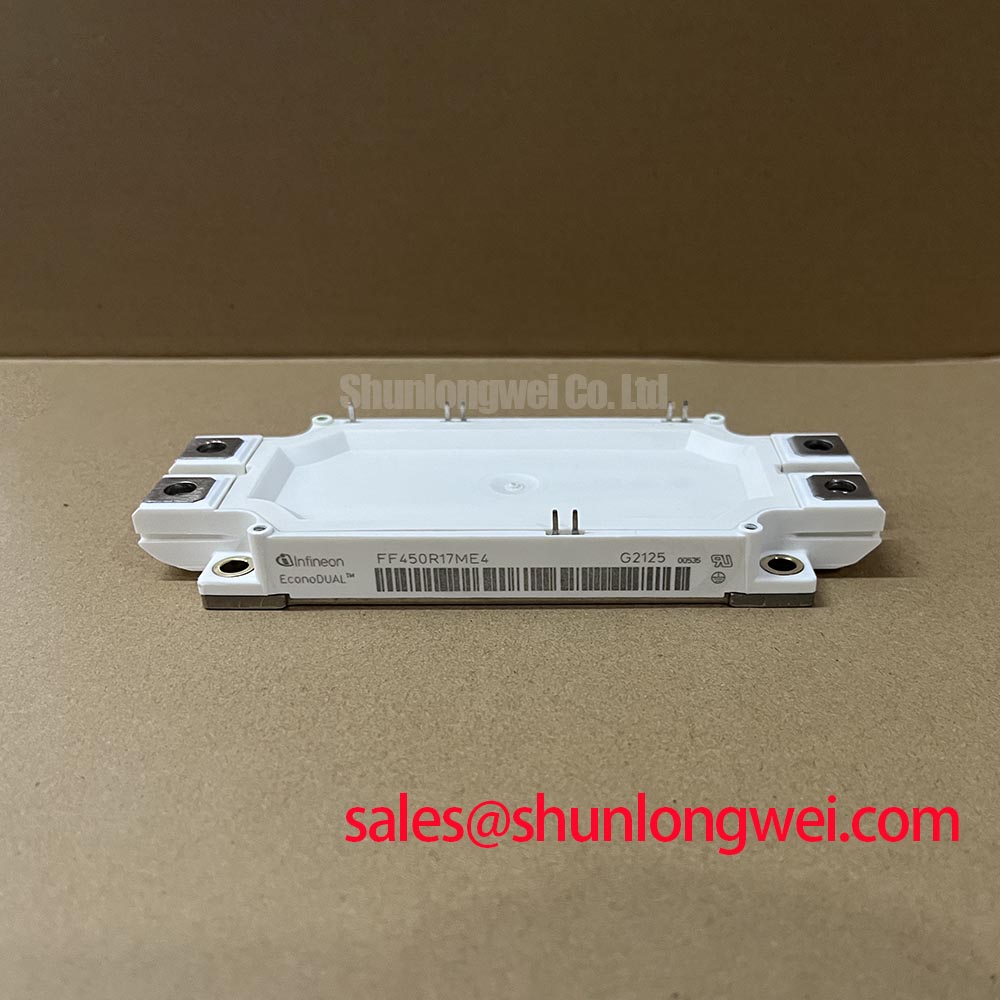
FF450R17ME4_B11: Engineering Reliability with Solder-Free PressFIT Technology
Introduction to a High-Reliability Power Solution
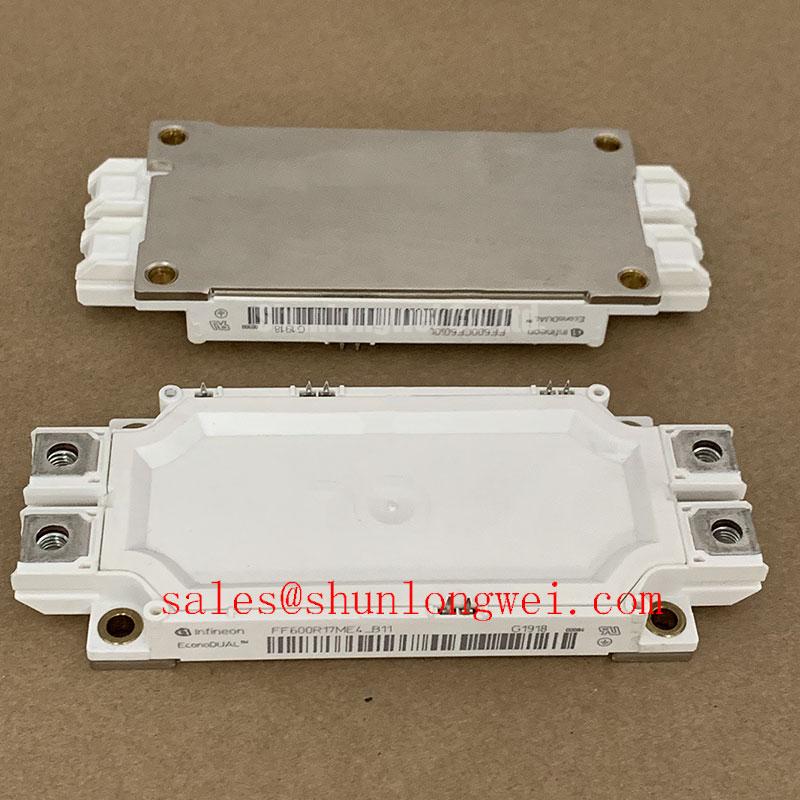
The Infineon FF450R17ME4_B11 is an EconoDUAL™ 3 IGBT module engineered for exceptional long-term reliability and manufacturing efficiency in high-power applications. Delivering a robust performance profile of 1700V | 450A with its proven Trench/Fieldstop IGBT4 technology, this module's defining feature is its PressFIT contact technology. This innovation provides two core benefits: significantly enhanced system reliability by eliminating solder fatigue and a streamlined, automated assembly process. For systems like wind turbine inverters or large industrial drives where service life and manufacturing consistency are critical, the FF450R17ME4_B11 offers a decisive advantage over traditional soldered modules. What is the primary benefit of its PressFIT design? It creates a gas-tight, cold-welded connection for superior vibrational and thermal cycling endurance.
Key Parameter Overview
Decoding the Specs for Enhanced Thermal and Electrical Reliability
The technical specifications of the FF450R17ME4_B11 are foundational to its performance in demanding power conversion systems. Each parameter is a critical piece of the design puzzle, directly influencing everything from thermal management to overall system lifespan.
| Parameter Group | Specification | Value | Engineering Implication |
|---|---|---|---|
| Voltage & Current Ratings | Collector-Emitter Voltage (Vces) | 1700V | Provides a substantial safety margin for inverters operating on 800V to 1000V DC links, crucial for applications in renewable energy and heavy industrial drives. |
| Nominal Collector Current (Ic nom) | 450A | Supports high-power throughput suitable for multi-megawatt systems. | |
| Repetitive Peak Collector Current (ICRM) | 900A | Indicates a strong capability to handle transient current spikes during motor startup or grid fault conditions. | |
| Thermal & Operating Conditions | Max. Junction Temperature (Tvj,op) | 150°C | Allows for operation at higher temperatures, enabling more compact heatsink designs and greater power density. |
| Thermal Resistance (RthCH, case-to-heatsink) | 0.009 K/W (Typical) | A low thermal resistance ensures efficient heat transfer away from the module, which is critical for reliability and preventing thermal runaway. | |
| Switching Characteristics | Collector-Emitter Saturation Voltage (VCE,sat) | 2.15V (Typ. @ 450A, 150°C) | This parameter directly impacts conduction losses. The low VCE,sat of the IGBT4 technology contributes to higher overall system efficiency. |
| Mechanical Integrity | Contact Technology | PressFIT | Enables solder-free PCB assembly, eliminating a common failure point (solder joint fatigue) and improving long-term reliability under harsh thermal and mechanical stress. |
Download the FF450R17ME4_B11 datasheet for detailed specifications and performance curves.
Application Scenarios & Value
Achieving System-Level Benefits in Renewable and Industrial Converters
The FF450R17ME4_B11 is optimized for power conversion systems where long-term reliability and operational uptime are non-negotiable. For systems requiring higher current handling in the same 1700V class, the related FF600R17ME4 offers an increased current rating.
A prime engineering scenario for this module is in the power converters of multi-megawatt Wind Turbine Inverters. In this application, the converters are often located in difficult-to-access nacelles and are expected to operate reliably for 20+ years under fluctuating loads and harsh environmental conditions. The primary challenge is ensuring the longevity of the power electronics to minimize costly downtime and maintenance. The PressFIT connection technology of the FF450R17ME4_B11 directly addresses this. Unlike soldered pins, which can develop micro-fractures over years of thermal cycling, the PressFIT pins form a stable, gas-tight cold weld with the PCB. This is analogous to using a precisely machined bolt instead of glue; it provides a mechanically superior connection that is far more resistant to vibration and temperature-induced stress, directly enhancing the converter's field reliability. The module's robust 1700V blocking voltage provides the necessary design margin for grid-tied inverters connected to medium-voltage lines, ensuring resilience against grid voltage swells.
- Industrial Motor Drives: In high-power variable frequency drives (VFDs) for applications like mining conveyors or large-scale water pumps, the module's ability to handle high currents and its thermal efficiency ensure stable and continuous operation.
- Uninterruptible Power Supplies (UPS): For data centers and critical industrial processes, the reliability afforded by the PressFIT technology translates directly into higher system availability and a lower total cost of ownership.
- Central Solar Inverters: The high voltage and current ratings make it a suitable building block for large-scale photovoltaic power plants, where maximizing efficiency and uptime is key to financial returns.
Technical Deep Dive
A Closer Look at PressFIT Technology for Uncompromising Reliability
The "_B11" suffix in the FF450R17ME4_B11 part number signifies more than just a minor feature; it points to a fundamental shift in assembly philosophy with the inclusion of PressFIT contact technology. This solder-free interconnection method is a cornerstone of the module's enhanced reliability, particularly in applications subjected to significant Power Cycling Capability and mechanical vibration.
Traditionally, IGBT modules are soldered to a PCB. Over many years of operation, the expansion and contraction from thermal cycles can stress these rigid solder joints, leading to cracks and eventual failure. PressFIT technology circumvents this entirely. The pins on the module feature a specially designed "eye-of-the-needle" zone. When pressed into a precisely drilled and plated-through hole on the PCB, this zone deforms elastically, exerting a high, continuous pressure against the hole's copper wall. This creates a gas-tight, cold-welded electrical and mechanical connection.
The engineering value is twofold. First, it eliminates a primary wear-out mechanism, dramatically extending the module's service life. Think of it as the difference between a glued joint and a precision-engineered friction fit in a high-performance engine; one is prone to aging and cracking, while the other is designed for enduring mechanical integrity. Second, it simplifies the manufacturing process by removing the need for a selective or wave soldering step, reducing thermal stress on the PCB and enabling a faster, more repeatable automated assembly line. For OEMs producing high-volume systems, this translates to lower manufacturing costs and higher production yields.
Frequently Asked Questions (FAQ)
How does the PressFIT technology of the FF450R17ME4_B11 impact the total cost of ownership (TCO) in an industrial drive?
The PressFIT connection significantly lowers TCO by enhancing long-term reliability, which reduces the frequency of expensive field service and system downtime. It also simplifies the manufacturing process by eliminating a soldering step, leading to lower assembly costs and potentially higher throughput.
What is the specific advantage of a 1700V Vces rating for an application like a wind turbine inverter?
A 1700V rating provides a critical safety margin for inverters designed for 690V AC grids, which can have DC-link voltages exceeding 1000V. This margin is essential for handling voltage overshoots caused by switching operations and potential grid voltage fluctuations, thereby preventing catastrophic module failure and ensuring the system's robustness.
With a Tvj,op of 150°C, how should an engineer approach thermal design with this module?
The high operating junction temperature provides flexibility. An engineer can either push for higher power output from a given footprint or design a more cost-effective and compact cooling system (heatsink). The key is to leverage the module's low thermal resistance to ensure the junction temperature remains safely below the 150°C limit during worst-case load and ambient temperature conditions, as detailed in our guide on mastering IGBT thermal management.
For further evaluation of your power system requirements or to inquire about this component, please contact our technical sales team for assistance and quoting information.